
 LT
 DE
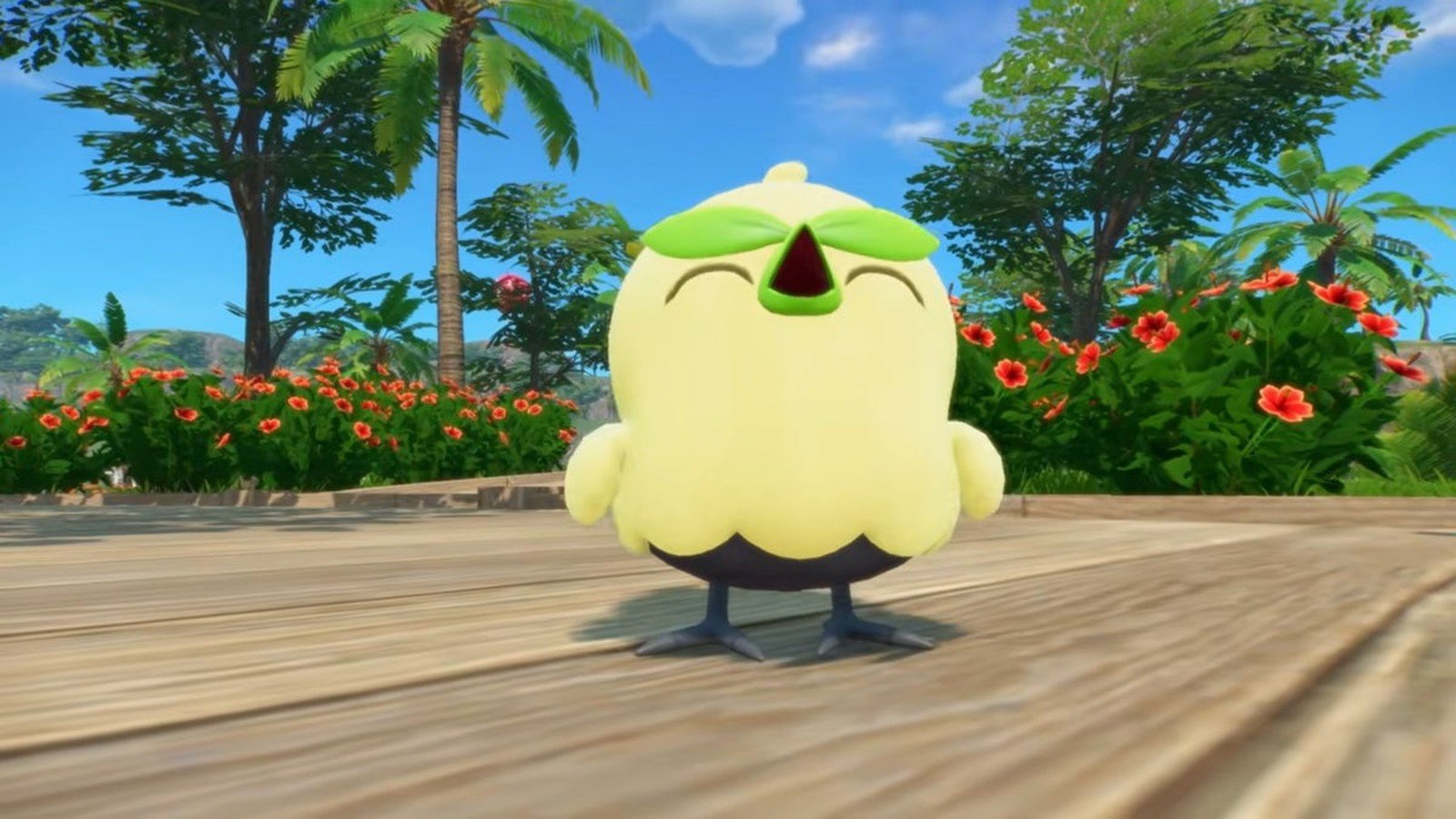
The Pokémon Winds and Waves trailer became one of the most talked-about gaming stories following the 30th-anniversary presentation. Before the community had even had time to process the footage, social media was flooded with reactions, memes, and speculation about what the 10th generation of Pokémon will be like.
Although the announcement itself, as often happens with the series’ first trailers, feels more like a hint at the overall direction than a detailed game reveal, it managed to accomplish the most important thing: spark collective curiosity. Some are excited about the new tone and themes, others are concerned about whether the technical problems of previous entries will be resolved, while others are simply enjoying the new creature designs and the community’s sense of humor.
This time, discussion intensified particularly quickly because of one of the new creatures shown in the trailer, which fans have already compared to an “angry bird.” The comparison became a perfect example of how the Pokémon audience reacts to every new generation: from irony and gentle teasing to genuine affection, which often develops after only a few days.
However, more serious questions lie beneath the memes: what does the title “Winds and Waves” mean, will the open world return, what changes can be expected in battles and exploration, and will this generation finally deliver the technical leap that some fans have been waiting for over the past several years?
Pokémon Winds and Waves Trailer: What the First Reveal Really Tells Us
First trailers generally serve as statements of mood and direction. They rarely make clear promises about features, but they deliberately leave clues that later develop into major marketing themes: the region’s aesthetic, several new Pokémon, a short glimpse of the world, and perhaps one hook related to the story or gameplay mechanics.
In this case, the biggest hook is the title itself—“Winds” and “Waves”—which naturally evokes weather, the sea, coastlines, storms, travel, and movement. This suggests that the game’s region, or its broader theme, could be based on climate, winds, and water, perhaps even featuring seasonal or dynamic phenomena that affect the gameplay experience.
Another important detail is the first set of new creature designs. Even if the trailer shows only a few of them, they become the center of online reactions because design is the common denominator for everyone interested in the Pokémon franchise: people who play the games, collect the cards, watch the anime, or simply follow pop culture.
A short announcement also often establishes a framework for expectations: whether the visual direction is moving toward a more stylized, “storybook” appearance or attempting to maintain the previous balance between realism and caricature. This is exactly why even a few seconds of footage can become evidence in debates over whether a new generation looks “fresh” or merely resembles previous entries with a new title attached.
Of course, a single trailer does not answer the most important question—how the game will actually play. It does, however, establish the tone, and the internet immediately transforms that tone into hundreds of interpretations, ranging from serious analysis to memes that often become the best form of free advertising.
How the Internet Received the Pokémon Winds and Waves Trailer: Memes, Affection, and Criticism
The reaction to a new Pokémon generation is almost always divided: some fans want change, others want stability, and many want both at the same time. The Pokémon Winds and Waves trailer highlighted that duality very quickly. On social media, some celebrated the beginning of a new era, while others responded with a cautious “let’s wait until we see more” attitude.
The biggest catalyst for reactions is the new Pokémon designs. Certain creatures instantly become internet sensations: they are easy to describe in a single sentence, have a distinctive shape, or look like a “relative” of something from an earlier generation. The “angry bird” comparison is a classic community reaction—a gentle joke that often turns into affection once players begin seeing the creature not simply as a meme, but as a potential member of their future team.
However, memes are not just about humor. They reveal what resonated most strongly with the audience while also showing which emotions people are looking for: familiarity, strangeness, charm, and surprise. Pokémon has a distinctive design language. Over nine generations, the series has created an enormous visual vocabulary, so new creatures are immediately compared with older ones, sometimes even subconsciously.
Another type of reaction involves cautious skepticism about the technical side of the game. In recent years, some players have come to expect more than just new monsters and a new region; they also want a clear leap in quality, including greater stability, visual consistency, fewer glitches, and better performance. Even if the trailer does not show these things directly, this context accompanies every new announcement and immediately becomes part of the discussion.
The third category involves theories. The internet immediately starts dissecting everything: which locations can be seen in the background, what the symbols mean, whether the title refers to two versions, as is customary for the main series, and which types—Water, Flying, Ice, Electric, and others—will be central. This tradition is particularly strong within the Pokémon community because the series has a long history of using clues and recurring motifs.
What the “Winds” and “Waves” Theme Could Mean: Region, Travel, and Environmental Dynamics
If the title “Winds and Waves” is interpreted as a creative key, it opens up many possibilities. Winds and waves represent not only weather and water, but also movement, travel, direction, and change. This could suggest a region with a strong coastal aesthetic featuring islands, ports, lighthouses, or even maritime routes. Alternatively, it could represent a broader idea that the world will feel “alive” and constantly changing.
One of the most appealing interpretations is that the game could feature more dynamic environments. Weather has long influenced battles in Pokémon through effects such as rain, harsh sunlight, sandstorms, and hail, but in the game world itself, it has generally been little more than a visual effect or an isolated condition. If the developers wanted to use the theme to its full potential, “winds” could affect movement, gliding, visibility, and even the likelihood of encountering certain Pokémon, while “waves” could influence navigation, tides, currents, or access to new areas.
This direction would align closely with modern open-world concepts: the environment would not merely serve as decoration but become a system of its own. That would be particularly suitable for the Pokémon series, where exploration and collecting are central to the game’s design language. If different creatures can be found under different conditions, players are naturally encouraged to return, experiment, and plan their journeys.
Of course, this is only speculation. However, that is exactly how an early trailer works: it creates a thematic space in which the community fills in the potential features for itself. Sometimes developers deliberately leave enough ambiguity to keep discussions alive until the next presentation.
New Pokémon and the Design Direction: Why the “Angry Bird” Label Caught On So Quickly
Pokémon designs are among the few elements in the gaming industry that immediately become part of the wider culture. A player may know nothing about the gameplay mechanics, but simply seeing a new creature already produces an emotional reaction: “I want it,” “that’s funny,” “that’s strange,” “it’s too simple,” or “it’s too complicated.”
“Angry bird” memes generally emerge when a design has a clear silhouette and an easily recognizable mood. That is not a bad sign—on the contrary, it shows that the creature is memorable. In the world of Pokémon, memorability is currency: it helps a new generation establish itself alongside hundreds of older monsters.
It is also interesting that some fans initially “reject” new designs before eventually accepting them. This is a recurring cycle: the first encounter with a new generation often causes a sense of shock because it inevitably moves away from the nostalgic standard. Once players begin seeing the new creatures in motion, in the story, and as part of a team, they form a connection, and the memes become affectionate rather than biting.
Another factor is how quickly designs become part of the “language of the community.” One name, one comparison, one funny image—and the internet already has a nickname for describing a new Pokémon. This works as organic marketing: even people who have not seen the trailer encounter the meme and ask, “What is this about?”
What Fans Expect from Generation 10: More Quality, Fewer Compromises
Although community reaction is at the heart of the story, it is supported by a broader set of expectations. For many people, Generation 10 feels like a symbolic milestone: a significant round number that naturally raises the question of whether the series will make bolder decisions. Fans generally expect three things: innovation, stability, and respect for the series’ identity.
Innovation could mean a fresh regional concept, a more engaging story, additional social or exploration systems, more convenient quality-of-life features, and meaningful multiplayer interaction. Stability means technical quality: performance, frame rate, fewer visual issues, and a clear, consistent graphical direction. Respect for the series’ identity means ensuring that Pokémon still feels like Pokémon, with clear progression, team building, the type system, battles, and the joy of discovery.
Interestingly, the “Winds and Waves” theme could potentially bring these expectations together. A dynamic environment could be an innovation while also restoring the series’ sense of adventure—a journey through a region where conditions change and players must adapt. It sounds like the classic Pokémon formula expanded with modern tools.
At the same time, this creates a concern: will these ambitions be successfully realized on a technical level? That is why reaction sections frequently contain both excitement and a “it looks good in the reveal, but we’ll see what it’s really like” attitude. For now, that is only natural. A single trailer cannot prove that the game will run smoothly, but it can offer clues about whether the developers are changing direction.
Pokémon Winds and Waves Trailer and Its Communication Strategy: Why Maintaining Momentum Matters Most Now
Pokémon reveals often happen in stages: an initial announcement presenting the title and atmosphere, followed by details about the region, the starter Pokémon if they have not yet been revealed, the main characters, the most important gameplay mechanics, and finally the release date and platform highlights. The intensity of the community’s response shows one thing: the audience is ready for more information.
Communication discipline is important at this point. If the next piece of information arrives too late, discussions could lose momentum or turn into an echo chamber of skeptical comments. If information is presented consistently, memes and theories will work in the developers’ favor, with every new detail becoming additional fuel for social media content.
Analyzing fan reactions can also be valuable for the developers themselves. Although the game is probably already far along at this stage, the focus of its communication can still be adjusted. For example, if the audience is most concerned about performance, it would be worth showing real gameplay earlier and clearly demonstrating technical stability instead of relying solely on cinematic footage.
On the other hand, the Pokémon brand has enormous momentum: even divisive entries sell extremely well. As a result, some fans hope that Generation 10 will be an opportunity to demonstrate that the series can not only maintain its popularity but also surprise players with its quality. The “Winds and Waves” title sounds like an attempt to create a clear, poetic theme. All that remains is to see whether that theme will also be fully realized in the game.
What to Do Now: How to Follow the News Without Getting Lost in Speculation
After the first trailer, the internet quickly fills with “leaks,” supposed logos, fake lists, and fraudulent concept art. To maintain a level head, it is worth following a few simple rules: rely on official channels, wait for confirmation from at least several reliable sources, and remain skeptical of promises that sound “too good to be true.”
At the same time, speculation and theories are part of the fun of the Pokémon community. If you enjoy analyzing every frame, that is perfectly normal. The most important thing is to distinguish between “I would like this to happen” and “this will definitely happen.” At the moment, the Pokémon Winds and Waves trailer is like a starting signal: it has opened the door to discussion but has not yet revealed all of its cards.
In the near future, much will depend on what the developers show next: real gameplay footage, the scale of the world, the battle system, exploration tools, and, of course, more new Pokémon. If the pacing is handled well, this generation has the potential to become one of the most interesting in a long time, simply because of how many thematic possibilities are opened up by the idea of winds and waves.