
 LT
 DE
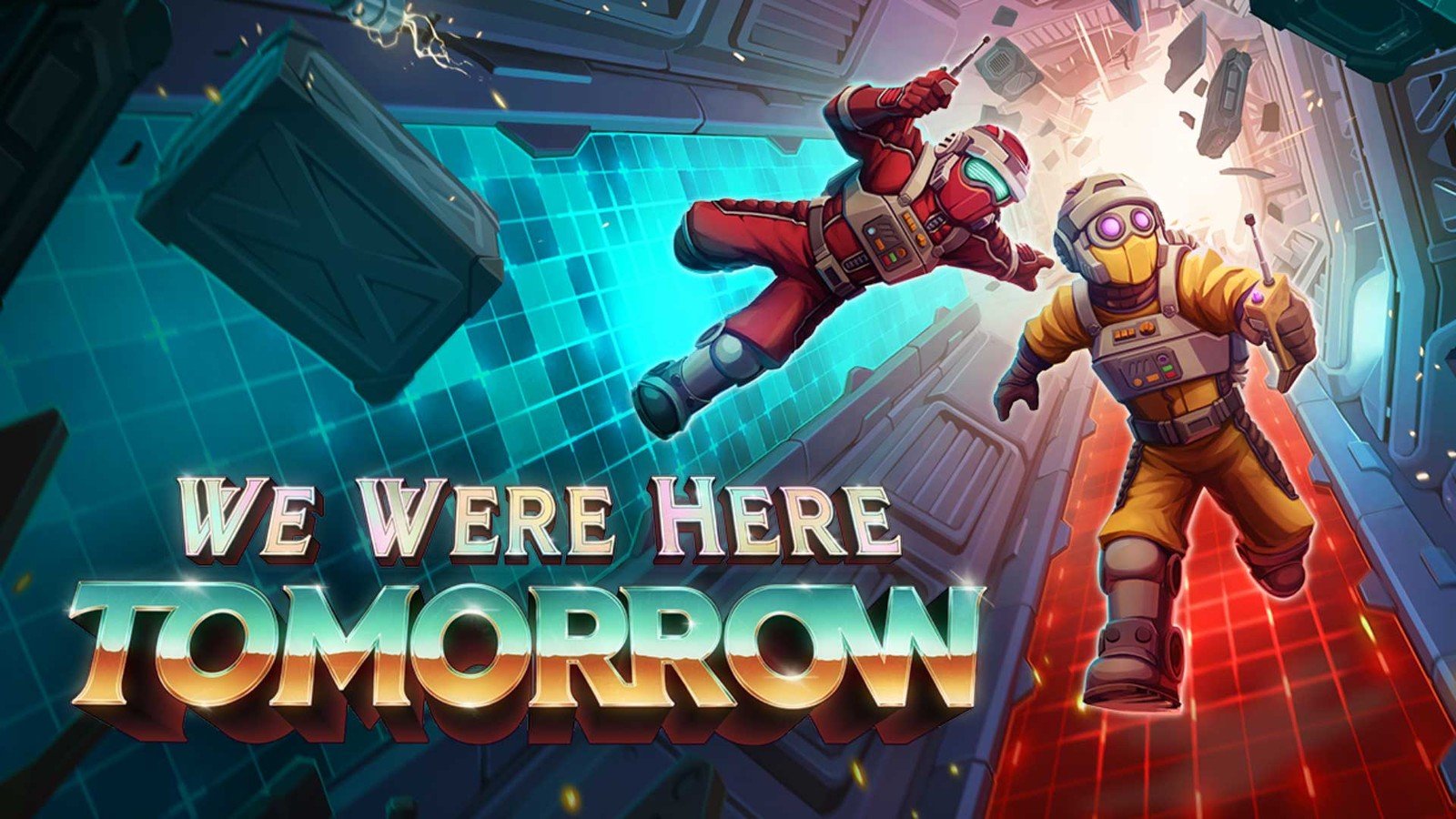
This We Were Here Tomorrow preview begins with one clear piece of news: Xbox Wire has published an introduction inviting players to step into the retro-futuristic world of “We Were Here Tomorrow.” It signals that the series, which many appreciate for its asymmetric co-op gameplay and emphasis on communication, intends to preserve its core identity while offering a new aesthetic direction and different types of mysteries.
Think of this article as an expanded overview of the announcement: not a post-playthrough “verdict” (it is still too early for that), but clear context explaining what the retro-futuristic tone means and which design choices we can reasonably expect from this franchise based on how it has worked so far.
In games like “We Were Here,” it is not only the difficulty of the puzzles that matters, but also how they create situations in which two players see different information. The retro-futurism highlighted in the announcement is interesting because it could transform the very language of the puzzles: instead of relying solely on mechanical locks and symbols, there may be more technological motifs, signals, systems, screens, and perhaps even an “analog future” aesthetic in which indicators, sounds, lights, and logic circuits play important roles.
Another important aspect is expectations. Xbox Wire articles are often designed not only to communicate facts but also to sell the atmosphere and experience. This means that some details may be presented as an impression—how the game is supposed to “feel”—rather than as a final specification. Nevertheless, these articles usually indicate the intended direction clearly, and that is precisely what we explore here.
What’s new: Xbox Wire introduces the retro-futuristic world of “We Were Here Tomorrow”
The main message of Xbox Wire’s article about “We Were Here Tomorrow” is simple: the new entry in the series invites players into a retro-futuristic setting. This suggests that the developers are deliberately expanding the identity of “We Were Here” beyond its familiar boundaries of mysticism and mysterious environments by searching for a new tone, new visual symbols, and new puzzle themes.
In games, retro-futurism often represents “the future as imagined by the past”: analog devices, bold color accents, the aesthetics of vintage screens, control panels filled with buttons, dials, tape recordings, industrial details, and, at the same time, the futuristic idea that this is still a more advanced and stranger reality. This direction is especially well suited to cooperative puzzles because it allows developers to create clear, “readable” signals that one player can see while the other must interpret or use them.
This is also important for players because of the mood: a new aesthetic could introduce a different kind of tension. While earlier entries in the series were often dominated by a mysterious, cold, and isolated atmosphere, a retro-futuristic world could be both brighter and “noisier,” with more information, indicators, and system logic, while still retaining the sense of loneliness that comes from being separated from your partner and having to trust only their voice.
We Were Here Tomorrow preview: why retro-futurism could transform the logic of its puzzles
When discussing what makes the “We Were Here” series stand out, it is worth remembering its foundation: this is an asymmetric cooperative puzzle adventure in which two people usually have different “roles,” or at least different perspectives, and are forced to share information. The person who solves puzzles fastest rarely wins here; more often, success belongs to the person who communicates clearly.
The retro-futuristic setting could reinforce this principle in several ways. First, it creates opportunities for more “system-based” puzzles: routing signals, distributing power, tuning frequencies, deciphering codes and indicator lights, and completing multi-stage procedures. The advantage of such puzzles is that they naturally require information to be communicated methodically: one player sees a schematic while the other has a control panel; one hears an audio signal while the other must tune the frequency; one has the instructions while the other can access the mechanism.
Second, retro-futurism allows the developers to introduce “deceptively simple” objects. Buttons or levers, for example, may look like decorations while actually being crucial parts of a task; an old monitor may reveal a clue only from a particular angle or under specific lighting; an analog instrument may have an imprecise scale that must be interpreted rather than simply read. Such solutions fit the pacing of “We Were Here,” where much depends on attention to detail and the ability to describe exactly what you see.
Third, the new style could affect how the story is presented. In “We Were Here” games, the story is often told through the environment: notes, symbols, interior details, strange rituals, or recurring motifs. In a retro-futuristic version, the storytelling could become more “technological,” featuring terminal logs, hints about experiments, protocols, system errors, and archived messages. This does not mean the game will become pure sci-fi—rather, the mystery will simply have a different flavor.
Co-op as the main driving force: what you should know before playing
If “We Were Here Tomorrow” retains the series’ DNA, the most important preparation will not involve good aim or fast reflexes, but a strong connection with your partner. In this genre, much depends on whether you can agree on terminology: what you will call different sides of a room, how you will describe symbols, and how you will shorten lengthy instructions. It may sound trivial, but this is where most of the progress is made.
A practical tip: before starting a serious session, it is worth agreeing on a few shared rules. For example, “I will always say exactly what I see before pressing anything,” or “if we are stuck for more than five minutes, we will return to our original assumptions.” Puzzles in the style of “We Were Here” often punish rushing, because one wrong action can “lock” the solution and force you to reset the situation from scratch.
Another important detail is the method of communication. Voice chat is almost essential in this type of game because text messages are often too slow, and the natural flow is lost when explaining complicated schematics. If “We Were Here Tomorrow” is intended for a broader audience, the developers will likely consider more convenient accessibility options as well, but the essence of the series remains the same: this is a game best experienced through conversation.
We Were Here Tomorrow preview for co-op fans: how this series differs from other co-op puzzle games
There are many cooperative puzzle games, but what distinguishes the “We Were Here” series is that you do not “solve the same puzzle together”—you “solve the same puzzle while separated.” This creates a different psychological dynamic: you cannot verify what your partner is doing; you cannot lean over and look at their screen, at least not as the game intends; and you cannot “take control.” You have to trust them, and that trust depends on clarity.
This design often creates a powerful feeling that is difficult to reproduce in other games: one player feels like the “eyes,” while the other feels like the “hands.” When everything works, there is a genuine sense of satisfaction from successful teamwork. When it does not, you can clearly see where communication broke down: too many assumptions, too little clarification, or no agreed terminology.
The retro-futuristic backdrop of “Tomorrow” could enhance this even further because a technological aesthetic usually “allows” for clearer rules: an indicator turns on, which means the action was correct; a light flashes in a specific rhythm, which represents a code; a sound changes, meaning the system has entered a different state. Such signals are useful cooperative tools because they are easier to describe accurately than, for example, abstract murals or symbols that may look different to different people.
Atmosphere and art direction: what a “retro-futuristic world” means for players
Aesthetics are not simply a matter of whether something looks “good or bad.” In puzzle games, the visual style often becomes a set of rules. If the environment resembles a laboratory, you expect experiments, protocols, and warnings. If it resembles a ship or station, you expect sections, power grids, and emergency modes. Retro-futurism often combines both: it is simultaneously “engineered” and slightly theatrical.
Small details work particularly well in an environment like this: labels on panels, color codes, fragments of vintage recordings, and the sounds of machinery. If “We Were Here Tomorrow” is designed around the idea that every detail could be a clue, this will mean players should slow down, look around, notice recurring motifs, and, most importantly, talk about them with their partner even if they do not yet understand their purpose.
Retro-futurism could also change the source of fear or tension. Instead of “what is hiding in the darkness?” the question may become “what is wrong with the system?” or “why is the protocol not working as it should?” This is a more paranoid, “technical” form of tension that fits the separation mechanic perfectly: you see one part of the system, your partner sees another, and only by talking can you understand what is really happening.
Puzzle design expectations: difficulty, pacing, and “aha” moments
One of the questions raised by every new entry in the series is whether it will be accessible to newcomers or aimed more directly at veterans. Since all we currently have is the introductory announcement, it is more accurate to discuss potential directions rather than facts. Nevertheless, the retro-futuristic thematic framework could support both very clear “tutorial” puzzles, such as simple circuits and logic switches, and highly complex multi-stage scenarios, such as synchronizing several systems.
Puzzles in games like “We Were Here” work best with a three-level structure: (1) you notice a clue, (2) you communicate it accurately to your partner, and (3) you apply it together through direct action. If “Tomorrow” relies on technological motifs, the third stage could become even richer: not simply “pull the third lever,” but “switch modes, wait for the indicator, and then adjust the frequency until it reaches the green zone.”
These solutions create powerful “aha” moments, but they also require clear feedback from the game. If the feedback is precise—through sounds, lights, and animations—players will feel that they are learning how the system works. If it is too vague, frustration may set in because you will not know whether you are close to the solution or merely guessing. That is why one of the most interesting things to watch for in future announcements will be how the developers balance mystery and clarity.
The significance of a single announcement: what it says about the future of the series
Although the Xbox Wire article is only one point of communication, it reveals quite a lot about the game’s ambition. When developers clearly define an aesthetic shift—a “retro-futuristic world”—it often means they want the game to be recognizable not only through its mechanics but also through its visual and audio identity. This could be an attempt to attract a broader audience interested in sci-fi moods, analog aesthetics, or the mysteries of “space stations.”
On the other hand, this shift could also be intended to revitalize the series itself. Now that many players are already familiar with the main asymmetric co-op concept, a new aesthetic makes it possible to create new types of challenges, a new language of symbols, and a new storytelling style. This is good news for players—as long as the fundamental principle is preserved, ensuring that two people feel essential to one another rather than simply “playing together for company.”
It is also worth noting that announcements like this often signal the beginning of a more active communication phase: more clips, interviews, explanations of mechanics, and perhaps demonstrations. If “We Were Here Tomorrow” is being positioned as a distinct new chapter, we will likely hear more in the near future about its specific gameplay principles, including the number of episodes, playthrough length, whether it offers additional replayability, and whether there will be tools to assist communication.
Who should look forward to it—and who may not enjoy it
This game will likely appeal most to those who enjoy: (1) two-player cooperative adventures, (2) puzzles in which accuracy matters more than speed, (3) atmosphere and environmental storytelling, and (4) communication challenges. If you and a friend enjoy working through logic together and appreciate how a story can emerge from the process of finding a solution, the direction of “We Were Here Tomorrow” sounds promising.
However, there are also clear limitations. If you do not enjoy talking extensively while playing, if situations that require you to repeat descriptions become irritating, or if you prefer to “do everything yourself” without depending on another person, this type of experience may become exhausting. Likewise, if your co-op sessions are often chaotic and lack clear agreements, the structure of “We Were Here” may expose those problems quite ruthlessly.
Nevertheless, this is precisely the strength of the series: it does not reduce co-op to a decorative feature. It makes cooperation the main driving force of the game. The retro-futuristic backdrop now announced by Xbox Wire could become the “new layer” that makes this driving force even more interesting.
What to do now: how to follow “We Were Here Tomorrow” news wisely
For now, we have one direction and one strong promise—a retro-futuristic world. The wisest approach at this point is to be excited about the direction without fixating on details that nobody has firmly confirmed yet. When more material appears, it will be worth paying attention to several things: whether the asymmetric separation is preserved, how puzzle feedback is presented, whether the story is told through the environment, and how communication ergonomics are handled—whether there are convenient ways to share information or whether players must rely entirely on improvisation.
If Pixelzona.net readers need a single checklist: (1) see whether the game clearly features a two-role structure, (2) determine whether the puzzles appear designed around communication, and (3) check whether the retro-futuristic aesthetic is functional and helps players solve puzzles rather than serving as mere decoration. If all three points come together, “We Were Here Tomorrow” has the potential to become one of the most interesting co-op puzzle picks of the season.