
 LT
 DE
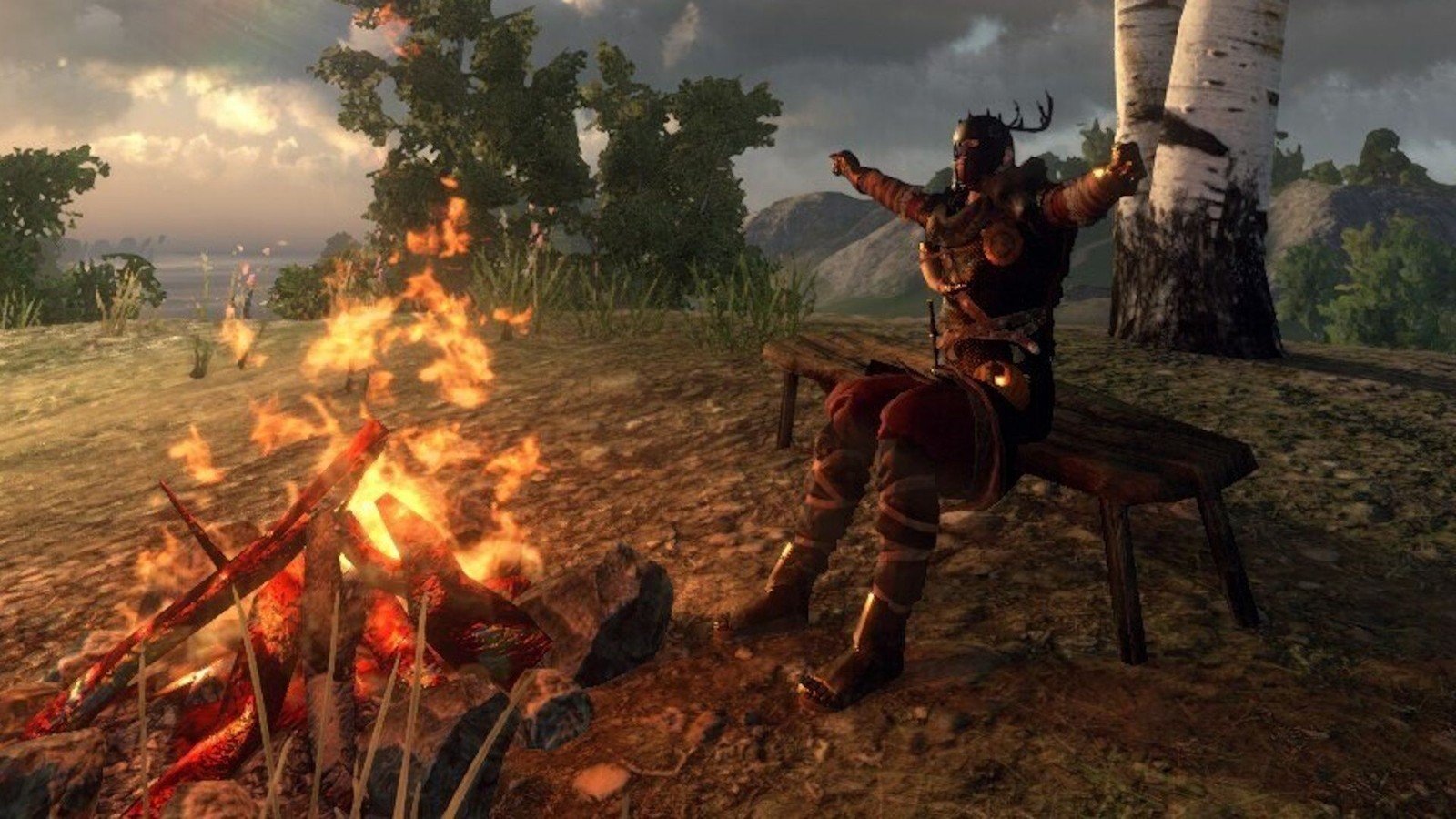
If you have recently been looking for an answer to the question “when can I play Gloria Victis again?”, there is good news: the medieval MMO, which was shut down in 2023, is being prepared for a surprise comeback under new ownership and with a free-to-play model.
This news matters not only to former veterans who once defended fortresses and took part in massive battles, but also to those who had written the game off as yet another ambitious project that failed to survive the challenging MMO market. Comebacks happen in the gaming industry, but an MMO returning after an official shutdown is far rarer and usually involves major structural changes.
Although there are currently few specific dates or details about the content roadmap, the very fact that “Gloria Victis” is getting a second chance offers hope for updated servers, a new development direction, and perhaps a new audience—especially if free-to-play is implemented fairly without undermining PvP balance.
Below is a focused yet detailed overview of what is known about the comeback, why the free-to-play model was chosen, which risks usually accompany projects like this, and how to prepare in practical terms so you do not miss the launch once it is finally revealed when you can play “Gloria Victis” again.
What Was “Gloria Victis,” and Why Did Its Shutdown Leave a Gap?
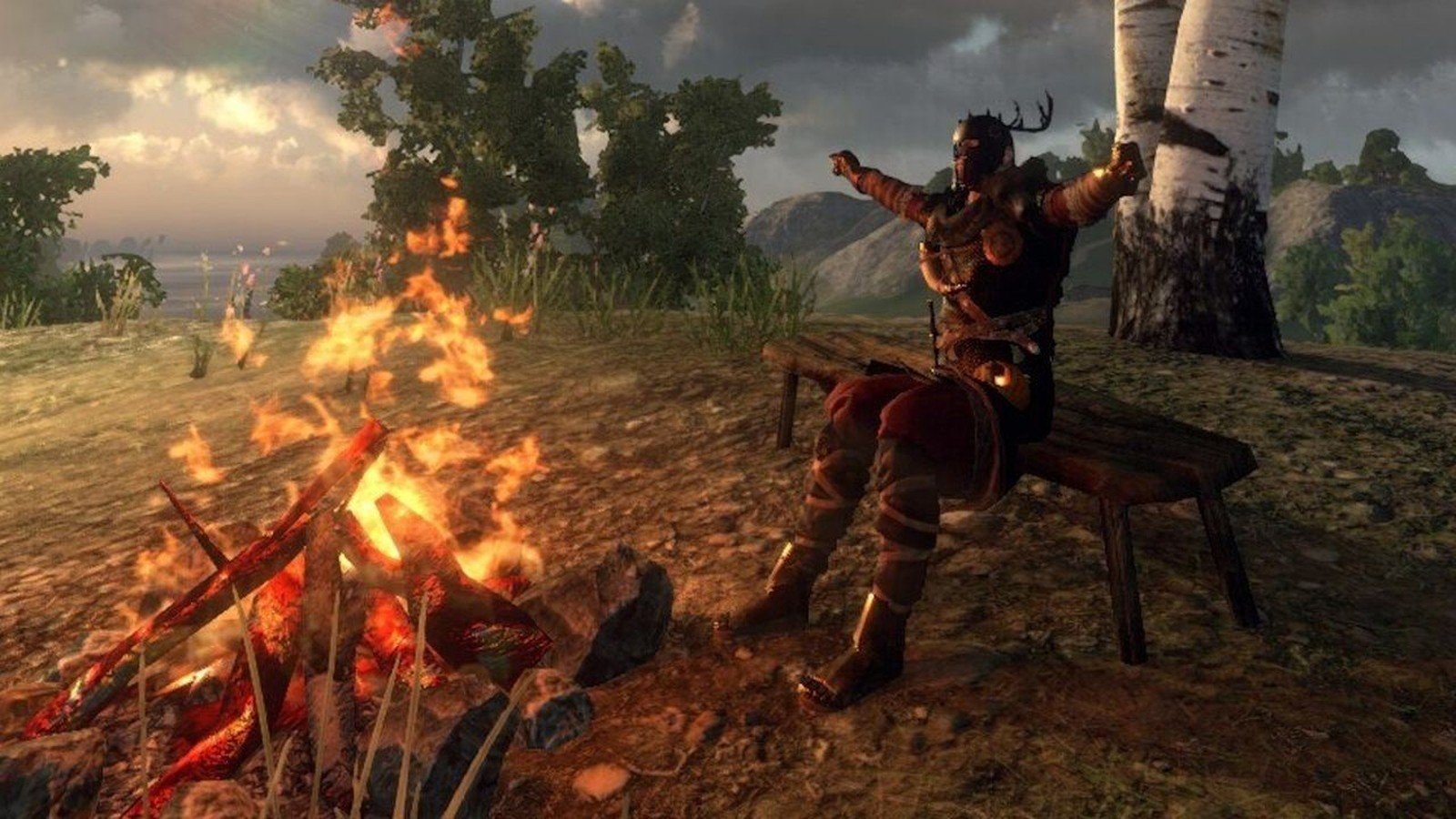
“Gloria Victis” had a clear identity for a long time: it was a medieval-themed MMO heavily focused on large-scale PvP, territorial control, and long-term conflict between factions. Unlike many theme park MMORPGs that emphasize instanced raids or story campaigns, the main driving force here was a living war—fortress sieges, expeditions into enemy territory, logistics, and the importance of community organization.
The project spent a long time in early access, while its full release lasted for a comparatively short period before the shutdown. This path is not unique: developing an MMO is expensive, requires constant infrastructure and a steady supply of content, and the player base must be large enough to maintain economic balance. When player numbers begin to fall, the game’s central promise also suffers—massive battles become smaller and less dynamic, while maintaining balance between factions becomes more difficult.
Nevertheless, “Gloria Victis” had a loyal core audience. Some players valued precisely what was missing from more “sterile” MMOs: an imperfect but organic medieval warfare simulation featuring player-controlled groups, political tensions, and real consequences for territories lost or won. As a result, the shutdown was more than simply taking the servers offline—for many, it meant losing their community’s home.
What Is the Comeback News? New Owners and a Free-to-Play Direction
The latest information about the return of “Gloria Victis” is linked to a change in ownership: the game is not being revived as the same project simply continuing through inertia, but as a product being taken over and relaunched by new owners. Cases like this usually point to one of two scenarios in the industry: either the goal is to preserve the game’s core formula while optimizing costs and redesigning monetization, or a broader transformation is planned, ranging from infrastructure to design priorities.
The clearest signal at the moment is the decision to move toward free-to-play. This may be an attempt to lower the barrier to entry and revive the player population more quickly. This is particularly important for a PvP MMO: the game is only as “alive” as the number of people playing it, while a paid launch after a long break often limits the returning audience to veterans.
However, free-to-play does not guarantee success on its own. The most important question for players will be how the game is monetized: will it focus on cosmetics and convenience features, or will there be a risk of pay-to-win mechanics, which are particularly damaging in a PvP environment? For now, the safest position is cautious optimism: it is exciting that the game is returning, but its actual quality can only be assessed once the specific policies and state of the game become clear.
When Can You Play Gloria Victis Again? What Is Clear and What Is Still Missing
The short answer is that an exact date has not been publicly confirmed in the way usually expected for major AAA releases. Returning MMOs often launch in stages: first comes a closed technical preview with server stability tests, followed by a limited beta, and only then a wider release. If the goal is to build an active community quickly, the first tests or a soft launch may appear before any major content expansions.
Practical advice for those asking “when can I play Gloria Victis again?”: watch not only the headlines but also the signals that usually appear before an actual launch. These may include updated store or distributor information, renewed activity across official channels, revised system requirements, new game builds, or registration forms for testing. Launching an MMO without a preliminary warm-up usually results in server problems, so even if the team wants to move quickly, several iterations will most likely be necessary.
Another important issue is regional infrastructure. Ping is critical in PvP games, so European players will want to know whether stable EU servers will be available and how peak-time loads will be handled. If the launch is global, the first few weeks often become a stress test, so it is worth expecting that the beginning may not be perfect, even with the best intentions.
What the Free-to-Play Model Could Mean for the PvP MMO Community
The free-to-play model has clear advantages: returning veterans can invite friends without any additional expense, while newcomers can more easily test whether the game’s style suits them. This is especially significant in the PvP MMO genre, where engagement often develops through group dynamics—guilds, squads, and faction coordination.
However, there are also obvious risks. The first involves cheating and smurf accounts. If entry is free, malicious players can return more easily after being banned, increasing the importance of anti-cheat measures, moderation, and reporting systems. The second concerns economic design. If monetization affects combat power, even indirectly through resources, convenience, or progression, the PvP community will notice it quickly because every advantage in battle has tangible value.
The best-case scenario would involve cosmetic monetization, additional visual items, convenience features that do not create a combat advantage, and a clearly communicated principle that “you can pay for style, not victory.” Whether the return of “Gloria Victis” follows this path will depend on the strategy of the new owners and how much they value long-term community trust.
New Owners: What to Realistically Expect From a “Resurrected” MMO
A change in ownership often means that the project will be evaluated through a new set of priorities: what is essential for the game to operate reliably and attract a critical mass of players. The first few months after a comeback are usually dedicated to the foundations: server stability, bug fixes, smooth combat systems, and protection against exploits.
This may seem boring to players because many people want new maps or mechanics. However, MMO history shows that the success of a revival usually depends not on a massive expansion but on a reliable core: whether battles work, whether the game remains stable during large-scale encounters, and whether controls and hit registration are predictable. In a PvP game, even minor inconsistencies quickly become frustrating.
Communication is also worth watching closely. Returning projects succeed when they clearly explain their direction, what will be done first, and what players should not expect “tomorrow.” If a roadmap is presented transparently, even a minimal one, the community will find it easier to remain patient during the transition period and contribute feedback rather than relying solely on speculation.
When Can You Play Gloria Victis Again, and How Can You Prepare for Its Return?
While waiting for more specific dates, it is worth preparing so that the launch does not take you by surprise. The first step is to organize your information sources and follow one rule: do not rely solely on something you “heard somewhere.” MMO comebacks quickly generate rumors about progression transfers, legacy accounts, compensation, and similar topics, but only official announcements and reliable media sources provide real value.
Second, be prepared for the launch to happen in stages. If tests are held, they may have limited time windows and require invitations. In that case, it is worth preparing the technical side in advance: free up storage space, update your drivers, and check the stability of your internet connection. PvP MMOs often struggle not because of graphics, but because of network and CPU loads when many players are on screen at the same time.
Third, prepare socially. Community has always been one of the strengths of “Gloria Victis”: playing alone is possible, but the real enjoyment comes from coordinating defenses, attacks, and resource transportation. If you have friends who enjoy realm-versus-realm conflict, agreeing in advance on when you will all try the game could provide the biggest boost at launch.
Finally, maintain realistic expectations. When people ask “when can I play Gloria Victis again?”, what often lies behind the question is a desire to return to an idealized memory. However, the returning game may be different: it may have a different economy, different progression, and perhaps rebalanced weapons or mechanics. It is worth approaching it as a new season or even a fresh start rather than an identical time capsule.
The Biggest Questions: Progression, Accounts, and Veteran Expectations
One of the most sensitive aspects of any MMO comeback is what will happen to old characters, items, and achievements. For veterans, this is an emotional issue involving invested time, collected equipment, and guild history. For the developers and new owners, it is a technical and design decision: whether to transfer data, start from scratch, or create a hybrid solution—for example, cosmetic or symbolic rewards for veterans while maintaining an equal starting line for competitive balance.
PvP-focused games often prioritize balance because even a small starting advantage can ruin the experience for newcomers. On the other hand, completely ignoring what the community previously had may reduce players’ desire to return. In practice, the best solution is usually clear, early, and transparent: explain what will be transferred, what will not, and why.
For now, the most important thing is not to believe claims about “guaranteed transfers” until there is official confirmation. A comeback under new ownership means that decisions may be made from scratch and that previous rules will not necessarily apply. This is inconvenient for players, but it is the reality when a project changes hands.
Could the Return of “Gloria Victis” Change the Medieval MMO Niche?
Medieval themes in the MMO market often compete with major fantasy titles dominated by magic, raids, and long-running franchises. “Gloria Victis” was always more focused on grounded conflict: steel, shields, crossbows, tactical decisions, and team discipline. If the comeback succeeds, it could become an alternative for players tired of progression based on “numbers” and looking for a more authentic sense of warfare.
In addition, the market has changed in recent years: players are more tolerant of live projects that improve over multiple seasons, but they also judge fair monetization more strictly. The revival of “Gloria Victis” is therefore also a test of whether a free-to-play PvP MMO can maintain balance and community trust instead of becoming a short-lived grinding and in-game store experiment.
If the new operators can deliver a stable launch, a clear path for newcomers so they are not crushed on their first evening, and a compelling endgame that gives guilds something to do for weeks, the game may be able to reclaim part of its reputation. MMO comebacks often succeed not through scale but through direction: a clearly defined audience and consistent support.
What to Expect in the Near Future: Signals Worth Watching
While waiting for more information, there are three things worth monitoring. First, watch for specific announcements about testing stages, including registration, dates, and server regions. Second, look for explanations of monetization and its core principles, especially regarding fairness in PvP. Third, watch for technical details about server plans, anti-cheat systems, and moderation. These factors often determine whether a launch will be sustainable or merely create a brief surge of activity.
If these questions are answered clearly, then “when can I play Gloria Victis again?” will no longer be a matter of speculation but a concrete plan: when to gather your team, when to expect the first serious battles, and when the game is likely to establish a stable rhythm.
For now, the most important message is simple: the story of “Gloria Victis” is not over yet. This is a rare case of a closed MMO receiving a second chance—and players getting an opportunity to return to a familiar but potentially renewed medieval battlefield.