
 LT
 DE
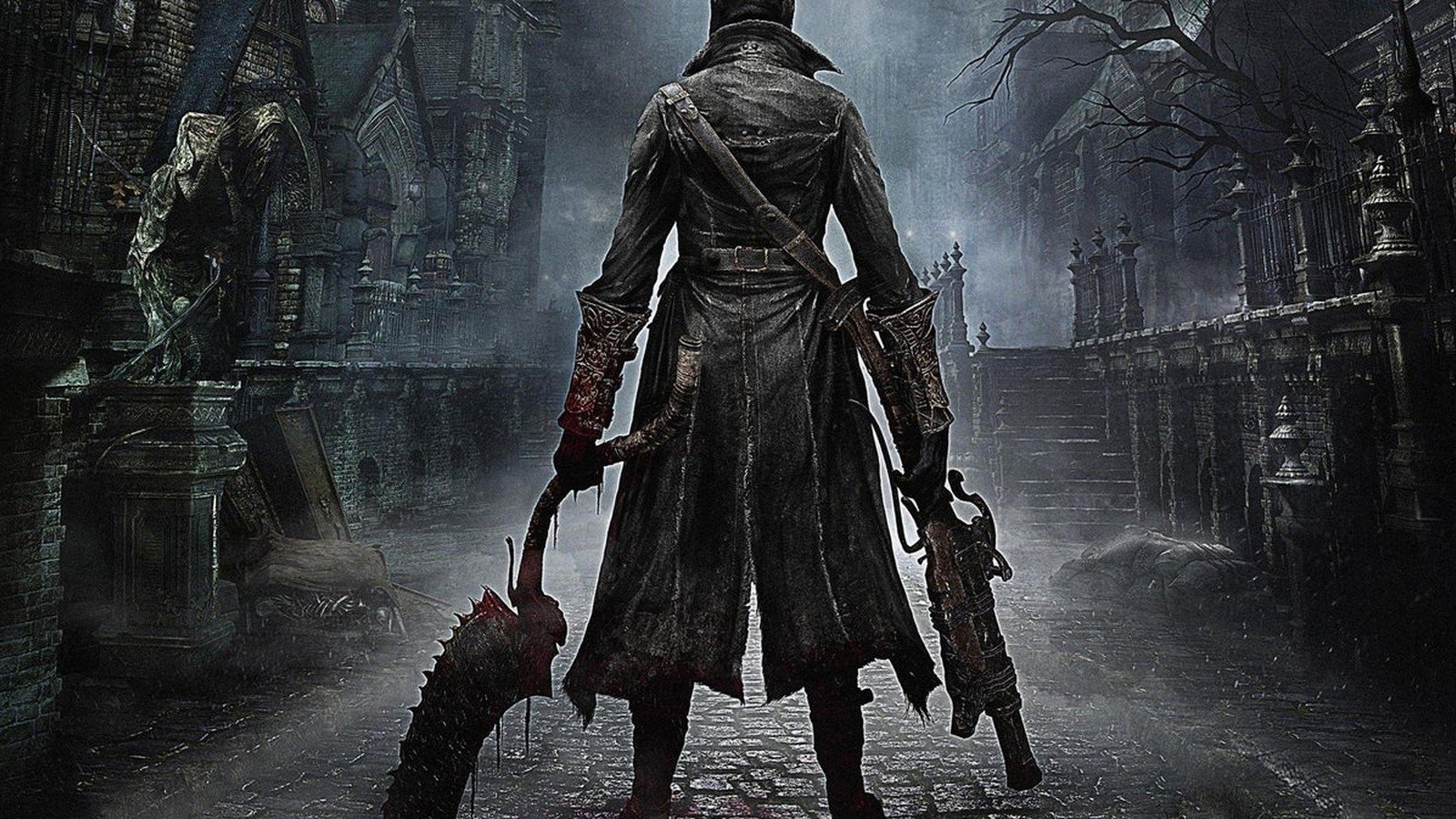
“Why did FromSoftware reject a Bloodborne remake?” This question has once again become one of the hottest topics in the PlayStation community following a new report claiming that Bluepoint Games pitched the idea for a remake, only for it to be rejected not by Sony, but by the original developer, FromSoftware. Although neither side has officially confirmed this, the detail changes the usual narrative, in which the publisher or platform holder is most often blamed.
The context is especially important here: Bloodborne (2015) is one of the defining symbols of the PS4 era and is still frequently mentioned alongside the generation’s best exclusives. At the same time, it is also a game whose technical state today is, to put it mildly, in need of an upgrade—from a stable 60 FPS mode to a higher resolution or faster loading times. That is why every hint of a remake or even a simple update immediately makes waves.
The report emerged at a sensitive time: just a few days earlier, news had circulated about changes to Bluepoint’s status and decisions being made by Sony regarding team structures and project direction. Some players connected this to Bloodborne’s future, but the new account shifts attention toward another, often invisible area—creative control and licensing agreements between studios.
What Really Happened With Bluepoint’s Proposal
According to the published information, Bluepoint had reportedly prepared an idea for a Bloodborne remake and presented it, but the proposal was rejected by FromSoftware. This claim alone is significant because Bluepoint has an exceptionally strong reputation in the field of remakes: the studio became known for both its meticulous Shadow of the Colossus remake and its reconstruction of Demon’s Souls for PS5, which became a benchmark for quality in the eyes of many players.
However, even a team like this needs more than technical expertise. Remakes are not just about better textures or lighting. They involve decisions about animation timing, the “weight” of the controls, artistic direction, and sometimes even what is “allowed” to be changed at all. In Bloodborne’s case, its artistic and design identity is particularly sensitive: the gothic nightmare that later shifts into cosmic horror is an exceptionally carefully calibrated experience in terms of tone.
Another important detail is that projects of this kind usually require approval from several parties: the platform holder—in this case, Sony—the departments overseeing the IP’s interests and rights, the original developers, and the studio that will actually “make” the remake. If even one link in that chain does not see sufficient value, the balance between risk and reward changes, and the project may be halted at an early stage.
Why FromSoftware Rejected the Bloodborne Remake: Creative Control and Vision
If the report is accurate, the most logical first question concerns creative control. FromSoftware games often have a very specific “feel”: the pace of combat, stamina management, animation commitment, camera behavior, and even nuances such as the metallic sound of a hit or the echo of footsteps in different spaces. A remake, especially one developed by another studio, could unintentionally “polish away” something that forms an essential part of the original’s character.
The PS5 remake of Demon’s Souls is a perfect example of how a technical leap can spark debate over interpretation. Although many praised its visuals and smooth performance, some fans criticized certain changes to the artistic direction that, in their view, strayed from the original’s atmosphere. If FromSoftware saw this as a risk internally, it would be natural for Bloodborne—a game with an even more distinctive style—to be protected more strictly.
There is also a reputational aspect: if the remake turned out “wrong,” the public would associate the result not only with Bluepoint, but also with the FromSoftware name. For a studio that has become one of the industry’s most influential developers over the past decade and maintains exceptionally high expectations, that is a significant risk. Sometimes it is easier to say “no” and avoid a project that you cannot fully control.
Finally, the creative vision may be connected not to a “current” remake, but to “future” plans. Even if nothing has been announced, studios often consider whether a remake might interfere with a potential sequel, a separate project, or even a different kind of return to the same universe. If there are ideas that would require a “clear” release window, a remake could be viewed as noise that confuses the message being sent to the audience.
Why FromSoftware Rejected the Bloodborne Remake: Technical and Production Reasons
Even if everyone agrees on the creative side, the technical reality remains. Bloodborne was developed around the specific limitations and optimizations of the PS4 era. A remake would involve not only new graphics, but also an enormous amount of testing, compatibility work, and quality assurance. The more closely the team wants to “preserve the original,” the more carefully it must reproduce the game’s hidden systems: hitboxes, animation frame logic, enemy behavior scripts, and even minor bugs that sometimes unintentionally become tricks used by the community.
Furthermore, there is more than one technical approach: the discussion could involve either a remaster or a remake. A remaster would often be cheaper and faster, but it would require access to the code, tools, and specialists who understand the old infrastructure. A remake would be more expensive, but it would provide greater freedom. The paradox is that both options create friction: either the team must dig deeply into old technology, or it must rebuild the system from scratch in a way that feels identical.
FromSoftware is currently known for its intense project pace and its clearly recognizable priority of creating new games and expansions. Even if another studio developed the remake, the original creators would still need to dedicate resources to consultations, approvals, and supervision. When a team has limited attention to spare, that oversight may be considered too costly compared with the potential benefits.
The platform question is also important from a production standpoint. Bloodborne is closely tied to the PlayStation ecosystem, so any major return would automatically create expectations for a PS5 version and perhaps even a PC release. The broader the audience, the more work is required: different testing scenarios, performance profiles, and even additional adaptations. If it is unclear whether the project would be merely a platform-specific update or part of a larger strategy, postponement becomes a rational choice.
Sony, Bluepoint, and the Question of Responsibility: What This News Changes
For a long time, public discussions were dominated by the assumption that Sony simply did not want to invest in Bloodborne’s return or was in no hurry to do so. An alternative explanation has now emerged: even if the platform holder saw a strong business case, it might still depend on the developer’s position and contractual limitations. This does not mean that Sony has no influence, but it demonstrates that the decision-making process is often more complicated than “the publisher said no.”
Bluepoint’s case is symbolic here. The studio was considered one of the most reliable teams when it came to big-budget remakes, while Demon’s Souls became a technological showcase during the PS5 launch period. If even a team like this did not receive the green light for a Bloodborne project, it suggests that the problem may lie not only in money or expertise, but also in the architecture of “approvals”: who has the final say over the tone, design, and even minor aesthetic decisions.
For players, this is also an important lesson about the industry: the IP owner, the platform holder, and the original studio may have overlapping but not identical interests. Some want a larger catalog for new consoles, others want to protect a creative legacy, while others prefer to focus on new products. When these directions do not align, even an “obviously desired” project may remain on the shelf.
What Fans Really Want From Bloodborne’s Return
When discussing Bloodborne, the conversation is often reduced to “just give us 60 FPS.” To some extent, that is fair: stable performance and a higher resolution would provide the biggest improvement to the everyday experience. However, fans’ expectations are broader: faster loading, more vivid HDR, better anti-aliasing, more convenient accessibility features, and perhaps even some quality improvements for online modes.
However, every additional improvement raises another question: where does an “update” end and a “reinterpretation” begin? For example, if a remake rebalanced certain areas, changed animations, or improved hit detection, some players would welcome it, while others would see it as a betrayal of the original’s spirit. FromSoftware games are particularly sensitive when it comes to their “feel,” so the developers may fear that a remake would create more conflict than joy.
It is also important that the Bloodborne community has developed its own distinct culture over the years: routes, challenges, speedruns, and specific boss strategies. Even a faithful remake often changes minor details that disrupt this culture. For some, that would be refreshing; for others, it would be a reason to stick with the original. Such a divide may also affect how studios assess the project’s risk.
Is It Realistic to Expect at Least a Remaster? Smaller Scenarios and Compromises
If a full remake seems too ambitious, there are intermediate solutions available on the market. One would be a remaster with minimal visual changes but a major performance boost. Another would be a PS5 update (patch) that could theoretically enable a higher frame rate, provided the architecture allows it and the game’s logic is not dependent on the frame rate.
However, even these scenarios are not automatic. In some games, the frame rate is tied to animations, physics, or time calculations, meaning that a “simple” switch to 60 FPS can cause unexpected issues. That means additional engineering work, testing, and certification. If FromSoftware is not interested in reopening the old technical foundation and allocating resources to it, even minor updates may stall.
Nevertheless, players would often accept a compromise: even a “minimal” update that delivered smoother visuals and less input lag would significantly improve the experience. The only question is whether that aligns with the interests of all parties and whether anyone is willing to take responsibility for the result.
Why This Topic Will Not Go Away: Bloodborne’s Significance and Market Logic
Bloodborne has become more than just a game—it is a kind of benchmark demonstrating how boldly gothic aesthetics, an aggressive combat philosophy, and storytelling based on hints rather than direct explanations can be combined. That is why every discussion about a remake is also a discussion about how creative legacies are preserved in the modern industry.
From a business perspective, remakes often appear logical: they come with an established name, a clearly defined audience, and lower marketing risk. However, Bloodborne also presents another factor—the sheer scale of expectations. If the remake were only “prettier,” some players would be disappointed. If the remake were “too different,” another group would be disappointed. When the risk of polarization is high, decision-makers may choose to wait for a “better” moment.
Furthermore, the question of a remake is closely connected to platform strategy. The value of the PlayStation library is often strengthened specifically through exclusive games. Bloodborne’s return could be used as a strategic product—but a strategic product also requires strategic alignment. If FromSoftware does not want to move in a particular direction, Sony may choose other priorities instead of creating conflict over a single project.
What This Means for Players Right Now
In practical terms, this news primarily means that a Bloodborne remake is not simply a “forgotten” project that can easily be pulled out of a drawer. If there really was an attempt and it was rejected by FromSoftware, then the decision was likely deliberate rather than accidental. This reduces the likelihood that a major remake will suddenly be announced in the near future solely because of pressure from fans.
On the other hand, such rejections are not necessarily final forever. Projects return in different forms throughout the industry: sometimes team structures change, sometimes technological solutions evolve, sometimes contractual terms are revised, and sometimes a clearer “reason” to return simply emerges—for example, a series anniversary, a new platform, or the success of another game. Therefore, “no” today does not mean “no” forever.
For now, the most rational position for players is to separate desire from reality: a remake is a complex decision that requires creative, technical, and business interests to be aligned. And this story, regardless of how many of its details remain unconfirmed, helps explain why even “obvious” projects sometimes never become official announcements.