
 LT
LT
 DE
DE
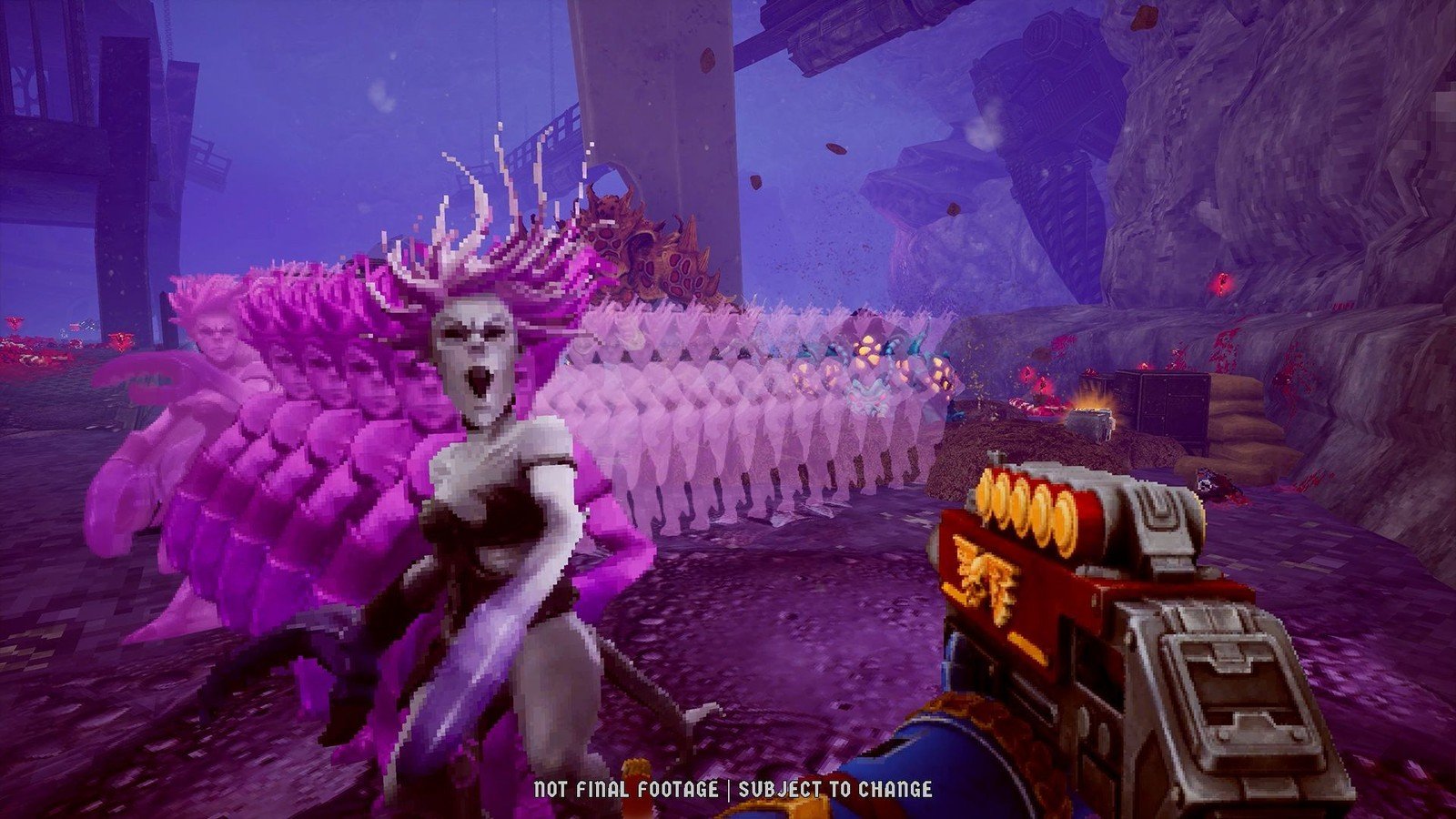
Boltgun 2 release date is one of the most frequently asked questions among Warhammer and retro FPS (boomer shooter) fans following the release of new information about the upcoming sequel. Although we do not yet have an exact date, the news sends a clear signal: the world of Boltgun will be expanded, with the spotlight shifting directly toward one of the most striking and controversial Chaos Gods.
The latest reports and discussions about the game emphasize that Boltgun 2 could become the Warhammer game that finally takes a more serious look at Slaanesh—the Chaos God of hedonism, excess, and temptation. This direction matters not only because of the lore, but also because of how it could change the game’s tone, enemy design, and combat dynamics.
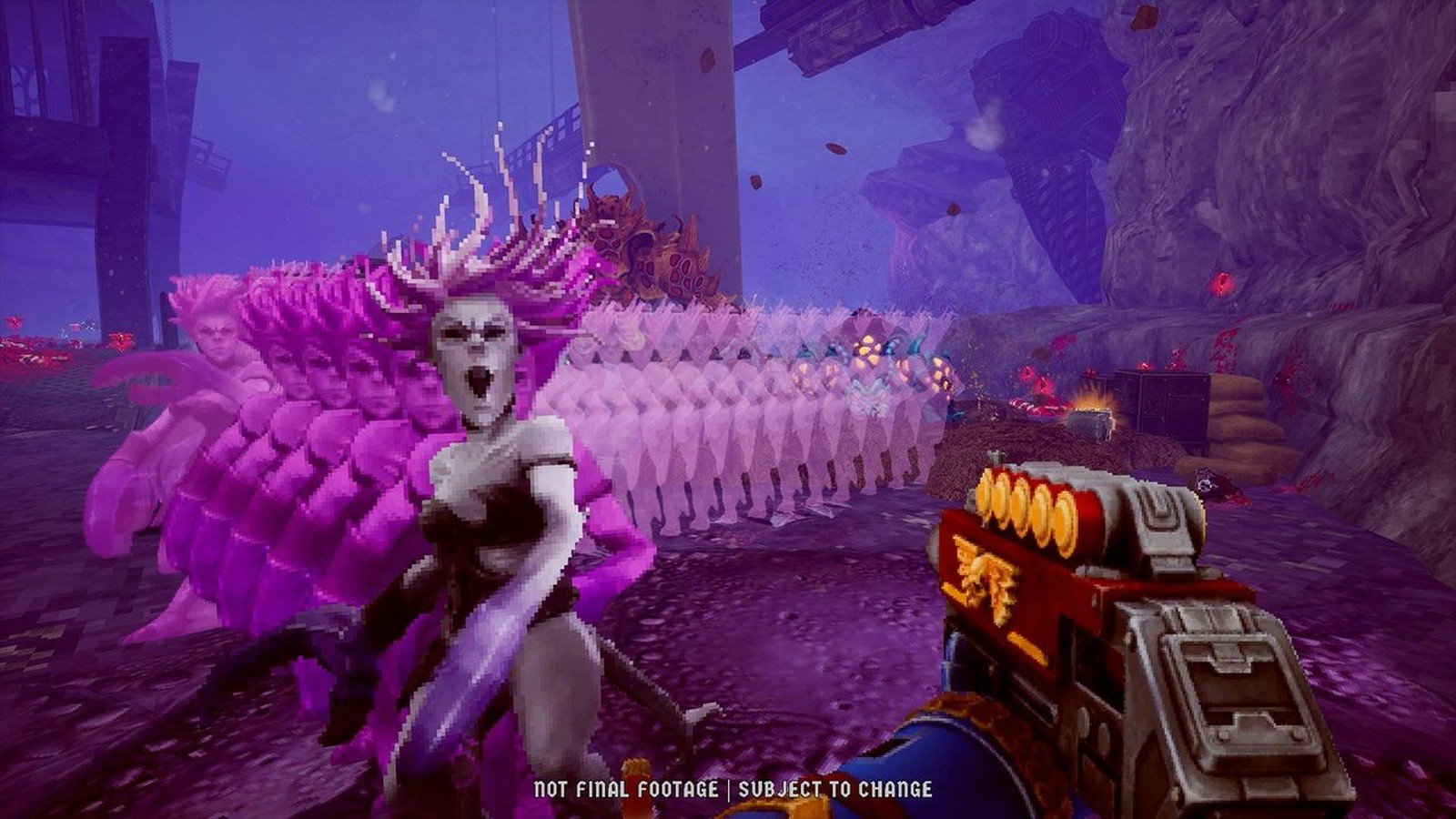
While many remember the first Boltgun as an aggressive, fast-paced, and deliberately old-school shooter infused with the Warhammer 40,000 aesthetic, the sequel appears ready to raise the bar in areas that matter most to boomer shooters: enemy variety, pace management, and memorable encounters. This is directly connected to another claim discussed by the sources: “good luck trying to hit the Daemonettes.”
Boltgun 2 release date: what we know now
For now, the most important news is simple: people are discussing the direction and content of Boltgun 2, but a specific Boltgun 2 release date has not yet been officially confirmed in a way that could be considered final. This is a common situation during the early stages of communication, when developers or publishers first want to establish the game’s concept, tone, and main selling points before moving on to more precise release plans.
Nevertheless, the news itself is important because it defines what will be discussed in the coming months: the Slaanesh theme, daemonic enemies—including Daemonette-type foes—and likely a greater focus on how enemies move, how difficult they are to line up in your sights, and what kind of reflexes players will need. Such talking points often mean that the development team already has a clear creative vision, which is usually one sign that the project is entering a more active promotional stage.
In other words, if your goal is to get a reliable answer about when the game will launch, it is worth separating two things: (1) what has already been communicated about its content and direction, and (2) what has not yet been announced regarding dates, platforms, or final publishing plans. Until there is an official announcement with a specific timeframe, any dates would be nothing more than speculation.
Why the Slaanesh direction is big news for Warhammer games
In the Warhammer universe, the Chaos Gods often take center stage in games, but their interpretation varies from one project to another. Some gods—for example, those associated with war, disease, or magic—are often presented fairly directly in games, making it easier to create a clear visual identity and a recognizable threat. Slaanesh is more complicated: this deity’s themes revolve around excess, temptation, aesthetics, and psychological pressure.
Because of this, Slaanesh is more often left in the background or used only in fragments—especially when developers want to avoid an inappropriate tone or overly risky portrayals. Therefore, the fact that Boltgun 2’s direction is associated with a desire to finally “give Slaanesh its due” could signal a bolder approach to the horror and grotesque elements of Warhammer 40,000.
This also matters to players on a practical level: a new theme usually introduces new enemy types, attack patterns, weapon balance changes, and different approaches to level design. If Slaanesh’s influence becomes more prominent, players can expect more deceptive or agile enemies rather than only traditional targets that slowly move toward them.
“Good luck hitting the Daemonettes”: what this could mean for gameplay mechanics
At first glance, the brief remark about how difficult it will be to hit Daemonette-type enemies sounds like a joke, but in the context of boomer shooters, it points to a very specific design choice: enemies that move unpredictably, rapidly change direction, leap, dodge sideways, or otherwise force players to rethink their usual shooting habits.
If the first Boltgun was, for many players, built around aggressive charges, overwhelming firepower, and constant movement, the sequel could push the limits of their skills even further. Agile enemies mean that simply spraying and praying may no longer be enough. This could encourage more frequent weapon switching, more precise use of brief opportunities, and better control of the surrounding space.
Another aspect is also worth considering: if Daemonettes or similar enemies are difficult to hit, the developers will probably have to balance the threat they pose against the tools available to the player. This could mean clearer telegraphing before attacks, specific weaknesses, or weapons particularly well suited to dealing with such targets.
Boltgun 2 release date and what to expect from pre-launch communication
Until the Boltgun 2 release date is announced, the usual drip-feed period is likely to begin: first come highlights about the game’s direction and themes, followed by the first substantial videos, platform confirmations, and finally encouragement to place pre-orders or add the game to wishlists. This is a fairly standard sequence in the gaming industry, especially for a project that needs to appeal to both the Warhammer audience and boomer shooter fans.
At this stage, it is worth watching for clear release windows, such as “2026” or “the first half of next year,” because these are often the first official steps toward announcing a specific date. Some publishers deliberately avoid exact dates until they are 100% certain about the production schedule, particularly when several platforms are planned or when they want to avoid competing with major AAA releases.
In practical terms, if you want to be among the first to receive reliable information, it is worth following the game’s official channels and major gaming news websites. Confirmations usually appear through these channels first, followed by more detailed analyses and interviews.
Understanding the Boltgun phenomenon in the context of boomer shooters
Boltgun stood out because it brought two audiences together: for some, it was another excellent retro FPS, while for others, it was an opportunity to experience the Warhammer 40,000 universe through a game focused not on strategy or tactics, but on instinct and speed. Several features define this genre: distinctive weapons, impactful hit feedback, an aggressive pace, fewer cinematic sequences, and a stronger emphasis on gameplay flow.
With a sequel, the biggest challenge is often not to simply “make more of the same,” but to find a new hook that preserves the original identity while expanding the experience. The Slaanesh theme and agile enemies could become exactly that kind of hook: they do not change the genre, but they do change the nature of the encounters. If enemies force you to reposition, make faster decisions, and plan your firing opportunities more carefully, it naturally creates the feeling of a true sequel rather than just another repetition.
Another important aspect is the tone. The Warhammer 40,000 universe is broad, ranging from gothic militarism to cosmic horror. A Slaanesh-focused direction could introduce more psychological tension and a contrast between strange beauty and revulsion, which often works particularly well in boomer shooters because they favor bold, recognizable enemy silhouettes and color palettes.
How Slaanesh could affect level design and atmosphere
If the developers fully embrace the Slaanesh direction, it is likely that not only the enemy roster but also the environmental visual storytelling will change. Slaanesh’s influence in the Warhammer universe is often associated with distorted luxury, ornamentation, provocative symbols, and an unsettling sense of excess. In the game, this could translate into more labyrinthine corridors, unexpected passages, deceptive decorations, or geometry that forces players to check corners more frequently.
From an atmospheric perspective, this offers an opportunity to create tension not only through darkness or blood, but also through contrast: beautiful yet horrifying, enticing yet threatening. Such choices could work well in a fast-paced FPS as long as they do not reduce visual readability—in other words, as long as the player can still clearly see enemies, projectiles, and hazards.
It is also possible that if Daemonette-type enemies are agile, level spaces will be designed to encourage circling and strafing—moving around enemies, dodging sideways, and taking advantage of verticality. This is not guaranteed, but it would be a logical consequence if the design aims to keep the player constantly moving.
What players should know while waiting: how to follow news and avoid misleading “dates”
As soon as the first articles about a sequel appear, “release dates” quickly begin circulating online that are actually either speculation or automatically generated entries in store catalogs. Therefore, those waiting for the game should apply a simple filter: reliable information comes from an official announcement, the publisher or developer, or a clearly cited interview. Everything else is just noise.
If your goal is not to miss genuine information about the Boltgun 2 release date, the best strategy is to follow several sources: official developer and publisher channels, major gaming news websites, and news roundups from Warhammer communities. Once the date is announced, it will probably be repeated across many different platforms rather than appearing only in a single anonymous post.
Another practical tip is to pay attention to the wording. “Planned,” “targeted,” “expected,” and “hoped for” do not mean the same thing as “confirmed” or “releasing.” Until there is official confirmation, it is worth maintaining a healthy level of skepticism, especially when a specific day or month is mentioned.
What to expect from Boltgun 2’s gameplay if this direction is confirmed
Although official details about all of the game’s systems may still be scarce, its direction allows several likely scenarios to be outlined. First, greater enemy variety could mean that combat becomes less linear: fast, heavy, and ranged enemies might attack simultaneously, forcing players to shift priorities quickly. This kind of combination creates the best tension in boomer shooters because players must constantly decide which threat is the most dangerous at that moment.
Second, if Daemonette-type enemies are being highlighted as difficult to hit, there will likely be more situations in which maintaining distance, playing around corners, and preparing in advance become important. This could encourage the developers to give players more tools, ranging from weapons that are more forgiving of inaccurate shots to alternative fire modes or area-of-effect (AOE) solutions.
Third, the Slaanesh theme could affect not only the aesthetics but also status effects or psychological disruptions if the developers decide to use them. However, it is important to emphasize that until these mechanics are officially confirmed, they remain logical interpretations rather than facts.