
 LT
 DE
Today, in 2026, a natural question arises: Is Left 4 Dead 2 worth playing in 2026 when the selection of co-op shooters and live-service games seems endless? This game is considered one of the classic examples of the team-based action genre, but its age is not purely a drawback: sometimes it is precisely the simplicity, clear objectives, and strong team flow that make the experience appealing even now.
The essence of Left 4 Dead 2 is not a “grand story” or a complex progression system, but tense, fast-paced, and often unpredictable sessions in which four players must survive, keep moving forward, and make decisions under time pressure. If you enjoy chaotic action where the situation can change within seconds, this game can deliver a highly concentrated and refined co-op experience.
Still, it is worth setting realistic expectations: community servers, different modes, varying player skill levels, and an older technical foundation can sometimes create friction. Below is a clear, neutral assessment of who Left 4 Dead 2 suits best, what makes it so appealing, and what may become frustrating if you are playing it for the first time or returning after a long break.
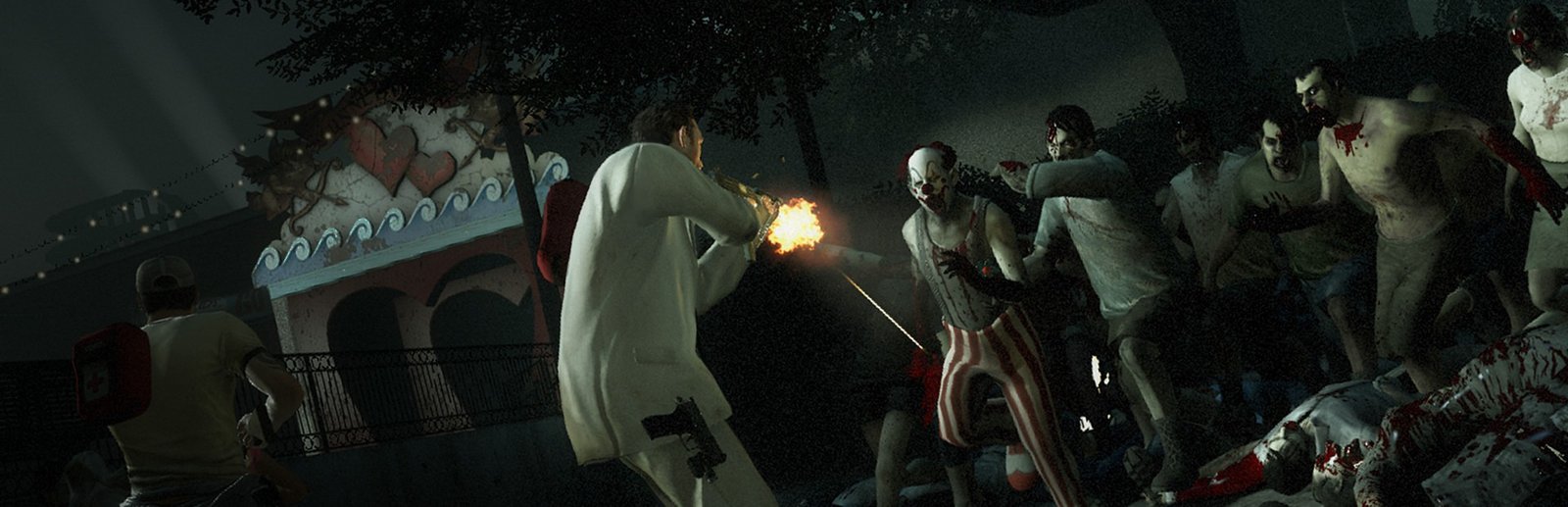
Quick summary
- If you enjoy risk, tension, and competition – Left 4 Dead 2 can be highly engaging.
- If you are looking for relaxed progression and a “stable” experience – the game may become tiring.
- The game often works best with friends, because it is easier to plan and compensate for mistakes as a team.
- Solo play is possible, but it usually requires more patience, caution, and a hit-and-run mindset.
- Your choice of server and mode often determines whether you will enjoy the game during the first few hours.
Who is this game for?
It will suit you if:
- You enjoy a clear sense of risk and reward, as well as tension.
- You like learning through experience and mistakes.
- You want a social element: communication, negotiation, or tactics.
- You enjoy challenges and skill-based progression.
- You play with friends or enjoy team-based dynamics.
You may not like it if:
- You want a relaxed pace and guaranteed progression.
- You dislike sudden losses or being “punished” for mistakes.
- You are looking for a strong story or an “A-to-Z” campaign.
- You want extremely short sessions without much involvement.
- You dislike competition or pressure from other players.
Which mode or server is best for beginners?
New players should usually begin somewhere with less chaos and more room to learn the basics, as this can make the first impression significantly better.
- Vanilla – an authentic experience, but often stricter and more unforgiving for beginners.
- Modded / boosted – less routine, faster progression, and more room to experiment.
- Solo/Duo/Trio limits – better balance if you play alone or with one or two friends.
- Moderated community servers – often provide a friendlier culture and clearer rules.
What kind of game is it, and who is it for?
Left 4 Dead 2 is a co-op action shooter in which teamwork matters more than individual hero moments. The typical scenario is simple: the team travels through different sections known as campaigns, overcomes obstacles, deals with sudden attacks, and tries to reach a safe area. As straightforward as that may sound, the pace of the game often becomes unexpectedly intense.
This game is often recommended to players who enjoy clear rules and immediate feedback: make a mistake, and the team will feel it right away; play in a coordinated manner, and progress will be smooth. Because of this, Left 4 Dead 2 suits players who like learning on the move. After every failed attempt, you want to tackle the section again in a smarter, cleaner, and safer way.
In terms of genre, it is an action game with a touch of survival. Shooting is only one part of it: positioning, team formation, the ability to retreat, staying together, and not panicking when the situation suddenly turns chaotic are all extremely important. The game constantly forces you to make decisions: do you save a teammate while putting yourself at risk, or stabilize the situation first?
If you are looking for a game where completing the “main campaign” is the only objective, Left 4 Dead 2 may seem too focused on replayability. Its strength is not a one-time journey through the story, but the constantly changing feel of each session: sometimes it is easy, sometimes unexpectedly brutal, and sometimes comically chaotic.
Another important aspect is the role of the community. Although the core experience is clear and self-contained, in practice, much depends on where and with whom you play: with friends, random players, on official or community servers, with standard rules, or with more “experimental” settings. As a result, the same game can leave completely different impressions.
What you will like most (strengths)
- A clear co-op foundation. The team is not an “extra” here – it is the foundation on which almost everything depends. Even simple decisions, such as where to stand and when to move, become important as the pressure increases.
- Tension that builds naturally. The game can create moments where everything shifts from “everything is fine” to “every player for themselves” within a second. This appeals to those who enjoy adrenaline rushes and unexpected situations.
- A fast learning cycle. The consequences of mistakes are usually clear, so progression is felt not through numbers, but through skills: better movement, cleaner communication, and smarter risk assessment.
- A structure suited to short sessions. You do not need to commit an entire evening to accomplish something – you can play through individual stages and reach a clear stopping point. This is convenient if you enjoy concentrated experiences.
- Team flow. When four players begin to understand one another, a satisfying rhythm emerges: who provides cover, who gathers resources, and who watches the surroundings. During moments like these, the game feels highly polished and enjoyable.
- Good value through replayability. Even without the need to grind for items, the experience can remain interesting simply because different situations force you to play differently. This is especially true if you occasionally change the difficulty or your team.
- An easy-to-understand objective. Beginners benefit from the game’s clear premise: keep moving, survive, and help the team. You do not need to learn complicated systems before you can start having fun.
- The social aspect. With friends, the game often becomes more than just shooting. It also involves communication, planning, laughter, and after-action discussions. This is one of the reasons it has held up so well over the years.
- Different modes for different moods. When you want to relax, you can choose one type of game; when you want competition, you can choose another. This provides flexibility when members of the team have different preferences.
- Potential for mods and community content. If the standard experience becomes repetitive, there are often ways to expand it. Just avoid jumping into the most chaotic options during your first few hours.
- It does not follow the “latest PC required” philosophy. Because it is a game from an older generation, it is a convenient choice for many players who want co-op action without high technical requirements. The actual experience still depends on your specific system and settings.
- Clutch moments. Sometimes one correct decision, a well-timed resource, or a calm retreat can save an entire run. These moments provide intense satisfaction without artificial spectacle.
What may become frustrating (weaknesses)
- An inconsistent experience depending on the team. With friendly people, the experience is excellent, but when playing with people who rush, react angrily, or completely fail to coordinate, fatigue sets in quickly. The game is particularly sensitive to team chemistry.
- Difficulty spikes for beginners. During the first few hours, it may feel as if everything is happening too quickly, especially if you choose the wrong mode or set the difficulty too high. Sometimes you need to deliberately slow down and learn the basics.
- Chaos can overwhelm the sense of control. If it is important to you that the outcome always remains directly in your hands, unexpected attacks and chains of mistakes may become frustrating. The players who succeed here are often those who accept chaos as part of the game.
- An older-generation feel. The animations, interface design, or certain technical details may not feel as modern as those in newer games. Some players will not mind, while others may find them distracting.
- The storytelling style will not appeal to everyone. If you are looking for a strong, cohesive story with a clear beginning and ending, there may not be enough of it here. Left 4 Dead 2 relies more on atmosphere and individual moments than on plot twists.
- Differences in public server culture. Rules, attitudes toward beginners, and the overall atmosphere may differ from one place to another. Sometimes you need to search for the right community before finding a comfortable option.
- The communication barrier. The game is especially good when the team communicates or at least understands what everyone else is doing. If you dislike any form of social pressure or want to play in complete silence, the experience may not be as smooth.
- Replayability is not equally appealing to everyone. Although situations change, the overall structure usually remains similar: movement between points, waves of tension, and final encounters. If you value a constantly changing format, you may find the variety lacking.
- The sense of balance depends on the mode. Some modes feel fairer and more welcoming, while others are more aggressive and designed for experienced players. Choosing the wrong one can give you a misleading impression of the entire game.
Game pace, difficulty, and grind
The pace of Left 4 Dead 2 often comes in waves: a quieter section, a sudden encounter, another brief moment to recover, and then fresh pressure. This rhythm is one of the reasons the game works so well in shorter sessions – it always feels as though one more attempt could be the run where everything falls into place.
For many players, the difficulty becomes the main hook, but it is important to understand that it is not simply about having more enemies. A greater challenge more often means less tolerance for mistakes: poor positioning, missing a teammate’s signal, or rushing into an unclear area too quickly can come at a high cost. If you enjoy the feeling of a game demanding discipline, there is plenty of it here.
When it comes to grinding, classic Left 4 Dead 2 is not based on constantly farming resources or following a long progression curve. Progress here is more internal: better map awareness, more efficient movement, improved team decisions, and the ability to remain calm when chaos puts you under pressure. Because of this, some players find it refreshing – fewer systems, more action.
However, if you are used to modern games that constantly reward you with new cosmetic items, levels, or daily challenges, Left 4 Dead 2 may feel “thin” in terms of its metagame. It is worth approaching it with the right mindset: the enjoyment comes from successful runs, not from expanding your inventory.
Another nuance is that different servers and community rules can significantly alter the pace. In some places, the game is more tactical; in others, it is more arcade-like. If you do not enjoy your first experience, it is worth trying a different environment, because sometimes the problem is not the game itself but the way you chose to play it.
Solo or with friends?
Left 4 Dead 2 usually shines brightest with friends because communication becomes natural. Even simple agreements such as “stay together,” “the first player provides cover,” or “fall back to the corner” create a sense of stability that random teams sometimes lack. In addition, mistakes made with people you know are more likely to become funny stories rather than conflicts.
When playing with random players, the experience can vary greatly. Sometimes you join a disciplined team and enjoy an excellent sense of cooperation, while other times you end up with a mixture of conflicting goals: one player rushes ahead, another pursues “perfection,” and a third simply experiments. This is normal for a game with such a diverse community.
Solo mode is theoretically possible, but it often feels more like a compromise: the team-based dynamics remain, but they do not always work as smoothly as they do with real people. If you are a player who enjoys learning at your own pace, observing, and testing different decisions without social pressure, solo play can be a good training ground.
A simple principle often helps beginners: first create a “safe” experience where you can learn the fundamentals, and only then move into more intense social chaos. This is especially relevant if you do not want your first few hours to be filled with frustration. The more clearly you understand your objective – learning, having fun, or competing – the easier it becomes to choose the right group and mode.
If you have one or two friends, it is often worth choosing an environment where the team size and rules allow you to feel more confident. The game then becomes less about randomness and more about meaningful decisions and shared progress.
How long does it take, and is it worth the price?
Left 4 Dead 2 is not the type of game you complete once and then put aside. Even if you finish several campaigns, its real value often becomes apparent later: when you begin to understand situations better, try other difficulty levels, change your team, or explore different modes. As a result, the game’s “length” depends heavily on whether you enjoy replayability and improving your skills.
If your main priority is a single cohesive narrative and a clear finale, the game may seem shorter than expected. However, if you are looking for a co-op experience that can be replayed in different moods – seriously, casually, or as a learning experience – its value often becomes obvious.
The question of price usually comes down to how often you genuinely plan to return. The game can be an excellent purchase if you want to keep a co-op option readily available for an evening with friends. On the other hand, if you know that this type of shooter quickly exhausts you, it is better to approach it cautiously and look for more narrative-driven or relaxed alternatives.
It is also important to remember that your choice of server or mode has a major effect on the experience. If you immediately find an environment that suits you, the chances of the game paying off emotionally will be higher. If your first sessions are chaotic, it may seem as though the game offers little value – when in reality, you simply have not found the right format yet.
A neutral piece of advice: before making a final decision, clearly ask yourself what you are looking for – competition, team tactics, or simply some casual zombie shooting with friends. Left 4 Dead 2 can satisfy all of these needs, but not equally well in every mode.
Similar games you may enjoy
- Back 4 Blood – follows a similar co-op survival shooter formula, but with a more modern structure and additional systems. It may appeal to you if you want a more contemporary package.
- Deep Rock Galactic – features co-op play, clear objectives, and a strong sense of teamwork, but within a different mining-themed fantasy. It is suitable if you want more collaborative work and less of a horror atmosphere.
- Warhammer: Vermintide 2 – offers more melee-focused action with co-op progression and intense waves of combat. It is a good alternative if you enjoy team-based dynamics but want a different style of combat.
- Warhammer 40,000: Darktide – team-based action with a heavier, darker atmosphere and a strong sense of pressure. It may appeal to you if you want more weight and intensity.
- Killing Floor 2 – focuses more on wave defense and combat rhythm, and less on traveling through a level. It is suitable if you enjoy combat mechanics and surviving against hordes as a team.
- Payday 2 – offers co-op play and a division of roles, but in a different context: heists. You will enjoy it if you like coordination and playing according to a plan.
- The Division 2 – features more progression, equipment, and long-term build creation, while retaining the importance of team combat and positioning. It is suitable if Left 4 Dead 2 does not feel enough like an RPG.
- World War Z – delivers co-op action with huge numbers of enemies and a strong emphasis on team discipline. It may appeal to you if you want more spectacle and crowd control.
- GTFO – offers much stricter, more tactical co-op play with a major need for communication. It is suitable if tension and discipline appeal to you more than casual action.
- Resident Evil 5 (co-op) – features a co-op campaign with an emphasis on action, while being more linear and story-driven. It may be a good option if you want less randomness and more structure.
- Call of Duty Zombies (various installments) – a wave-based survival mode in which teamwork and resource management are important. You will enjoy it if you particularly like an intense pace and constant pressure.
- Helldivers 2 – features co-op play, friendly fire, and chaos as part of the experience, along with plenty of comical failures. It is suitable if you enjoy dynamic team situations and emergent stories.
Verdict: is it worth playing?
Left 4 Dead 2 is worth choosing if you are looking for a co-op shooter where team synchronization, decisions under pressure, and skill-based progression matter most. In 2026, it can still feel extremely alive because its core formula remains strong: a clear objective, intense situations, and a constantly renewed desire to try one more time.
On the other hand, if you want relaxed and consistently stable progression, dislike unpredictable chaos, or are primarily motivated by extensive modern progression systems, the game may become frustrating. The best advice is to begin in a more beginner-friendly environment, learn the basics, and only then look for more intense competition or more challenging community options.
The final decision is simple: if you enjoy team-based tension and a sense of risk and reward, Left 4 Dead 2 remains one of the clearest choices in its niche. If you place greater value on a slow-paced single-player narrative, it is worth looking for a different kind of experience.