
 LT
LT
 DE
DE
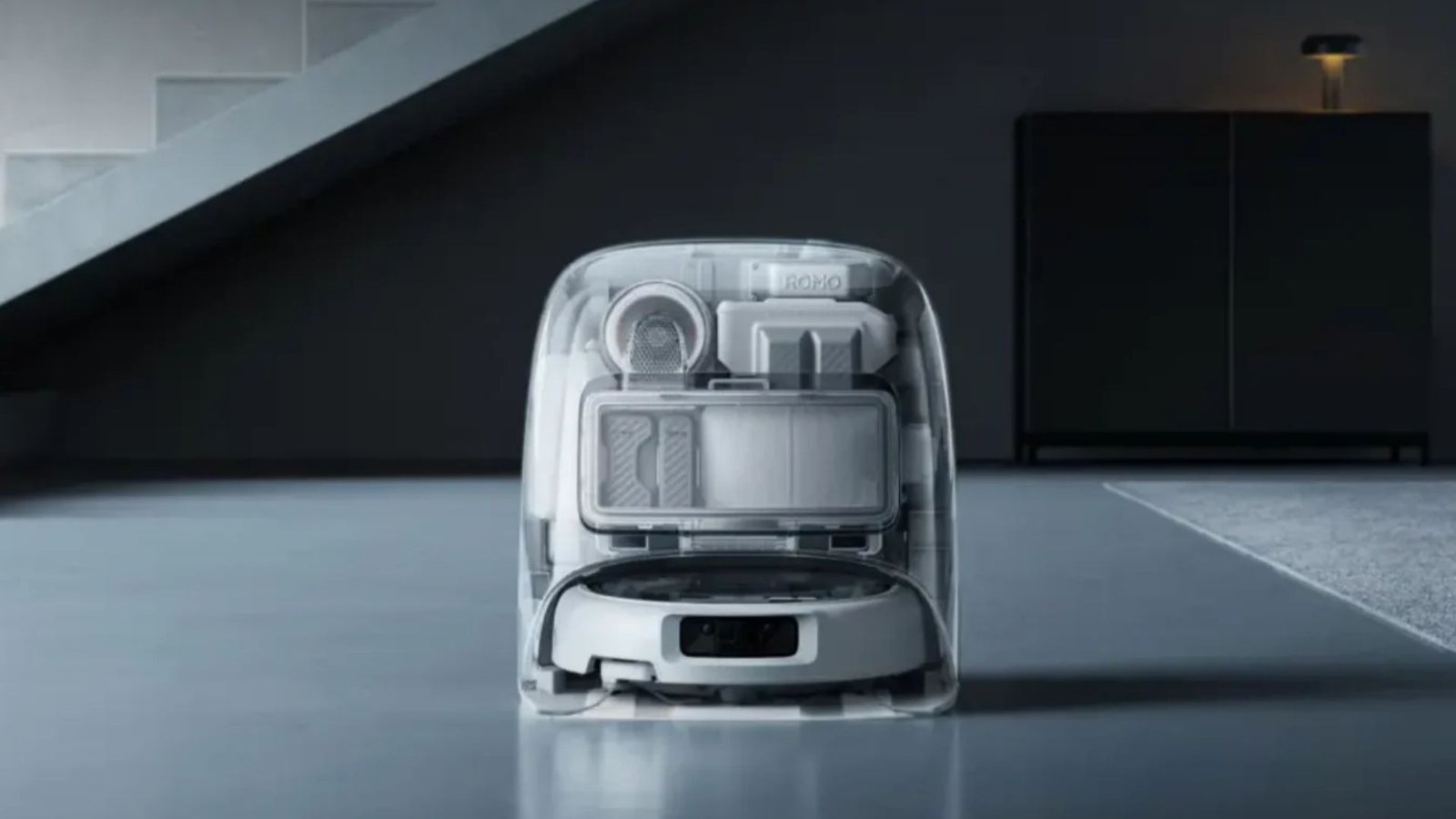
A robot vacuum security vulnerability may sound like a narrow Internet of Things issue, but a recent incident showed how it could affect thousands of people at the same time. The story began innocently enough: someone wanted to control a robot vacuum more conveniently with a gamepad. However, errors involving integrations and access management unexpectedly exposed the system so widely that the user gained the ability to view and send commands to thousands of devices located in other people’s homes.
The situation matters for more than its technical details. Modern robot vacuums are much more than mechanical brushes on wheels. They create maps of homes, connect to cloud services, receive software updates, store diagnostic information and sometimes include additional sensors. Their software also communicates with external APIs.
This means that one security mistake can develop into a large-scale privacy and safety problem, much like a badly configured game-server administration panel or a forgotten test account left active on a production system.
Robot Vacuum Security Vulnerability: What Happened and Why It Matters
The central issue involved an attempt to use a gaming controller as an input device for a robot vacuum. The idea itself is not particularly unusual. Gamers and technology enthusiasts have long experimented with home automation, smart-home platforms, custom control panels and modifications that change how devices behave.
This time, however, the experiment revealed that a vulnerability existed somewhere between the user application, the cloud service and the device-authentication system. The flaw appeared to allow access to more than one device session.
Security problems like this are usually not caused by the gamepad itself. The real issue is often the way third-party integrations or unofficial tools access the device’s control functions.
If API keys, authentication tokens, session identifiers or user permissions are handled incorrectly, one account may accidentally overlap with another. A system may also return far more information than it should.
Sometimes the cause is a straightforward logic error, such as failing to verify the correct user ID. In other cases, the problem is architectural: the system fundamentally trusts data or requests that should never have been trusted.
Why is this serious? Commands sent to a robot vacuum are not necessarily limited to “move” or “start cleaning”. Remote control may include cleaning schedules, room or zone selection, access to maps and notifications about obstacles. Some models may also include additional sensors.
Even if the specific incident allowed only a limited set of commands, the fact that an unauthorised person could access another user’s device is a major warning sign for the reliability of the entire IoT ecosystem.
What Remote Access Could Allow: From Pranks to Privacy Breaches
The first reaction may be to dismiss the story as a strange prank in which someone remotely starts another person’s vacuum and causes it to drive under a table. In practice, however, remote-control access can create several levels of risk.
1) Disruption and physical damage. Even basic unauthorised activation may cause problems. A robot vacuum could become stuck, collide with objects, damage small possessions, knock over a pet’s water bowl or become tangled in cables. If it starts operating during the night, it also becomes a direct disturbance.
2) Exposure of a home profile. Some robot vacuums create detailed maps of rooms. Although a map may look like a simple floor plan, it can reveal the number of rooms, the property layout and indirectly suggest the size of the home.
This information becomes particularly sensitive if it can be associated with an address or user account.
3) A potential entry point into the wider network. Robot vacuums often share the same Wi-Fi network as computers, consoles, NAS devices, routers and cameras.
If the vacuum contains additional software vulnerabilities, it could theoretically be used as a pivot point for other attacks. This is similar to an insecure game-server plugin exposing access to the server’s wider file system.
4) Botnet risk involving large numbers of devices. The ability to control thousands of devices at once resembles the type of infrastructure cybercriminals attempt to exploit for distributed denial-of-service attacks and other automated activity.
Even if this particular incident was accidental, it suggests that safeguards intended to limit the scale of access may not have worked properly.
Where the Problem Usually Exists: Cloud Services, APIs and Authentication
People often assume that device security is mainly a firmware issue. With modern robot vacuums, however, the most important layer may be the cloud service.
The user application communicates with a remote server, the server forwards commands to the vacuum, and the device sends data back. If access control is incorrectly designed at any point in this chain, the vulnerability can affect the whole system.
Several common problems can create large-scale unauthorised access.
Incorrect tenant separation. If devices belonging to different users are not strictly separated, changing a request parameter such as a device ID may expose another user’s device.
Weak or incorrect authorisation. Authentication and authorisation are not the same thing. Authentication confirms who the user is, while authorisation determines which actions that user may perform.
A common mistake is to confirm that a user is signed in but fail to verify that they are authorised to access a specific device.
Excessive permissions for third-party integrations. When users connect automation platforms, unofficial libraries or custom gamepad controls, the integration may receive broader permissions than it actually requires.
This becomes especially risky if the integration relies on one universal key or is not properly isolated.
Session-management errors. If authentication tokens are generated or validated incorrectly, one account could theoretically receive data intended for another account.
In this incident, the gamepad was more likely a trigger that led the user into a deeper layer of the system rather than the actual source of the vulnerability.
In gaming terms, it resembles using an alternative client to connect to a modified server and then discovering that the server API was left without adequate restrictions.
Why Robot Vacuum Security Matters to Gamers
There is a clear connection between this incident and gaming culture. Gamers are often among the first people to adopt new control methods and automation tools.
Controllers, macro keyboards, streaming control panels and home-automation systems all move from gaming environments into everyday life. When someone attempts to operate a robot vacuum with a controller, the underlying idea is similar to gaming: they want a more convenient and familiar control method.
However, an IoT device is not simply another gaming peripheral. A controller usually does not have access to the layout of your home, while a robot vacuum may store that information.
A compromised gaming account may result in lost cosmetic items or temporary loss of access to a library. An insecure home device can affect the physical environment through noise, privacy exposure and potential risks to other devices connected to the same network.
Another important detail is that gamers frequently modify router settings such as NAT and port forwarding to improve connectivity, reduce latency or fix voice-chat problems.
These adjustments can sometimes create additional attack surfaces when IoT products share the same network. Gaming optimisation and smart-home security can therefore conflict, and users should keep that possibility in mind.
How to Identify Increased Risk in Your Home
Not all robot vacuums are designed in the same way, and a particular robot vacuum security vulnerability may be connected to one manufacturer, cloud platform or integration method.
However, several factors may indicate that your potential risk is higher.
You use cloud-based remote control. If you can operate the vacuum while away from home, commands are probably being routed through the manufacturer’s servers.
You use several integrations. For example, the vacuum may be connected simultaneously to a home-automation platform, a voice assistant and an additional third-party application.
You recently granted access to an unfamiliar application or script. This is particularly relevant when using a GitHub project that has not been audited recently or an application that asks you to sign in with your main device account.
You rarely update the firmware or mobile application. IoT manufacturers often fix vulnerabilities through quiet software updates, which means older device software can remain exposed without the user realising it.
If several of these points apply to your setup, it is worth spending approximately 30 minutes reviewing updates, passwords and network separation.
Practical Security Steps You Can Take Today
Although the exact incident may be linked to a specific product or integration, several general actions can reduce the potential impact of future vulnerabilities.
Install all available updates. Update the robot vacuum’s firmware and the official manufacturer application. If a security fix has been released, it will usually be distributed through the official update channel.
Change your account password and enable two-factor authentication. Use two-factor or multi-factor authentication if the manufacturer supports it.
Even if the original vulnerability involved authorisation rather than a stolen password, additional account security still reduces the risk from credential leaks and account takeover.
Review connected devices and active sessions. Some platforms display a list of active logins. Remove unknown sessions and revoke access for third-party integrations you no longer use.
Place IoT devices on a separate Wi-Fi network. The ideal setup is a guest network or dedicated VLAN for smart-home devices without direct access to your computer, console or NAS.
This is one of the most effective methods of reducing the risk that a compromised IoT device becomes an entry point into the rest of your home network.
Disable remote control when it is unnecessary. If you almost always operate the vacuum while at home, consider whether cloud-based remote access needs to remain active.
Some platforms allow users to disable certain cloud functions.
Choose safer options for advanced or custom control. If you want to control the vacuum through a controller or custom automation, prefer solutions that support local control and request only the minimum permissions required.
The less universal internet access an integration receives, the better.
Manufacturer Responsibility and What Should Happen Next
Incidents like this usually produce two immediate reactions: users become concerned, while manufacturers attempt to reassure them that the problem was isolated or can be solved through an update.
In reality, the long-term solution requires a secure development process rather than one individual patch.
Manufacturers should take several important steps.
Communicate clearly about the vulnerability. A useful security notice should explain more than the fact that the problem has been fixed. It should describe what was vulnerable, what the risk was and whether users need to take action, such as signing in again or changing credentials.
Apply the principle of least privilege. Third-party integrations should receive only the permissions they require, while APIs should verify strictly which user owns each device.
Maintain a bug-bounty or responsible-disclosure programme. Security researchers need a clear channel for reporting vulnerabilities so that problems can be corrected quickly and with less confusion.
Limit unusual access patterns. If one user suddenly attempts to access thousands of devices, the system should treat the behaviour as an anomaly.
Possible protections include rate limiting, automated blocking, additional authentication checks and incident review.
Europe is also moving towards stricter security requirements for connected devices, including stronger default protections, longer software-support periods and clearer responsibility for vulnerabilities.
For consumers, this suggests that incidents like this should become less common in the future. However, the market is still in a transitional period in which devices and services vary widely in quality.
The Main Lesson: Convenience Should Not Replace Control
This incident demonstrates why IoT security should be taken as seriously as computer and smartphone security.
If a device is connected to the internet and can receive commands, clear boundaries are necessary. The system must define who may access it, when they may do so and which actions they are permitted to perform.
Users should also receive basic visibility into account activity through login history, a list of active integrations and a simple option to sign out of every device.
Gaming culture encourages experimentation, and that is often a positive thing. However, when gaming-style customisation is applied to home infrastructure, the consequences are different.
A gamepad may be only an input device, but behind it sits a cloud API, an authentication system, data flows and a wider platform that must be designed so one person’s experiment can never become a large-scale security incident.
If you own a robot vacuum, it is worth performing a short security review today: install updates, strengthen passwords, enable two-factor authentication, remove unnecessary integrations and place IoT products on a separate network.
These actions cannot prevent every possible vulnerability, but they can significantly reduce the likelihood that a future robot vacuum security vulnerability becomes a personal problem in your home.