
 LT
LT
 DE
DE
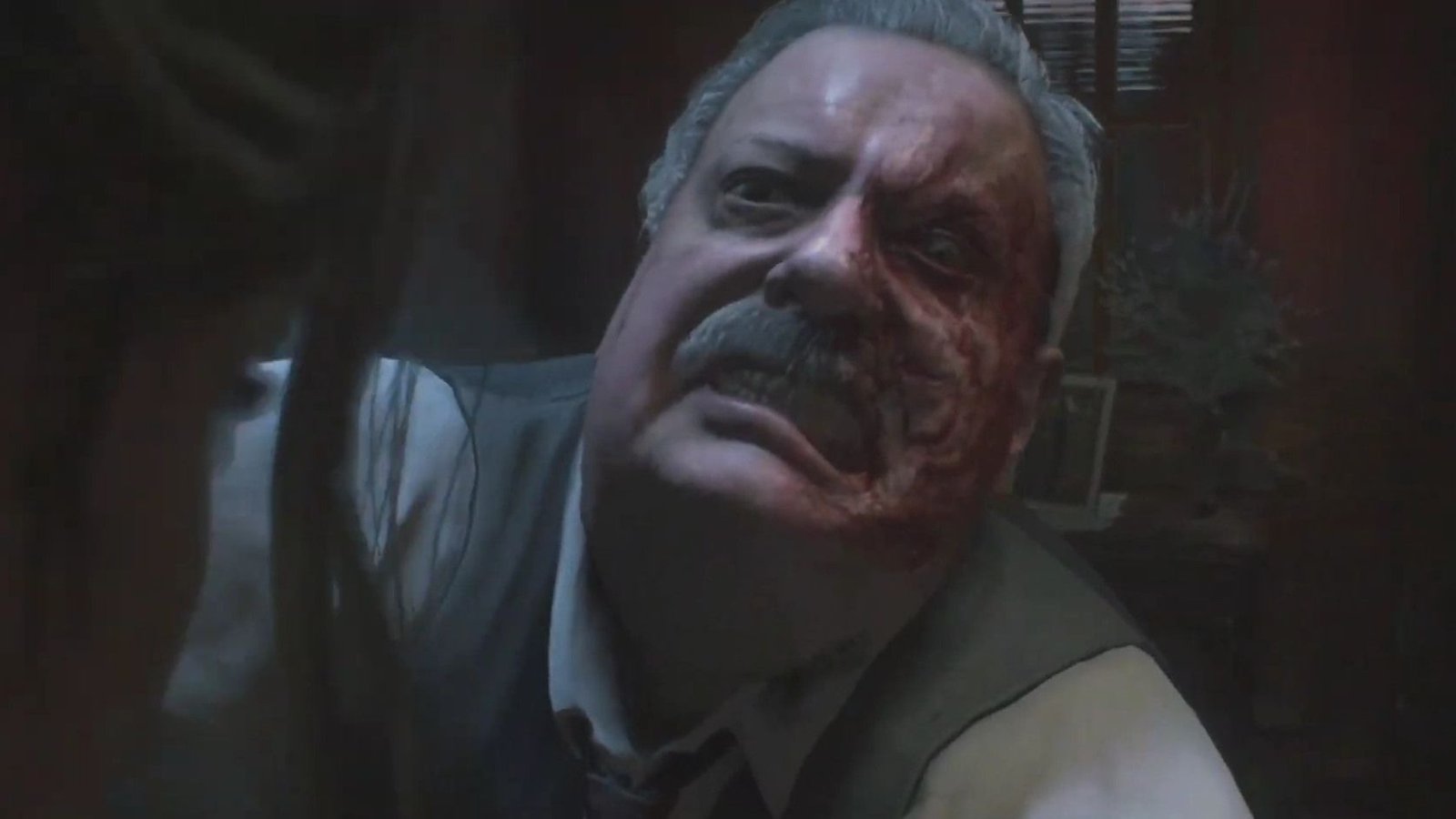
The development history of Resident Evil 2 includes one particularly fascinating twist: when Capcom decided to bring a professional screenwriter onto the team, his approach did not tone down the series’ eccentricity. Instead, it helped establish it as a deliberate part of the game. Newly shared details from the developers reveal that rather than turning the game into an entirely serious thriller, the team took a different approach—finding a logical, character-driven explanation for why absurdly theatrical puzzles still existed inside a police station or laboratory.
This story matters to more than just nostalgic fans. It helps explain how a game’s tone takes shape—that subtle balance between horror, tension, B-movie charm and the occasionally comically impractical challenges beloved by designers. In the case of Resident Evil 2, that tone became one of the reasons the game remained an icon, giving its remake a strong foundation to build on many years later.
Resident Evil 2 development history: why Capcom needed a professional screenwriter
By the late 1990s, Capcom already had a hit on its hands. The first Resident Evil proved that slow-paced, tension-driven survival horror could become a mainstream phenomenon. Success brings pressure, however: the sequel needed to be bigger, better directed and more memorable. In situations like this, familiar questions arise: does the game need more cinematic storytelling, better dialogue and clearer pacing?
Bringing a professional screenwriter onto the team signaled a desire to tighten up the narrative—to create a stronger chain of motivations, clearer dramatic structure and more memorable characters. In games, particularly those of that era, stories were often delivered in fragments through documents, brief cutscenes and minimal dialogue. Resident Evil 2, however, aimed for greater emotional weight, turning the Raccoon City disaster into more than background scenery. It became a tragedy experienced through Leon, Claire, the fate of the police station and the increasingly aggressive biological horror surrounding them.
The most important part of this story, however, is that the screenwriter’s role was not limited to making the game more serious. It allowed the series to consciously embrace its own style: a world in which horror and weirdness coexist. Instead of trying to disguise the absurdity of its puzzles, the team looked for a way to justify them through character and circumstance.
How the screenwriter helped justify the absurd puzzles
The puzzles in the Resident Evil series are a phenomenon in their own right. They often revolve around symbols, unusually shaped keys, statues, medallions and mysterious mechanisms that would never exist in real-world public buildings. A police station secured with assorted crests, stone figures and hidden partitions sounds like an architect’s nightmare. That is precisely why these elements became so memorable.
The story highlights the team’s creative direction: if the game was going to retain the playful collection of puzzles associated with the series, those puzzles needed some kind of internal logic. Put simply, the answer was not to remove the weirdness, but to find a reason for it to exist. This is where a screenwriter can work wonders by creating a character or institutional backstory that explains the design decisions.
In Resident Evil 2, the figure at the head of the police department becomes the key. If a senior official is eccentric, obsessed with control, secrecy or displays of power—or even driven by personal abnormalities—the station can become his “playground,” a place where keys, hiding spots and symbolic locks are not random but intentional. The puzzle then becomes more than a mechanic for the player; it also becomes part of the world’s storytelling.
This approach may seem obvious today, when it is often described as narrative justification or diegetic design, but it represented an important step in the 1990s. The game allowed itself to be both frightening and strange, but that strangeness had a face and a motive.
A clash of tones: serious horror or B-movie charm?
Survival horror often walks a fine line. Too much realism can strip away its game-like qualities, making the experience restrictive and sometimes even oppressive. Too much self-awareness can drain the tension and make the threat feel less convincing. Resident Evil 2 became a classic because it successfully combined both extremes: a convincing sense of catastrophe and a slightly theatrical energy driven by strange design choices that never undermined the game’s momentum.
The story suggests that an alternative creative path may have existed: Resident Evil could have embraced complete seriousness, reduced the number of symbolic puzzles and relied more heavily on realistic action or exploration. Instead, Capcom chose a safer but creatively bold compromise. It retained the elements that defined the series and strengthened its identity rather than denying it.
As a result, the game’s tone feels less like an accidental mixture and more like a carefully considered recipe. The player experiences shock and fear through limited resources, unexpected encounters and claustrophobic environments, but also receives a release valve: a puzzle that briefly transforms tension into curiosity and logical problem-solving.
The police station as a character: architecture, secrets and logic
One of Resident Evil 2’s greatest achievements is the R.P.D. police station. It is not simply a level. It functions as a maze governed by rules the player gradually learns: which areas are safe, where danger is waiting, which doors will open later and where items should be stored. An environment like this requires structure, and that structure is often created through locks and progression gates—classic tools of game design.
This is where the puzzles come in. They are not merely strange challenges, but a way to pace progression, encourage backtracking, redistribute risk and reward observant players. Designers always face a potential problem, however: if the puzzles feel too arbitrary, players may lose their sense of immersion.
As the story suggests, the professional screenwriter’s contribution was to wrap these design decisions in character and the police station’s own mythology. This means its strange locks and secrets become part of the location’s history rather than a designer’s whim: someone designed them that way, someone allowed it and someone had a reason. Even if that reason is insane, it remains a reason the player can accept as one of the fictional world’s rules.
Resident Evil 2 development history and the role of strange characters
Classic horror stories often feature a figure who embodies the corruption of an institution: a director, caretaker or “master.” In games, such a figure can also serve a design purpose by explaining why an environment has been turned into a trap, why documents are hidden, why secret rooms exist and why everything is built around a culture of secrecy.
Resident Evil 2 contains exactly this kind of element: a high-ranking official whose behavior and decisions encourage players to view the station not as an ordinary office building, but as a “mechanism of control.” If someone is strange, paranoid or driven by pathological tendencies, it becomes natural for them to install symbolic locks, collect keys, conceal evidence and create “rituals” even where none should exist.
This is why the story connects so neatly with the game’s design. It reminds us that characters do not exist solely for dialogue. They can become engines of justification, allowing players not only to accept a strange mechanic but to experience it as another layer of the story. In other words, when players solve an absurd puzzle, they are also examining the environmental “signature” left behind by a particular person.
From an idea to the player experience: why it still matters today
When discussing old games, it is easy to dismiss everything as a product of the era: “that was just how games were made,” “the technology was limited” or “players were more patient.” Details from development stories like this remind us that many of those decisions were deliberate. Capcom could have tried to simplify the formula, but instead it chose an identity that distinguished the series from its competitors.
Today, when many games pursue cinematic realism, stories like this offer a valuable lesson: games are allowed to feel like games. Puzzles, symbols and theatrical locks are tools that create pacing and make an experience memorable. The difference is that modern design more frequently demands internal logic. This is where a screenwriter can connect two different worlds: the designers’ mechanics and the narrative’s credibility.
Another consideration is the Resident Evil 2 remake. Although the remake adopted a more grounded presentation and a more realistic atmosphere, its core still rests on the same fundamental elements: limited resources, navigation through interconnected spaces, and progression through keys, discoveries and logical solutions. In other words, even after modernization, the roots remain—and those roots are the game’s development history.
What if Resident Evil had become too serious?
The underlying implication of the story is intriguing: if the creative direction had shifted toward complete seriousness, Resident Evil might have lost part of its identity. The puzzles could have been simpler, doors might have opened in more conventional ways and the environment could have looked more like a real police station. That version may have been more logical, but would it have become equally legendary?
The longevity of a series often depends on more than technical quality. It also depends on character. Resident Evil’s character was born from creative risks: mixing horror with pulp aesthetics, serious threats with strange details, and biological apocalypse with mysterious medallions and statues. The result is a world that can be recognized within seconds, even if players no longer remember every plot twist.
The professional screenwriter’s idea to embrace this identity rather than suppress it helps explain why Resident Evil 2 works so well as an experience. It is not afraid to be a little strange, but it integrates that strangeness into the narrative’s internal logic. Players do not merely accept the rules—they begin to expect them and may even miss them when playing other games.
What this story tells us about game development as a whole
One of the most valuable lessons from this story is that different disciplines need to communicate during game development. Designers may want puzzles that control progression and lock off certain spaces. Artists may want striking, symbolic objects. A screenwriter can then ask: “All right, but why does this exist in this world?”
When that question is asked not to eliminate everything but to give it meaning, the best compromises emerge. Resident Evil 2 shows that even a “silly” puzzle can become meaningful when it serves as an expression of someone’s personality or as a symbol of institutional corruption.
This principle appears throughout modern games in the form of environmental storytelling, documents, clues and architectural “signatures” that explain gameplay mechanics. In this 1990s classic, however, it was handled with such distinctive flair that we are still discussing not whether the puzzles were realistic, but why they were so memorable.
Does this change how we view Resident Evil 2’s development history?
Yes, because this detail provides a clearer chain of cause and effect. Classic games are often discussed as if they became icons by accident: they arrived at the right time, had a strong atmosphere and appealed to players. But when we see that the team made a conscious creative decision about the game’s tone and puzzles, it becomes clear that its iconic status was deliberately built rather than simply discovered.
The development history of Resident Evil 2 emerges here as a lesson in having the courage to preserve a creative identity. Even decisions that sound absurd can become strengths if they remain consistent and fit the logic of the world. When this is achieved through characters, players receive a double benefit: they solve a puzzle while also learning what kind of world they are exploring.
Ultimately, this story reminds us that seriousness is not the only path to quality in games. Sometimes quality lies in controlling tone, providing meaningful context and turning even the strangest detail into part of the story.