
 LT
 DE
Daily gaming news often looks like a stream of unrelated headlines, but in reality it helps reveal recurring trends: how game development philosophy is changing, which community topics are generating the most debate, and where the most active creativity can currently be found – from major studios to small teams experimenting with demos. Today’s roundup clearly shows that stories from the past, which help explain why classics became classics, are just as important as completely fresh attempts to find a new hook for players.
On one side, we have a story about how the creative process behind Resident Evil 2 made room for deliberately “weird” puzzles that eventually became one of the series’ recognizable traits. On the other, there is a discussion about developers who once helped shape Diablo II and are now trying to create their own ARPG while inevitably being compared with the icon they helped build. At the same time, Steam Next Fest reminds us that discovering games today often begins with a demo rather than a full release – and that a wave of inspiration can quickly turn into a mini-trend within a genre.
Platform decisions also play a role. Discord has acknowledged that the rollout of its age verification system had problems and raises sensitive questions about privacy practices. For players, this creates very practical choices regarding what information they are willing to provide, what they are not willing to share, and how they should manage account security. Finally, several separate highlights – from GTA 4’s technical “side effects” to Path of Exile quality-of-life improvements – remind us that small details such as controls, UI, physics, and even cursor behavior often determine whether a game feels welcoming or frustrating.

Resident Evil 2’s creative turn: why the series embraced “weird” puzzles
The story describes Capcom’s decision to bring in a professional screenwriter while developing the original Resident Evil 2 and how the creative direction could have shifted toward a much more serious tone. Instead, according to the publication, the idea was to fully embrace the series’ uniqueness – including intentionally “goofy,” strange, or playfully illogical puzzles. This decision matters not only as an entertaining behind-the-scenes detail, but also as a reminder that the identity of genre classics is often shaped not by major plot twists, but by tone and gameplay rules that developers consciously decide to embrace.
Puzzles in the Resident Evil series have always acted as a kind of contrast to tension. The player is running away from danger, but suddenly has to stop, examine the environment, read a clue, and connect different objects. If these puzzles were designed to be completely realistic, they could easily blend into ordinary objectives. When they are deliberately stylized, however, they become part of the series’ signature. Players recognize that this is Resident Evil logic – a world with its own strange but consistent rules.
The practical value for players today is learning to look at classics not only as products, but as collections of design decisions. If you return to older games or play their remakes and remasters, it is worth consciously observing how the design moves you from chaos – combat and danger – toward structure through puzzle solving, and how this regulates the rhythm of tension. These decisions help explain why some horror games maintain suspense effectively while others burn through it too quickly.
It is also worth remembering that “weirdness” does not necessarily mean carelessness. From a design perspective, it can be a deliberate way to make objectives easier to read, provide the player with a moment to breathe, or create memorable scenes that people continue discussing decades later. Some puzzles remain in players’ memories precisely because they feel slightly “out of this world,” helping separate the game from reality.
If we turned this story into a practical tip, it would be simple: when playing classic survival horror games, do not be afraid to spend time examining the environment and clues even when you can hear danger nearby. Developers often deliberately construct spaces so that tension is managed rather than constantly increased. And if a puzzle seems “weird,” that may not be a flaw at all – it could be part of the series’ identity, designed specifically to make the moment memorable.
Former Diablo II leads are creating Darkhaven: competing with an icon and dealing with “conflicted feelings”
This story highlights an interesting paradox that appears frequently in the games industry: people who helped establish the standard for a genre later create a new project that is inevitably compared with their own legacy. The discussion centers on former Diablo II leads who, according to the publication, have “tons of conflicted feelings” about competing with the legendary ARPG they helped shape while working on their new indie project, Darkhaven. That situation creates enormous expectations before the game even arrives, even if the project itself wants to be judged on its own merits.

For players, the most important thing to understand is that comparisons in the ARPG genre often come not only from marketing, but from the language of the mechanics themselves. Inventory management, loot quality tiers, skill trees, endgame loops, and seasonal structures are all elements that communities read as signals. When developers’ names are associated with Diablo II, it is natural for players to expect a certain feel: a clear progression rhythm, satisfying combat, and a solid in-game economy.
However, an “indie competitor” often has a different advantage: the freedom to reinvent familiar rules. Major brands need to protect the core of their audience, while smaller teams can afford to take more risks – for example, by handling the difficulty curve differently, experimenting more aggressively with progression feedback, or giving communities more tools for creating their own content. For players, this means more choice: not simply “which iteration is best?” but also “which design philosophy fits me better?”
If you follow ARPG news, a practical strategy is to judge testable elements rather than promises. Does the game explain its statistics clearly? Does build creation encourage creativity? Does the endgame include a variety of activities instead of repeating the same grind for bigger numbers? Even if we currently know Darkhaven mostly through broader context, experience shows that first impressions usually come from controls, clarity, and the rhythm of rewards.
There is also an emotional angle. The developers’ “conflicted feelings” are human and understandable. Creating a competitor to your own legendary work is not the same as simply copying a formula; it can instead be an attempt to answer the question, “What would I do differently today?” For players, that can be a useful perspective. A new game does not necessarily exist to replace the old one – it may simply offer an alternative that improves the parts of the ARPG loop that you personally find tiring or outdated.
Steam Next Fest and the wave of Balatro-inspired demos: how to choose what is worth trying
Steam Next Fest once again demonstrates that the modern PC gaming ecosystem increasingly operates around demos. Huge numbers of trial versions appear within a short period, while players search for the “next big thing.” The publication highlights how the event is filled with games inspired by Balatro – with the important point being that developers are trying to capture a particular kind of magic – and presents a list of seven demos recommended by the author. Even if you are not a Balatro fan, the trend itself is worth watching: a successful game creates a design language that other developers begin to reinterpret.

For players, the practical question is obvious: how do you choose when there are too many demos and not enough time? One useful filter is asking, “What is new here?” If a game simply replaces one theme with another – cards with dice, dice with coins – without introducing a new approach to risk and reward, the demo will probably become repetitive quickly. But if the game delivers a clear twist, such as a different progression mechanic, a new approach to resource management, or an original interaction system, it may deserve more of your time.
Next Fest is also an excellent opportunity to determine whether you enjoy a game’s core loop from the first few minutes. Demos usually need to convince players quickly, so they reveal whether the developers understand their strongest ideas. Pay attention to the clarity of tutorials, UI readability, and whether the game respects your time. Does it let you start playing quickly, or does it spend too long explaining concepts that could have been demonstrated through a single example?
Another useful tip is to write down your impression immediately after playing each demo. During Next Fest, it is easy for everything to blend together: one roguelike merges with another, and the next day you may only remember a vague feeling of “there was something about X.” A few short notes are enough: what you liked, what annoyed you, and whether you would want to continue. This becomes particularly useful when some of those games later enter Early Access and you need to decide whether to buy immediately or wait.
Finally, waves of Balatro-like games are completely normal – this is how microgenres are born. Some projects will be little more than fashionable echoes, others will become interesting reinterpretations, and a few may find their own audiences and become new reference points. For players, that is a positive development: more creative experiments mean a greater chance of finding a niche hit that perfectly matches your taste.
Discord age verification: rollout delayed, but some users will still face checks
Discord has acknowledged that the rollout of its age verification system did not go smoothly, and the process is therefore being delayed. However, as the report notes, some users will still be required to complete verification. This is important for gamers because Discord serves as the main communication infrastructure for many communities – from guild coordination and tournament organization to direct communication between developers and players. When platform rules change, everyday habits are affected as well.

The biggest practical issue here is privacy and trust. The publication mentions an earlier experiment involving identity verification company Persona and notes that submitted documents may potentially have been stored for a limited period, with up to seven days mentioned. Claims like these naturally raise questions for users: what data is collected, who can access it, how long it is stored, and what alternatives exist for people who do not want to share sensitive information.
If you use Discord every day, it is worth preparing with a few steps that do not depend on the specific verification method. First, enable two-factor authentication and make sure your account email address and phone information are up to date. This reduces the risk of losing access because of unexpected requirements or account problems. Second, review which servers you use and where your most important contacts are located. In critical situations, having a backup communication channel – such as a community forum or another platform – is not a bad idea.
Third, monitor official Discord explanations and regional rules because age verification is often connected to different legal requirements. Even if all we know today is that the rollout has been delayed and verification will remain for some users, it is worth waiting for clearer information about when it applies, whether self-verification alternatives exist, how false blocks will be handled, and what appeal channels are available.
The main takeaway for players is not panic, but preparation. Platform policies can change quickly, so communities are in the strongest position when they maintain organized information channels, clear rules for new members, and minimal dependence on a single platform. If Discord becomes less convenient, the communities that already know how to stay connected with friends and teammates will be better prepared.
GTA 4’s technical “side effects”: when systems allow more than developers expected
The report quotes the idea that GTA 4 was “so ahead of its time” that even its technical lead apparently did not fully anticipate what helicopters could do in certain situations and had not completely considered the resulting “side effects.” Stories like this often sound like entertaining nostalgia, but they reveal an important principle: when game systems become sufficiently complex, they begin generating unexpected behavior. Sometimes these are bugs; sometimes they are emergent situations created by interacting systems that later become legendary moments.
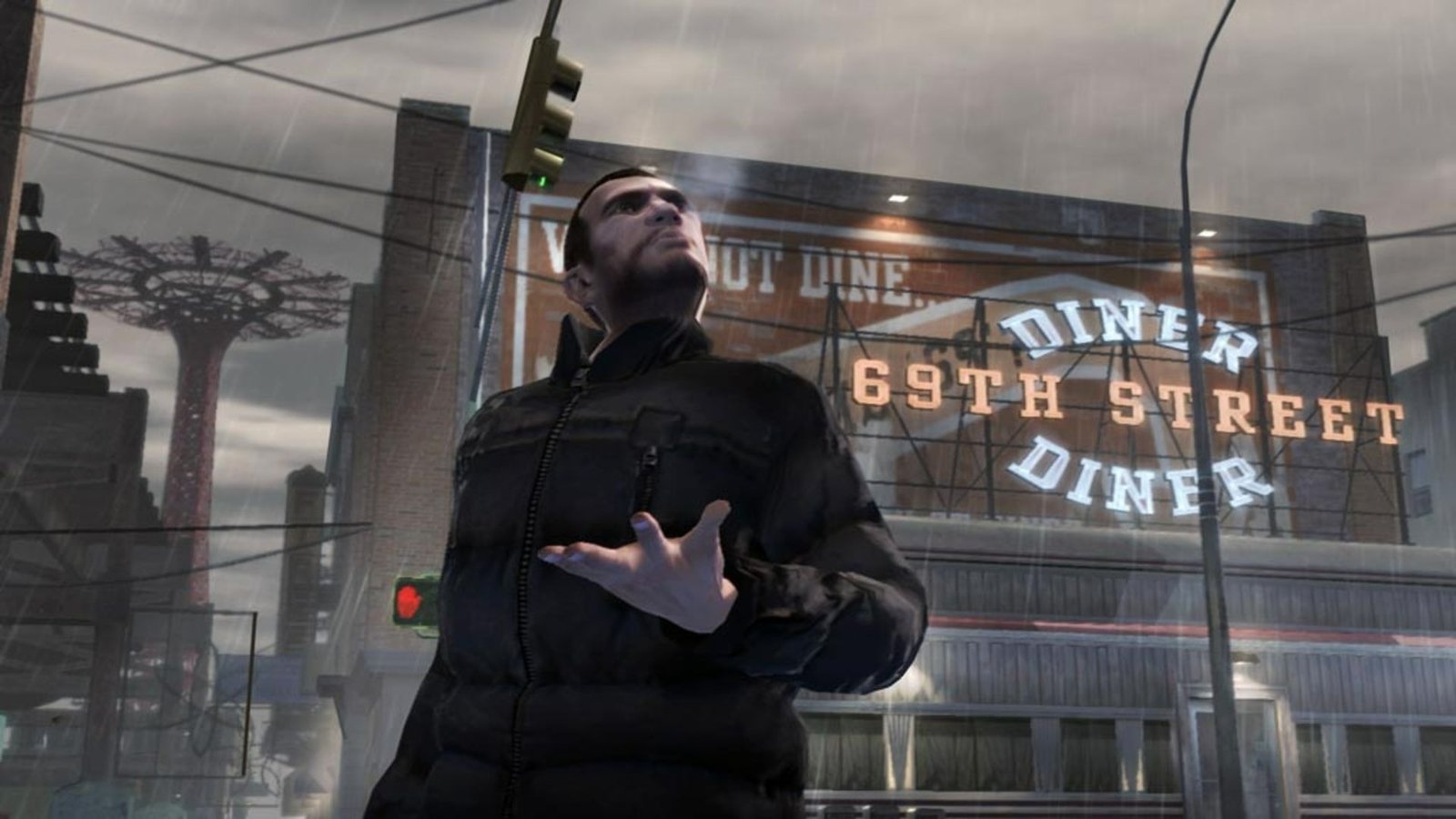
For players, this is a reminder of why physics, water, vehicles, and NPC behavior are so valuable in open-world games. Even if the headline focuses on one particular example, the larger idea is that systems allowing more freedom create more unscripted stories. That is one reason players return – not only to complete missions, but also to see what happens when they combine X and Y in an unusual location.
A practical tip if you plan to return to GTA 4 or similar games is to spend some time experimenting with the sandbox itself. Do not focus only on the main campaign. Try simple experiments with vehicles, the environment, and police reactions. These games often reveal their best qualities when players stop trying to optimize progression and instead allow the systems themselves to create unexpected situations.
From the development perspective, this also explains why modern games can sometimes feel more restricted. The more freedom developers provide, the more unexpected combinations they need to test. As a result, some studios choose more controlled systems or stricter limitations. For players, this creates a trade-off: either you get a cleaner experience with less chaos, or greater freedom with a higher chance of unpredictable behavior and occasionally strange bugs.
This GTA 4 detail is also a good reminder that technological progress in games is not only about graphics. Many of the biggest “wow” moments come from systems such as water, physics, animation, and AI. When those systems interact, even developers cannot always anticipate every consequence – and that is often where the stories that remain in community memory are born.
The End Is Nigh for under $4: a chance to revisit the demanding platformer from the Mewgenics developers
The publication points out that the developers behind Mewgenics also created one of many players’ favorite hardcore platformers, and that The End Is Nigh can currently be purchased for an extremely low price – less than $4 is mentioned. Discount stories like this are easy to overlook, but they can be valuable for players because they provide an inexpensive opportunity to pick up a game that works well between major releases, especially if you enjoy tight controls, precise jumps, and a learn-through-failure rhythm.
Hardcore platformers usually make one very clear promise: you do not improve your character’s statistics – you improve yourself. Progress is measured not by your level, but by how quickly you begin to understand distance, timing, and momentum, and how your fingers learn to react. If you have recently played many relaxing or “autopilot” games, a demanding platformer can provide a refreshing contrast because it restores the feeling that every action is truly yours.
A practical tip before buying or starting is to approach the game with the right mindset. Hardcore platformers are often built around a series of short attempts: you die, respawn, and immediately try again. If the game is well designed, the cycle is quick rather than punishing and encourages “just one more try.” It is therefore worth considering whether you enjoy this rhythm and perhaps playing in shorter sessions to avoid frustration.
It is also worth paying attention to how the controls feel. In games like this, a comfortable controller or properly configured keyboard settings make a huge difference. If possible, adjust sensitivity, disable unnecessary overlays, and make sure there is no noticeable input delay. Small details become major factors in a platformer when you are learning difficult sections.
Finally, the discount can also be an opportunity to discover the community. Games like this often develop speedrunning cultures, challenge runs, and communities that share tips. If you enjoy improving your times or exchanging tricks, it is worth checking whether the game still has active discussions. Even if the news item only highlights the price and recommendation, it can become a gateway into a very specific but highly satisfying type of gameplay.
Tap Tap Loot demo: a clicker RPG where “Bongo Cat” picks up a sword
Steam Next Fest also brings lighter, humor-driven ideas, and one of them is a clicker game with RPG elements whose description provocatively asks what would happen if “Bongo Cat” picked up a sword and started attacking everything in sight. The publication names Tap Tap Loot and confirms that it has a demo available during Next Fest. Games like this can become engaging very quickly because clicker mechanics provide immediately understandable progression.

Players should consider what they want from a clicker or idle experience. Some clickers work mainly as background activities – numbers increase while you occasionally return to make decisions. Others try to introduce more active gameplay through small combat encounters, build choices, and loot management. Because this story focuses on a demo, the best way to understand its direction is to spend 10–20 minutes testing whether the game offers interesting choices or is mostly a visual fireworks display of increasing numbers.
A practical tip when testing the demo is to look at whether progression is transparent. Is it clear why you are dealing more damage, where new resources come from, which upgrades are essential, and which are situational? The quality of clicker design becomes apparent quickly. A good game allows players to plan instead of simply clicking and hoping the numbers increase. If you already feel during the first part of the demo that your decisions have consequences, that is a positive sign.
Another factor is the longevity of the humor and aesthetic. A Bongo Cat-style concept can be very entertaining during the first hour, but the question is whether the game contains enough substance for the meme to become more than a one-time visual joke. During the demo, look for variety: different enemies, abilities, and changing objectives. Even if it is too early to judge the complete game, a demo often reveals whether the developers have a broader plan rather than a single joke.
If you enjoy lighter games between more serious projects, demos like this are an excellent opportunity to build a list for the future. Even if Tap Tap Loot does not become your main game, it could still work as a short, relaxing option – particularly if you enjoy progression, collecting, and a simple but satisfying gameplay loop.
Path of Exile quality-of-life updates: when small details improve survivability
The Path of Exile story highlights how the next update could prevent situations where your cursor effectively “gets you killed,” while also introducing a number of quality-of-life improvements that, according to the report, even PoE 2 does not have yet. Although the wording is playful, the issue itself is serious. ARPGs are a genre where one inaccurate click, unclear indicator, or poor targeting behavior can cost a character their life, particularly in more difficult content.

For players, these QoL changes are valuable because they reduce friction – situations where you lose not because of a poor strategic decision, but because of an inconvenient interface or control behavior. Long-running games with many interconnected systems accumulate numerous small issues over time: an unclear tooltip here, an awkward inventory routine there, or dangerous targeting behavior somewhere else. Every improvement directly makes everyday gameplay more comfortable.
A practical tip for PoE players is to review your settings and habits before a major update. Even if the game improves cursor or targeting behavior, many things still depend on your own setup – mouse sensitivity, keybindings, loot filters, and screen readability. QoL updates are often the perfect opportunity to tidy up your configuration: update your loot filter, reorganize keybindings so critical actions are easier to reach, and check whether your build has enough defenses for unexpected situations.
Another interesting angle is that PoE 1 continues to be refined even while PoE 2 exists alongside it. For players, this is a signal that the older game has not simply been abandoned. Its systems are still being improved and the community continues receiving meaningful updates. In long-running games, that is an important indicator of trust – players are more willing to invest time when they can see consistent support.
For now, based on the available summary, the discussion is more about the direction of the update than a complete patch list. The most important thing is therefore to follow the official notes when they appear and evaluate how the changes affect your playstyle. If you enjoy hardcore or high-difficulty content, even one “small” QoL improvement can significantly increase survivability. If you play more casually, these changes can still allow you to focus more on build creativity rather than fighting against the interface.
Recommended Steam Next Fest demos: why it is worth trying games outside your usual genres
Although one of today’s stories connects Steam Next Fest specifically with Balatro-inspired projects and a list of seven recommended demos, the broader message is about demo culture itself. Demos provide a rare opportunity to experience the core of a game without much financial risk, while developers gain feedback before the full release. For players, this is extremely useful: even if you close a demo after 15 minutes, you have already learned something about what you enjoy and what you want to avoid.
In practice, a “three-test rule” works well. During Next Fest, choose three demos that clearly match your usual tastes, then add one or two that sit outside your comfort zone. Those extra experiments can sometimes produce the biggest discoveries because they challenge your expectations about a genre. For example, if you normally play only shooters, you may discover that you enjoy tactical resource management. If you usually play RPGs, a short and tightly focused roguelike loop may unexpectedly hook you.
It is also worth paying attention to technical performance: stability, frame rate, available settings, and control rebinding. Many Next Fest games are still in relatively early development, so bugs are normal. What matters is whether the developers communicate clearly and respond quickly. Active updates, responses to feedback, and a visible development direction are good signs even if the demo itself still feels rough.
Another practical factor is the Wishlist. Even if you do not plan to buy immediately, adding a game to your Wishlist helps you avoid forgetting it and gives developers a signal of interest. Later, when release date or Early Access news appears, it becomes easier to return and judge whether the project has progressed. This is especially useful for indie games where communication can sometimes be irregular.
Finally, demo culture is healthy for communities because it encourages discussion about design rather than simply hype. When players share impressions, they often talk about very specific elements: whether the gameplay loop is engaging, whether the difficulty feels fair, and whether meta-progression is motivating. This kind of discussion helps other players make better decisions and reduces disappointment after purchasing.
Behind the scenes of creativity and technology: why old stories still matter in 2026
Today’s news roundup has a clear behind-the-scenes theme: Resident Evil 2’s creative tone, GTA 4’s technical side effects, and the emotions of ARPG developers working on a new project. Stories like these can sometimes seem like simple entertainment, but they genuinely help us understand how decisions that later become “genre rules” are created. When players understand that design is the result of deliberate choices, they become more observant and critical in a positive sense.
The practical value is learning to separate personal taste from quality. For example, one player may find Resident Evil puzzles too theatrical, while another may believe that they are exactly what creates the atmosphere. One player may love open-world chaos, while another finds it exhausting. Understanding that developers often consciously choose a particular direction – rather than accidentally ending up there – helps us describe more precisely what we want from games.
These stories also help us evaluate modern decisions. When a platform such as Discord rolls out age verification and acknowledges mistakes, we see that even large systems sometimes develop through experimentation. When Path of Exile continues refining an older version, we see that longevity is an ongoing process rather than a one-time release. For players, that means it is worth following not only headlines, but also direction: what is being fixed, what is being improved, and what is being left unchanged.
If you want to turn these behind-the-scenes stories into something practical, try playing analytically for a day. Observe when a game asks you to concentrate, when it allows you to relax, how it communicates its rules, and whether the interface helps or gets in the way. This slower style of play can sometimes provide more enjoyment than rushing through content because you begin to see the design itself rather than only the result.
Ultimately, behind-the-scenes gaming stories are a reminder that games are both culture and technology. When those two sides come together, they create works that remain relevant for longer than a single season. That is why stories about older games can still feel fresh today when they explain why certain design choices continue to work.
What matters most today?
- The Resident Evil 2 story reminds us that tone and deliberate design “weirdness” can be conscious choices that define a series’ identity. Players can pay attention to how puzzles regulate the rhythm of tension and why this works so well in survival horror.
- Former Diablo II developers working on Darkhaven will inevitably be compared with a legend, so it is worth focusing on the quality of the mechanics rather than the headlines. In the ARPG genre, clarity, satisfying progression, and endgame variety matter most over time.
- The wave of Steam Next Fest demos shows that game discovery increasingly happens through short trials. The best approach is to choose demos by asking “what is new here?” and write down impressions while they are still fresh.
- The wave of Balatro-inspired games is a normal cycle in which a successful title creates a new design language. This benefits players because more experiments increase the chance of discovering new niche hits.
- Discord’s age verification issue matters not only as news but as a practical concern for communities involving privacy, account security, and alternative communication channels. Preparing in advance can help prevent losing access or important contacts.
- GTA 4’s technical stories remind us that complex systems can create unexpected “side effects” that later become legendary moments. It is a good reason to appreciate open-world games as collections of interacting systems rather than just lists of missions.
- The End Is Nigh discount is a reminder that having a smaller game between major releases can be worthwhile. Hardcore platformers offer progression through player skill and are well suited to short but intense sessions.
- Tap Tap Loot-style clicker demos reveal whether there is sustainable progression design underneath the humor. When testing them, pay attention to transparency: is it clear how upgrades work, and do your choices actually matter?
- Path of Exile’s QoL direction shows that small control and interface improvements can directly affect survivability. Before major updates, it is worth reviewing keybindings, filters, and settings so you can fully benefit from the changes.
What should you watch next?
In the near future, it will be worth watching how Discord specifically defines the use of age verification: which users will be required to complete it, what information will be requested, and what support channels will be available if verification fails incorrectly. This is particularly important for server administrators and communities that want to maintain accessibility and clear onboarding procedures.
For Steam Next Fest, it is useful to monitor which demo projects maintain momentum after the event. Are developers fixing bugs? Does a clear release plan appear? Is the community receiving updates? If you added several games to your Wishlist, take a few minutes a week or two later to see what has changed. That is often when it becomes clear which projects are being actively maintained.
For ARPG fans, the most important developments will be the details of the Path of Exile update: the exact QoL changes, how they affect builds and survivability, and how these improvements compare with other games in the genre. Once clearer patch notes are available, it will be worth checking whether the update affects your habits – such as targeting, hotkeys, or UI use – and whether you need to adjust your setup before returning to harder content.
Sources
- PC Gamer – When Capcom brought in a professional screenwriter for the original Resident Evil 2…
- GamesRadar+ – Ex-Diablo 2 leads have “tons of conflicted feelings”…
- PC Gamer – Steam Next Fest is full of Balatro-likes: here’s 7 demos…
- Rock Paper Shotgun – Discord concede they mucked up their age verification system rollout…
- GamesRadar+ – GTA 4 was apparently “so ahead of its time”…
- PC Gamer – Mewgenics’ developers made one of my favourite hardcore platformers…
- PC Gamer – This new clicker game dares ask: What if Bongo Cat picked up a sword…
- PC Gamer – Path of Exile’s next update might prevent your cursor from killing you…