
 LT
 DE
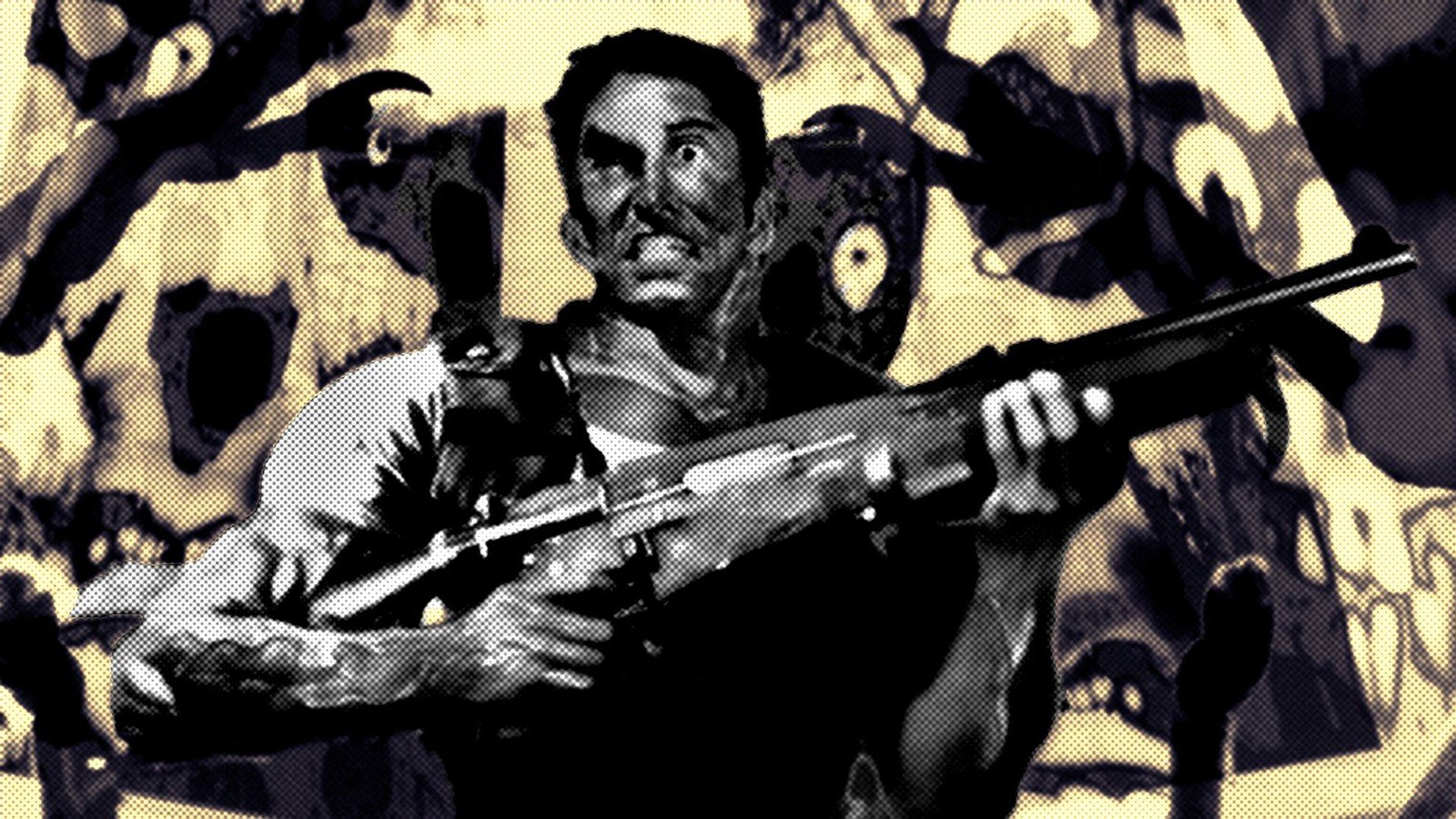
The discussion about why the Resident Evil movie did not follow the game has picked up again following a comment from director Paul W.S. Anderson. According to him, the goal of the first movie (2002) was not simply to “transfer” the game to the screen, as such a decision could have destroyed one of the most important driving forces behind a horror story: uncertainty and suspense.
This topic has never been simple within the gaming community. Resident Evil is a series that has survived several eras of gaming, from fixed-camera horror to modern remakes, while its movie adaptations have become a phenomenon of their own. As a result, every attempt to explain why the movies took a different path automatically touches on both fan expectations and the logic of the industry.
Anderson’s argument is fundamentally simple: if viewers knew in advance what would happen and who would survive, the movie would lose some of its impact. He used an analogy involving classic space horror movies—imagine someone telling you the ending and the fates of the main characters before the screening. In that case, some of the tension would not build the scene but would simply lead toward an outcome you already knew.
Why the Resident Evil movie did not follow the game: the director’s logic on suspense and surprise
Cinematic horror often relies on two things: uncertainty and risk. When viewers do not know what will happen next, even a familiar corridor, the quiet sound of an elevator, or a faint shadow can create tension. In a game, meanwhile, tension comes not only from the plot but also from the consequences of your actions: you conserve ammunition, decide whether to open a door, and effectively “earn” the fear yourself.
From Anderson’s perspective, the first movie needed to work as a standalone action horror production rather than a literal recreation of the game’s script. If the filmmakers had chosen a direct adaptation featuring the same plot twists, fans of the game could have arrived already “armed” with knowledge of where the greatest threat would appear, who would show up in the finale, and which locations were the most dangerous. In horror, that kind of situation often weakens the emotional impact—especially if the movie also aims to frighten people who have never touched the game.
It is worth distinguishing between two things that are often treated as one: “following the plot” and “capturing the atmosphere.” The strength of the Resident Evil games lies not only in their events but also in their overall feeling: claustrophobia, uncertainty, corporate secrets, and biological horror. A movie can attempt to recreate that feeling even if its characters, locations, or sequence of events are different.
Why movie adaptations often do not follow the game’s plot—and why that is not always bad
Games and movies are different formats. In a game, the story is often created through experience: exploration, finding items, reading notes, returning to previous locations, and getting stuck on a puzzle. That kind of pacing often does not work in a movie: viewers have no control, so prolonged periods of being “stuck” or repeated corridors may look like stalling tactics.
Another consideration is runtime and structure. The first Resident Evil game could be “compressed” into 1.5–2 hours, but that raises the question of what should be sacrificed: character development, suspense, the logic of the world, or action scenes. When a game has several possible routes, different strategies, and even different interpretations, a movie is forced to choose one clear path.
Finally, there is the reality of the audience. In 2002, video game adaptations were not as prestigious as they are today, and movie studios often sought to attract people for whom Resident Evil was merely a title on a poster. In such a case, an original protagonist or a newly created opening scenario becomes a “bridge” into the world, avoiding the need to explain the entire history of the series from the very first shot.
The choices behind 2002’s Resident Evil: a new protagonist but a familiar threat
The first movie chose a path that seemed logical at the time: instead of directly recreating the mansion plot, the story moved behind the scenes of the Umbrella corporation and into a laboratory nightmare where a biological disaster becomes a contained, rapidly escalating crisis. This preserved the essence of the series—corporate secrets, a virus, experiments, and monstrous consequences—while creating a new scenario in which uncertainty could affect even veteran players.
The decision to introduce a new main character and a new team dynamic also stemmed from the needs of cinema. In games, players become attached to a character because they control them. In a movie, that connection must be built through dialogue, emotions, choices, and screen time. When a screenplay has a limited runtime, filmmakers often choose one distinctive, cinema-friendly guide who becomes the audience’s eyes.
Of course, such a decision comes at a cost. Some fans see it as too great a departure because the Resident Evil name is associated with specific characters, locations, and moments. However, this is precisely where Anderson’s logic becomes clear: he wanted the first movie to be more than an illustration of the game. He wanted it to be a standalone action horror production capable of surprising viewers.
“Spoilers” as the director’s argument: does knowing the outcome really ruin horror?
Anderson’s point about knowing the outcome in advance touches on one of cinema’s oldest questions: does suspense come from “what will happen” or from “how it will be shown”? There are many movies whose plots audiences already know from books or history, yet they still work. In the horror genre, however, uncertainty is often especially important because fear is born from not knowing when an attack will happen, who will become a victim, or whether the monster follows any rules.
“Spoilers” work differently in games. Even if you know that an enemy is waiting around the corner, you still have to perform the action yourself: enter, turn, aim, and survive. In a movie, viewers are passive, so “knowing” can genuinely reduce the impact if the direction relies on surprise or the unexpected loss of a character.
However, this is also where the argument has a weakness: fans of the Resident Evil games often value more than plot twists. They also appreciate the atmosphere, the world, the monster designs, and the rhythm of the horror. In other words, even a relatively faithful adaptation could be tense if the movie found a way to convey the feeling of survival, limited resources, and isolation. The question, therefore, is not “whether it is possible,” but “what purpose” the adaptation is intended to serve.
Why the Resident Evil movie did not follow the game as fans wanted: compromises between the market and creativity
When a studio finances a movie based on a game, it often considers not only the fans but also the wider audience. General audiences need to understand the rules quickly: what Umbrella is, why the virus is dangerous, what those creatures are, and why the heroes cannot simply escape. If a movie relies on viewers having already played the game and “knowing” these things, it risks becoming incomprehensible to newcomers.
In addition, adaptations often aim to become franchises. The first movie must open the door to sequels, so filmmakers sometimes deliberately avoid adapting a specific game “from A to Z.” This allows them to borrow individual elements, iconic monsters, or characters in the future and arrange them according to a different rhythm. Incidentally, that is exactly what happened: later movies introduced more familiar figures and motifs, but everything was adapted to fit the logic of the movie series.
To fans, this model may look like a “mutilation” of the source material, but from an industry perspective, it is an attempt to create a separate product: a movie series with its own arcs, its own heroes, and its own tone. This is where the conflict emerges because fans of the game often expect one thing—to see the game on screen—while the director may pursue something else: creating a movie that works even without the context of the game.
What is actually being “adapted”: the plot, the world, or the feeling?
When considering the Resident Evil case, it is worth asking what matters most to the identity of the series. For some, it is the mythology of Raccoon City; for others, it is specific characters; and for still others, it is the survival horror formula: limited supplies, enclosed spaces, and uncertainty over whether you will have enough strength to reach a safe area. A movie may not “recreate” specific events, but it can still attempt to adapt the central idea of the world: a biotechnology nightmare, corporate cynicism, and the transformation of the human body into a weapon.
Anderson’s comments suggest precisely this kind of approach: he viewed Resident Evil as a story that was itself already inspired by cinema. From the beginning, the games had a strong cinematic DNA—the camera angles, pacing, horror clichés, and even a certain B-movie charm. His goal, therefore, was likely not to retell the game but to create a movie that recaptured that cinematic energy while adapting it for a new audience.
Did it work? Commercially, yes: the movie launched a long-running series. Creatively, opinions remain divided to this day. However, the news itself is important because it serves as a reminder that even years later, as adaptations become increasingly faithful—especially in TV series—directors continue to defend the idea that sometimes “moving away” from the source material is a deliberate tool rather than a mistake.
What does this explanation mean today, now that video game adaptations have become prestigious?
Over the past several years, we have seen the quality bar for video game adaptations rise: larger budgets, a more careful approach to the source material, closer cooperation with the creators, and greater respect for fans. This naturally raises the question of whether the first Resident Evil movie would be made the same way today.
Most likely, it would not be identical. Today, studios more often choose a strategy of “greater faithfulness, but with adjustments,” especially when the goal is a longer TV series format. Nevertheless, Anderson’s argument has not disappeared: even a modern adaptation must find a balance between familiarity and surprise. If everything becomes nothing more than a fan “checklist,” the story may lose its vitality.
Therefore, the question “why did the movie not follow the game?” ultimately becomes a broader one: what kind of experience do we want? Do we want to see a plot recreated literally, or do we want another high-quality horror story set in the Resident Evil world that can surprise us? Different viewers will answer that question differently, and it is precisely within this tension that debates over adaptations emerge.