
 LT
 DE

“Awaysis demo impressions” best describes an unexpected feeling: it seems like you are playing a familiar action RPG (ARPG), but the combat suddenly turns into chaotic comedy where it is not just numbers, skills, and loot that matter, but also how characters fall, slide, collide, and sometimes simply become hilariously tangled up with one another.
The news is simple but intriguing: the idea that the “Awaysis” demo shows what traditional “Diablo”-style games may have been missing for years—a small but highly distinctive touch of physics-based humor—has gained popularity online. In other words, not another layer of number optimization, but an additional emotion born from imperfect, slightly “silly,” and therefore memorable combat.
This type of idea is not entirely new to the gaming industry: physics-based comedy has worked successfully in party and fighting games. However, in the ARPG genre, which is often dominated by speed, efficiency, and build mathematics, this direction is still rare. That is why the “Awaysis” demo sparks curiosity not only because of the game itself, but also because of what it says about the future of the genre.
This article expands on a single piece of news: what the “slapstick” (situational comedy) element means within an ARPG structure, what kind of gameplay experience it can create, who will enjoy it, and who may instead find it disruptive.
Awaysis demo impressions: when physics comedy interrupts the seriousness of an ARPG
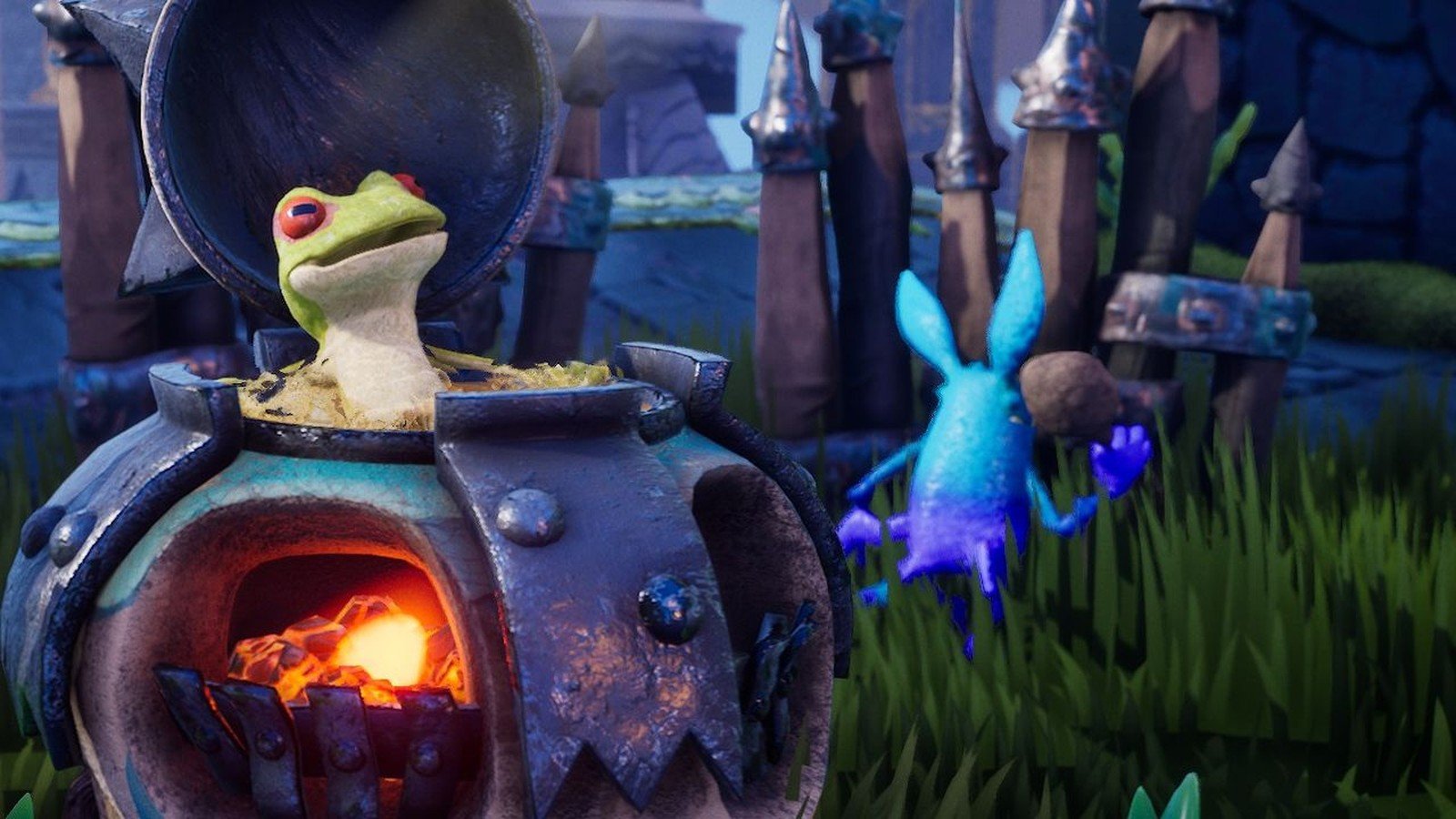
ARPGs are often designed as a “flow”: you move forward, destroy enemies, level up, collect loot, improve your equipment, and repeat. This formula works because it provides clear goals and constant progression. Over time, however, especially for experienced players, there is a risk that the game will become too sterile: the most efficient path becomes the only meaningful one, while emotions are reduced to “is this item better than the previous one?”
The “Awaysis” demo stands out because it introduces unpredictability into this loop. When combat is based not only on the precise “locking” of attack animations but also on physics interactions, situations begin to unfold differently each time. Characters can collide in corners, enemies can be knocked away at strange angles, and cooperation with other players can sometimes become not only strategic but also comedic.
For the player, this creates a new “story” even in the same arena: improvisation replaces the perfect plan. If you enjoy moments when a game makes you laugh not because of written dialogue but because of an unexpected event, this direction can be very appealing.
It is also important that a demo is often a game’s “calling card”: it showcases not only its mechanics but also the developers’ ambition. In the case of “Awaysis,” the message is clear—this will not merely be a serious slaughter for rare items, but more of an “action comedy” with weapons, where game physics become part of the design rather than a technical detail.
What is “slapstick” in games, and why does it resemble “Gang Beasts”?
“Slapstick” traditionally refers to humor arising from physical situations: falls, collisions, and failed attempts to do something “seriously.” In games, this kind of humor often emerges when character movement, weight, inertia, and collisions with the environment are not “perfectly orderly.” This creates moments that feel almost like improvised comedy.
The comparison to “Gang Beasts” makes sense here because it is one of the best-known examples of how deliberately awkward controls and exaggerated ragdoll physics can create entertaining chaos. What makes “Awaysis” interesting, however, is that this energy is transferred to another genre: not party brawls played for laughs, but an ARPG structure where reliability and control are normally expected.
If the developers manage to maintain the right balance, “slapstick” can become an advantage rather than an obstacle. The player feels less like a “numbers operator” and more like a participant in a lively, unpredictable battle. Every fight becomes slightly different, and even defeat can be entertaining because it happens in a cinematic fashion.
However, there is also a risk: ARPG audiences often value clarity. If the physics-based humor interferes too often with performing actions precisely, some players may see it as artificial difficulty. Therefore, the biggest question is whether the “slapstick” layer in “Awaysis” is additional entertainment or the game’s primary language.
Why “Diablo”-style games could sometimes benefit from more imperfection
When discussing “Diablo” and similar games, three qualities are often mentioned: clarity, smoothness, and efficiency. Attacks must “feel” precise, animations must be fast and predictable, and the player must remain in control. This is one reason why the genre is so well suited to lengthy progression sessions.
At the same time, however, this also limits the emotional range. The more optimized everything becomes, the less room there is for spontaneous stories. When everything happens “correctly,” there are fewer moments you want to tell a friend about. Paradoxically, a little imperfection can sometimes create more memorable experiences: “remember when we both accidentally rolled off the platform?”—phrases like this are born from physics-based games.
The idea presented by the “Awaysis” demo—that an ARPG can feature more “human” chaos—is a kind of antidote to routine. This does not mean that the traditional formula is bad. It means that the genre has room for different tones, ranging from dark Gothic fantasy to lighter, more comedic action fantasy.
Another aspect is watchability. In modern culture, games are often watched just as much as they are played: clips, livestreams, and short posts on social media. Unexpected moments created by physics often become “viral,” which can help a new game reach an audience more quickly.
Awaysis demo impressions and what they say about the combat system
When evaluating any demo, the most important consideration is not “how much content it has,” but what promise it makes. In this case, the promise is that combat will not only be about DPS and cycling through cooldowns, but also about movement through space, collisions, and situations that sometimes escape the player’s plan.
This could mean several things. First, the game will probably rely heavily on moment-to-moment enjoyment: every second should be fun, even if you have not just obtained a better helmet or a pair of swords. Second, this kind of combat is often more “tactile”—it matters how an attack pushes something, how an enemy reacts, and how your character maintains balance.
Third, it changes how you think about mistakes. In a traditional ARPG, a mistake usually means “you pressed the wrong button,” “you reacted too late,” or “you created the wrong build.” With a layer of physical comedy, a mistake can become a story. If it is fair and predictable in its unpredictability—as strange as that sounds, this is how games work—it adds charm.
Of course, a demo does not yet reveal the full depth of the system: the question is whether there will eventually be enough variety, progression, enemy design, and objectives to prevent the humor from becoming a one-off gimmick. As a hook, however, it works because it gives the genre an unusual “flavor.”
What to expect from progression, loot, and long-term motivation
In ARPGs, long-term motivation is usually based on progression: increasingly powerful items, clear build paths, more difficult challenges, and skill synergies. If “Awaysis” wants to be more than a short comedy experience, it will need a reliable endgame vision or at least an engaging midgame.
Physics-based humor can help during the transitional period: while you are still learning the mechanics, funny incidents create a reserve of patience. Later, however, some players will want clarity: do item stats matter, or will the “messiness” of combat overshadow progression? The more time you invest, the more you expect your decisions to produce tangible results.
One potentially interesting solution would be to connect the physics system with progression. For example, equipment or abilities could change your mass, recoil, pushing force, grip on surfaces, or even allow you to control crowds through “shoving.” Slapstick would then become more than a joke and turn into a serious part of a build: you could create a “control” character who manages the battlefield.
For now, this is speculation because we are discussing the impression created by the demo and a single news story about its tone. However, such a direction would make sense if the developers want to keep both humor and strategy in one package.
Co-op and the social effect: why games like this click with friends
Physics-based comedy almost always works better in co-op. When several people participate in a game, accidental situations arise: one person pushes another, someone uses an ability in the wrong place, everyone tries to “save” a falling team member together and makes the situation even worse. This is social material that turns into inside jokes.
Another aspect often becomes apparent in ARPG co-op: the division of roles. If “Awaysis” allows players to specialize at least to some extent—for example, one player focuses more on control, another deals damage, and a third provides support—then the physics-based chaos can become a team style rather than pure randomness. Some teammates may deliberately play “dirty” by pushing, scattering, and trapping enemies in corners.
It is also important how the game communicates information. In co-op, chaos must not become confusion. If there are many effects on the screen and the physics add unexpected movements, the developers need clear visual signals so that the player understands: “I lost here because of my decision,” rather than “it just happened that way.”
If the demo already creates the sense that these types of situations are a central part of the entertainment, it could be a powerful hook specifically for groups of friends looking not only for progression but also for shared stories.
Who might enjoy “Awaysis,” and who might not: an audience breakdown
Not all ARPG players are looking for the same thing. Some come for optimization, the “meta,” and efficiency. Others come for the atmosphere, story, and characters. A third group comes for co-op and fun evenings with friends. The reaction generated by the “Awaysis” demo suggests that the game is targeting the third group—and partly the second—while also trying to borrow the structure of the first.
It will appeal to those who enjoy:
– games where “something ridiculous happened” is a compliment;
– unexpected moments driven by physics;
– combat where spatial situations matter, not just the rhythm of button presses;
– co-op where fun is sometimes more important than efficiency.
It may not appeal to those who:
– want maximum control and predictability;
– value precise hitboxes and animation accuracy above everything else;
– prefer a dark, serious tone and a “clean” combat feel.
From a neutral perspective, this is not a drawback—it is simply a design direction. The most important thing is for the game to communicate clearly what it is. The demo and the news surrounding it do exactly that: they tell you in advance that there will be a little wild chaos here.
What to watch next: signs that will show whether the idea can carry a full game
For the “slapstick ARPG” idea to work not just for one evening but for dozens of hours, several things will be required. First, content variety: different enemy behaviors, different environments that react to the physics system, and progression that is not limited to cosmetic changes.
Second, balancing. Physics-based humor can be wonderful until it turns combat into a lottery. The player must understand how to improve their results: better positioning, correct timing, suitable equipment, and intelligent teamwork. Even if the result is funny, it must make sense within the game’s rules.
Third, technical stability. Ragdoll and physics systems sometimes expose bugs and unexpected behaviors that can be funny once but frustrating over time. A demo can be forgiven more; a full game, less. It will therefore be interesting to see how the developers “tame” the chaos without killing it.
If all of this comes together, “Awaysis” could become an interesting example showing that an ARPG does not necessarily have to be only a grim marathon of mathematics. Sometimes all the genre needs is a small change of direction to feel fresh again.