
 LT
LT
 DE
DE
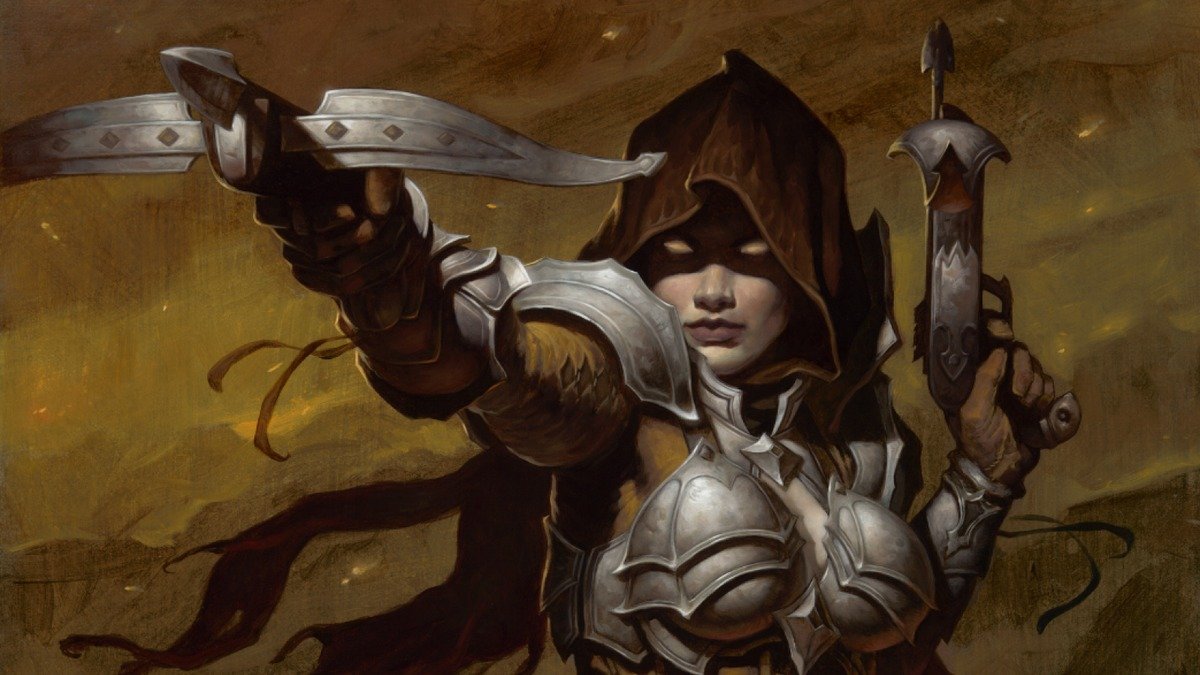
The debate over how many people play Diablo 3 has intensified once again after Blizzard publicly insisted that, despite competition from Diablo 4 and Diablo II: Resurrected, the third game still has a very large audience, with its active player base reportedly numbering in the millions.
How Many People Play Diablo 3? Blizzard Says Millions
The main point of the news is simple but significant. Blizzard representatives told the media that Diablo 3 continues to maintain a substantial community even today. The key detail is not merely the vague suggestion that the game is “still alive”, but the scale being discussed: Blizzard is talking about millions of players rather than thousands.
Statements like this often appear when the opposite view begins to dominate community discussions. Many players assume that most of the audience has moved to Diablo 4, while others have returned to the more nostalgic Diablo II: Resurrected, leaving Diablo 3 to a small group of dedicated seasonal players.
Blizzard’s message suggests otherwise. Diablo 3 remains an important part of the wider franchise ecosystem, even if it no longer dominates gaming news or receives the same level of marketing attention as the latest entry.
However, one crucial detail is still missing. Blizzard did not provide a precise, publicly verifiable figure, such as monthly active users or the number of players online at the same time. The statement therefore feels more like strategic positioning: Diablo 3 is not a forgotten niche title, but a game that continues to attract traffic, returning players and significant seasonal activity.
Why the Question “How Many People Play Diablo 3?” Matters Again
Discussions about player numbers in the Diablo series are almost always connected to two things: confidence in long-term support and the feeling that a game is still active. When players see busy clans, quick group matchmaking, competitive leaderboards and ongoing seasonal discussions, they feel more confident that investing time in the game is worthwhile.
When those signs begin to disappear, players naturally start asking whether the game still has a future.
In the case of Diablo 3, this question has an additional layer. The game moved beyond its period as Blizzard’s primary Diablo product a long time ago. It is no longer the title receiving most of the company’s marketing budget, major system overhauls or the newest franchise content.
That is precisely why players want to know whether Diablo 3 still has the critical mass required to remain active or whether it is surviving largely through momentum and nostalgia.
The Diablo community is also divided according to personal preferences. Some players enjoy Diablo 4 for its open world, seasonal structure and continuous live-service development. Others prefer Diablo II: Resurrected because of its classic itemisation, trading culture and slower old-school pace.
Diablo 3 players, meanwhile, often highlight its speed, accessibility and seasonal “jump in and play” philosophy. With all three communities existing at the same time, the question of how many people play Diablo 3 becomes more than simple curiosity. It also helps reveal which interpretation of the Diablo formula continues to attract players.
What Does “Millions” Mean and Which Player Data Is Missing?
The biggest problem with evaluating Blizzard’s statement is that the word “play” can refer to several very different measurements. Is Blizzard talking about unique players logging in every month, every season or every year? Does the number include everyone who launched the game at least once during a particular period, including players who logged in for only 15 minutes to inspect a new seasonal theme?
Modern video game companies commonly track several different metrics. These include daily active users, monthly active users, concurrent players, new players, returning players and the total number of gaming sessions. Each metric can appear impressive while describing a completely different level of engagement.
A seasonal game naturally experiences large fluctuations. The start of a season creates a substantial activity peak, while the number of active players usually declines after several weeks. That does not necessarily indicate that the game is performing badly.
Diablo 3 also has a significant platform divide. PC and console audiences often engage with the game in slightly different ways. Console players may value local multiplayer, accessible couch co-op and the ease of starting a session, while PC players are more likely to follow leaderboards, optimise farming routes and participate in detailed discussions about builds and statistics.
When Blizzard refers to millions of players, it is unclear how console users, different regions and the duration of individual seasons are included in the calculation.
The statement is therefore encouraging, but it still leaves considerable room for interpretation. Anyone seeking a precise answer to how many people play Diablo 3 is still missing one essential resource: official statistics that are updated regularly and use clearly defined measurements.
Why Diablo 3 Still Attracts a Large Audience
To understand why Diablo 3 may still have a large audience after so many years, it is worth remembering what made the game distinctive. Diablo 3 changed dramatically throughout its life cycle. It evolved from an early version criticised for its economy and balance into the more mature Reaper of Souls era, in which seasons, Greater Rift progression and a clearly defined endgame loop became the central focus.
The seasonal structure offers an important advantage. It allows players to return for a limited period, choose a specific goal, assemble a build, complete the Season Journey and then take another break without feeling that they have fallen permanently behind.
Not everyone wants to commit to a demanding live-service game filled with daily objectives and social pressure to keep up with constant changes. Diablo 3 often functions as a comfort game. Its systems are familiar, the action is fast and returning after a long break does not require studying dozens of new mechanics.
Community habits are another important factor. Some players treat Diablo 3 like a seasonal sport. They start from the beginning every season, compete to reach higher Greater Rift levels and optimise their Paragon progression, equipment and build details.
Even when the amount of genuinely new content is limited, the seasonal cycle provides enough motivation to bring players back. This is where Blizzard’s claim of millions of players becomes believable. A large audience does not mean that everyone plays every day. It may instead describe a broad base of returning players who become active in waves.
Why Players Stay: Speed, Simplicity and the Seasonal Ritual
The most frequently mentioned reasons why people still play Diablo 3 in 2026 are relatively consistent. The first is its pace. Diablo 3 is one of the fastest loot-focused action RPGs, offering substantial progression, frequent legendary item drops and clear rewards within relatively short play sessions.
The second reason is clarity. The basic logic behind most classes and builds remains understandable even after a long break. Players can usually return and quickly remember how their character works without spending hours researching every system.
The third reason is that Diablo 3 feels complete. There is less concern that a major feature is still missing or that an upcoming update will completely rebalance the game and make an existing build irrelevant overnight.
The fourth reason is social. Players with established groups of friends or long-running clans often return simply because it has become a tradition. The beginning of a new season provides an opportunity to meet again, divide responsibilities, farm the main equipment sets and compare performance in Greater Rifts.
The fifth reason is that Diablo 3 offers an alternative to games requiring a greater investment of time. Not everyone wants or can follow multiple live-service seasons simultaneously. Diablo 3 can therefore act as a secondary game that players know they can return to whenever they want.
Finally, Diablo 3 has a psychological advantage: players know what to expect. That familiarity is particularly valuable when other games in the franchise are still refining their long-term formula or changing more quickly than parts of the audience can comfortably follow.
What Diablo 3 Player Numbers Mean for the Community
For players, the practical consequences matter more than an impressive headline figure. If Diablo 3 genuinely has millions of players, even if much of that activity is seasonal, it has several important implications.
First, a large audience increases the likelihood that the servers and essential online services will continue operating reliably for a long time. Maintaining infrastructure for a substantial player base usually makes sense from both a financial and reputational perspective.
Second, stronger activity creates a healthier ecosystem. There are more groups to join, more updated guides, more conversations about the meta and more community events. Even when Blizzard does not introduce major new features, the community can fill the gap through build optimisation, unofficial competitions and player-created challenges.
Third, the size of the audience can influence expectations surrounding continued support. When players hear that the game still has a massive community, they naturally begin asking whether Blizzard might introduce small but meaningful improvements.
Will future seasons continue to offer interesting themes? Could the game receive additional quality-of-life improvements? Even if the answer is no, the fact that Diablo 3 remains popular creates more pressure on Blizzard not to abandon it completely.
This brings the discussion back to the main question. Understanding how many people play Diablo 3 matters because the perceived size of the community influences whether players believe it is worth returning, competing on the leaderboards or beginning the game for the first time.
Possible Scenarios for Diablo 3’s Future
Based on Blizzard’s statement, several realistic scenarios could describe how Diablo 3 will continue to develop.
The first and most likely scenario is stable, low-intensity support. Seasons may repeat or reuse successful themes, while the main priority remains ensuring reliable performance, compatibility and fixes for important technical problems. Under this model, Diablo 3 would remain a dependable choice for players who want fast ARPG combat and straightforward progression.
The second scenario involves a selective increase in updates. If Blizzard’s internal statistics show that Diablo 3 continues to produce exceptionally strong activity at the beginning of each season, the company may decide to invest additional development resources from time to time.
This could mean more balance adjustments, minor system improvements and quality-of-life features. It would not be equivalent to a new expansion, but it could significantly refresh the overall experience.
The third scenario is a slow and natural decline without any sudden decisions. Even with millions of players, the audience may gradually redistribute itself, particularly if Diablo 4 continues to improve its formula while Diablo II: Resurrected maintains its dedicated nostalgic community.
In this situation, Diablo 3 would remain a game that people regularly return to, but it would become less likely to serve as their primary long-term title.
The fourth and least attractive scenario is an eventual sunset. Even popular games ultimately reach a point where maintaining online services becomes more difficult than beneficial. Blizzard’s current statement does not suggest that Diablo 3 is close to this stage. In fact, the claim of a massive audience indicates the opposite.
Nevertheless, players should remember that online game servers do not last forever. It remains sensible to follow official announcements and watch for any significant changes to the game’s infrastructure.
What to Watch for in Future Diablo 3 Updates
Players who want to know whether Blizzard’s statement is simply reassurance or a sign of renewed attention should watch several areas.
The first is seasonal communication. Does Blizzard provide more detailed explanations, share plans earlier or discuss the goals of future seasons more openly?
The second is the frequency and nature of updates. Are patches limited to technical corrections, or do they begin to include quality-of-life improvements requested by the community?
The third is how Blizzard discusses the wider Diablo ecosystem. Is Diablo 3 still presented as an active game that players can choose today, or is it mentioned primarily as a historical stage in the development of the franchise?
It is also important to remember that millions of players do not necessarily indicate constant, intensive engagement. The figure could describe a broad group of people who return for several weeks during each season.
However, that model is one of Diablo 3’s greatest strengths. The game is capable of attracting players for short but regular periods. If Blizzard is publicly highlighting this activity, its internal data is likely strong enough to make the subject worth discussing.
Conclusion: Diablo 3 Is Old, but Its Audience Is Still Large
Although Blizzard has not provided a precise public answer to how many people play Diablo 3, the claim that the audience is measured in millions changes the tone of the discussion. It suggests that Diablo 3 is not simply a forgotten entry surviving in the shadow of newer games.
Instead, it appears to be a stable game that experiences substantial seasonal revivals and continues to find a place alongside Blizzard’s larger projects.
This is good news for players for two reasons. First, the Diablo 3 community will probably remain large enough to keep the experience active and social. Second, Blizzard’s comments reduce concerns that the game could suddenly be forgotten or abandoned.
Until Blizzard publishes exact statistics, players will need to rely on visible signs such as seasonal activity, community engagement and how frequently the company returns to the question of how many people play Diablo 3 and why the game remains relevant.