
 LT
 DE

The Assassin’s Creed Hexe director change has become one of the most significant recent developments at Ubisoft: creative director Clint Hocking is leaving the company, while longtime franchise developer Jean Guesdon is taking over the project.
Although little is officially known about Assassin’s Creed Hexe itself, a change in creative leadership always raises questions: will the game’s vision, tone, and priorities change, or will this merely be an organizational formality now that the team has already gained momentum?
This news is also important in a broader context: Ubisoft has recently been significantly restructuring the management of the Assassin’s Creed franchise, aiming for a clearer direction, a more stable release cadence, and better coordination between different projects.
Assassin’s Creed Hexe director change: what happened and who is taking over?
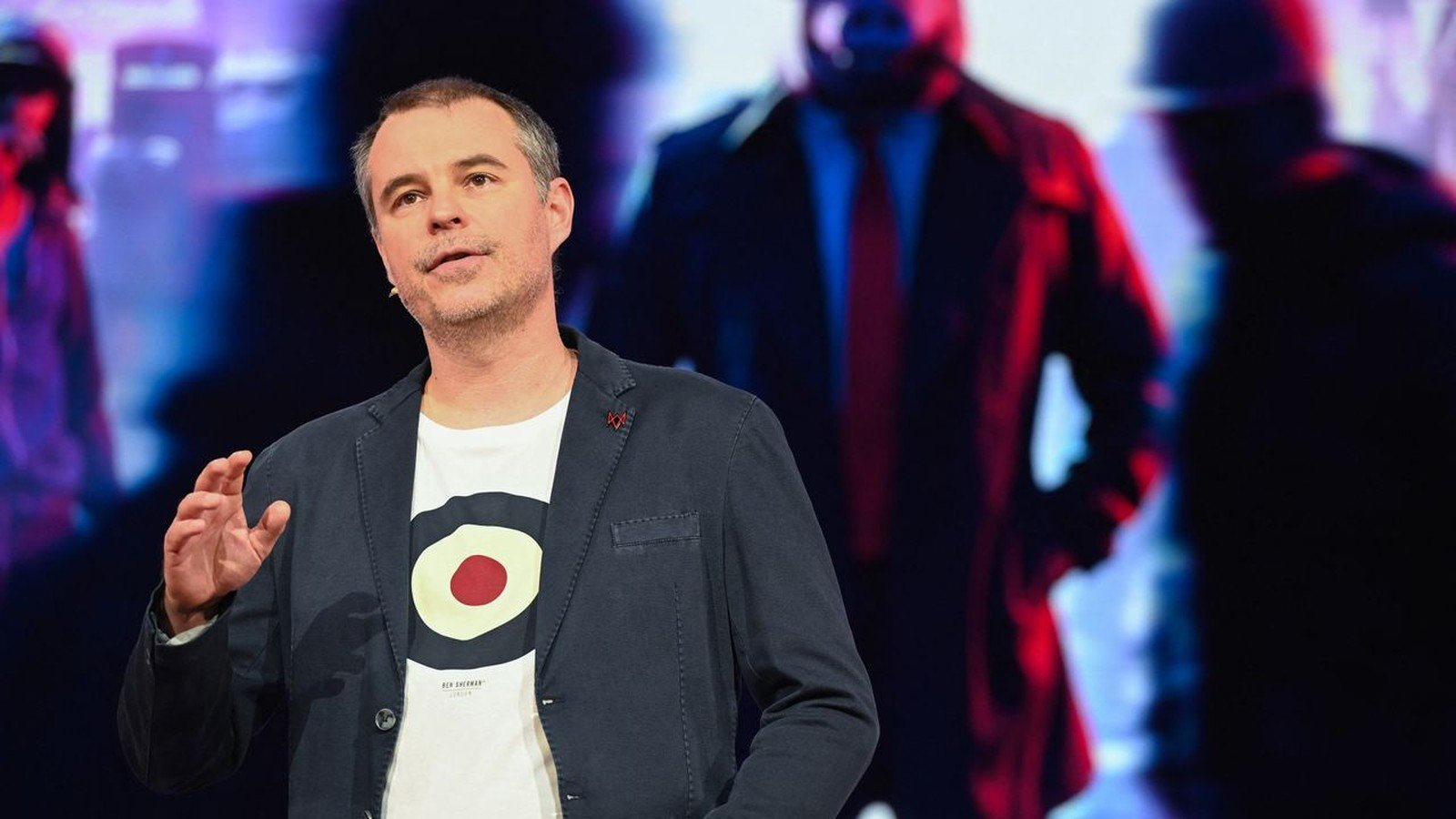
According to publicly released information, Clint Hocking will no longer work at Ubisoft, while creative leadership of Assassin’s Creed Hexe is being handed to Jean Guesdon—a developer whose name is well known to franchise fans because of his work on Assassin’s Creed IV: Black Flag and other Ubisoft projects.
In game development, the creative director is often responsible for the overall direction of a project: the game’s tone, the backbone of its themes and narrative, design principles, visual identity, and ensuring that different teams—design, narrative, art, audio, and user experience—are all moving in the same direction. Such a change therefore naturally sparks discussion, even if the project itself is not yet close to completion.
However, it is also important to emphasize another detail commonly highlighted in situations like this: development continues under an experienced team. This means that even when one leader changes, the project’s daily work often relies on a long-established structure, including core design decisions, existing prototypes, the production schedule, technological choices, and the team’s expertise.
What does the change in creative leadership mean for the Hexe project?
In the gaming industry, a leadership change does not necessarily mean a sudden shift in direction. A project often already has a clearly defined vision, with the new leader taking over the responsibility of implementing it and consistently guiding it toward a high-quality result. This is especially likely in large AAA projects, where decision-making is collaborative and creative risk is managed in stages.
However, a change of creative director can affect several areas even when the overall plan remains the same:
1) Tone and narrative emphasis. Even a slight adjustment in tone—a “darker” or “lighter” narrative, more psychological tension, or more action—can change the game’s identity. In the case of Hexe, where fans expect a different, more atmospheric take on Assassin’s Creed, tone becomes particularly important.
2) Design priorities. One director may place greater emphasis on systemic gameplay depth, such as AI behavior, stealth, and emergent gameplay, while another may prioritize clearer cinematic storytelling, mission structure, or accessibility for a broader audience.
3) Quality standards and polish culture. Experienced directors often bring very specific expectations regarding user experience, animations, how the controls feel, UI clarity, and how the game feels during its opening minutes. This can become one of the biggest differences in the final product.
4) Team communication. In large studios, the creative director also acts as a “translator” between the vision and the realities of production. When the person in this role changes, it can also affect how quickly decisions are made, how clearly goals are communicated, and how conflicts between ideas and deadlines are resolved.
In practice, this may mean evolution rather than revolution: the project retains its direction while defining more clearly what matters most, where corners can be cut, and where additional investment is worthwhile.
Who is Clint Hocking, and why is his departure notable?
Clint Hocking is a developer whose name is associated with prominent periods in Ubisoft’s history and with creative experimentation. His career is often linked to games that place considerable emphasis on systems, player choices, and the ways in which mechanics create tension or meaning.
A creative director with this type of profile is usually associated with the ambition to create a “different” kind of game—one that does not simply follow a proven formula but also attempts to reinterpret it. As a result, fans are naturally asking whether Hexe was being developed as a more experimental chapter of Assassin’s Creed and whether this tendency will remain after the change in creative leadership.
On the other hand, one person is rarely the sole source of ideas. Even when a creative director has a clear vision, it is usually developed in collaboration with narrative directors, lead game designers, art directors, and the production team. It would therefore be more accurate to view the situation as a change in team dynamics rather than the “end of the project” associated with one person.
Jean Guesdon’s role: experience with Black Flag and the franchise’s DNA
Jean Guesdon is associated with one of the franchise’s most highly regarded entries—Assassin’s Creed IV: Black Flag. The game is still frequently cited as an example of successfully expanding the Assassin’s Creed formula: ship controls, naval battles, a sense of open space, and a clear pirate theme gave the franchise new energy.
Bringing a developer like this onto Hexe may be viewed as a signal that Ubisoft wants stability and experience. Someone who has spent many years working on the franchise generally has a strong understanding of the Assassin’s Creed identity: the conflict between secret orders, the interpretation of historical periods, the balance between exploration and mission structure, and how to preserve the franchise’s recognizability even while experimenting.
For fans, this may point toward two opposing but equally realistic directions. First, Hexe may remain bolder but be more carefully framed within the franchise’s canon and gameplay loop to make it suitable for a broad audience. Second, this experience may allow its bold ideas to be executed more effectively—with less chaos during development and greater clarity about what should make it into the final version.
How do changes like this affect the development process of AAA games?
AAA projects are generally developed across several stages: concept development (pre-production), active production, content completion and optimization (alpha/beta), and final polishing (release candidate). The creative director has the greatest influence during the early stage, when the game’s “backbone” is defined: its core fantasy, main systems, world design principles, and player progression.
If a leadership change happens later, the following effects are more commonly seen:
• Reprioritization. Deciding what belongs on the “must-have” list and what should be postponed to ensure a stable release.
• Quality focus. Greater attention is given to one or two of the game’s strongest features to make them stand out.
• Tonal adjustments. Certain scenes may be rewritten, while the pacing of dialogue, mission presentation, and atmosphere may be adjusted.
• Clarity of presentation. A game needs to “sell” its idea within the first 30–60 minutes, so the opening, tutorials, UI, or mission layout may sometimes be reworked.
In Ubisoft’s case, the organizational scale is also important: different studios may work on separate parts of the same project. In structures like these, a leadership change often means that coordination between teams becomes even more important, especially if the company is restructuring the management of the franchise at the same time.
The Assassin’s Creed Hexe director change and the broader Assassin’s Creed strategy
In recent years, Assassin’s Creed has been developed as a broad ecosystem in which several projects are being created simultaneously for different audience preferences: a more traditional stealth model, a large-scale RPG, and experimental directions that can offer a different tone or structure.
Against this backdrop, the “Assassin’s Creed Hexe director change” becomes more than just news about individual people; it is also a strategic signal. When a company reviews the leadership of a franchise, it is natural for it to seek to reduce risk by ensuring that projects have a clear vision, a realistic production plan, and the ability to fit within the overall release schedule.
In other words, Hexe may be positioned as an important piece of the franchise puzzle—a project that will either offer a striking thematic contrast or serve as a bridge between different interpretations of Assassin’s Creed. In such cases, Ubisoft often chooses leaders who know how both to create and to present an idea to the broader market without losing the franchise’s recognizable identity.
What is it realistic to expect from Assassin’s Creed Hexe right now?
Official details about Hexe remain limited, so any specific promises would be speculation. Nevertheless, several realistic expectations can be identified based on the situation itself and the history of the franchise:
• Gradual release of information. If the project is still at an earlier stage, Ubisoft is unlikely to rush into revealing the full picture of the game. Leadership changes often mean that communication will become even more cautious until the direction has been firmly established internally.
• Greater consistency. An experienced director can help the team define the “core of the game” more quickly and avoid shifting between different ideas. This does not necessarily reduce ambition—sometimes it helps bring that ambition to life.
• Focus on identity. When a franchise has many different projects, it is especially important for each one to have a clear identity. In the case of Hexe, this identity will most likely be shaped through its atmosphere, the mood of its historical period, and decisions regarding the game’s structure.
• Quality control. In recent years, Ubisoft’s audience has become more demanding about technical stability and content quality on launch day. The team’s experience and clear leadership could therefore be among the most important prerequisites for a successful release.
Ultimately, the most important question for fans is usually simple: will the project become better because of this? The answer will depend on how extensively Hexe had already been shaped, which direction the team considers its strongest, and whether the new creative director can maintain a balance between innovation and the franchise’s DNA.
Is this bad news for fans? Not always
On social media, the departures of project leaders are often interpreted as signs of a crisis, but the reality of the industry is more nuanced. Creative leaders change workplaces for various reasons: a career shift, personal plans, internal reorganizations, or simply because a major project requires a different kind of leadership during its next stage.
If Ubisoft’s communication emphasizes that development is continuing under an experienced team, this often means that the main production “tracks” have already been laid. In that case, the change is more like taking over the wheel during a race: the car is moving, and the new driver is aiming to reach the finish line with as few mistakes as possible.
Of course, for now it is worth maintaining healthy skepticism and waiting for concrete facts: when more official information will be released, what direction the game will take, and how Hexe will fit into the broader roadmap for Assassin’s Creed.
What to expect next: signals worth watching
If you follow Assassin’s Creed news, it will be worth monitoring not only announcements in the near future but also indirect signals that often reveal more than a single quote in the press:
• Official team introductions. A new creative director is sometimes introduced later through interviews or developer diaries that provide hints about the vision.
• Franchise events and platforms. Ubisoft likes to group projects into larger presentations, so Hexe may appear as one of several highlights.
• Project positioning. How Hexe will be defined: as a “darker” chapter, an experiment, a narrative-driven game, or a full-scale open-world experience.
For now, one thing is clear: the news about the leadership change indicates that Hexe remains in active development and that Ubisoft is making efforts to ensure its continuity.