
 LT
 DE
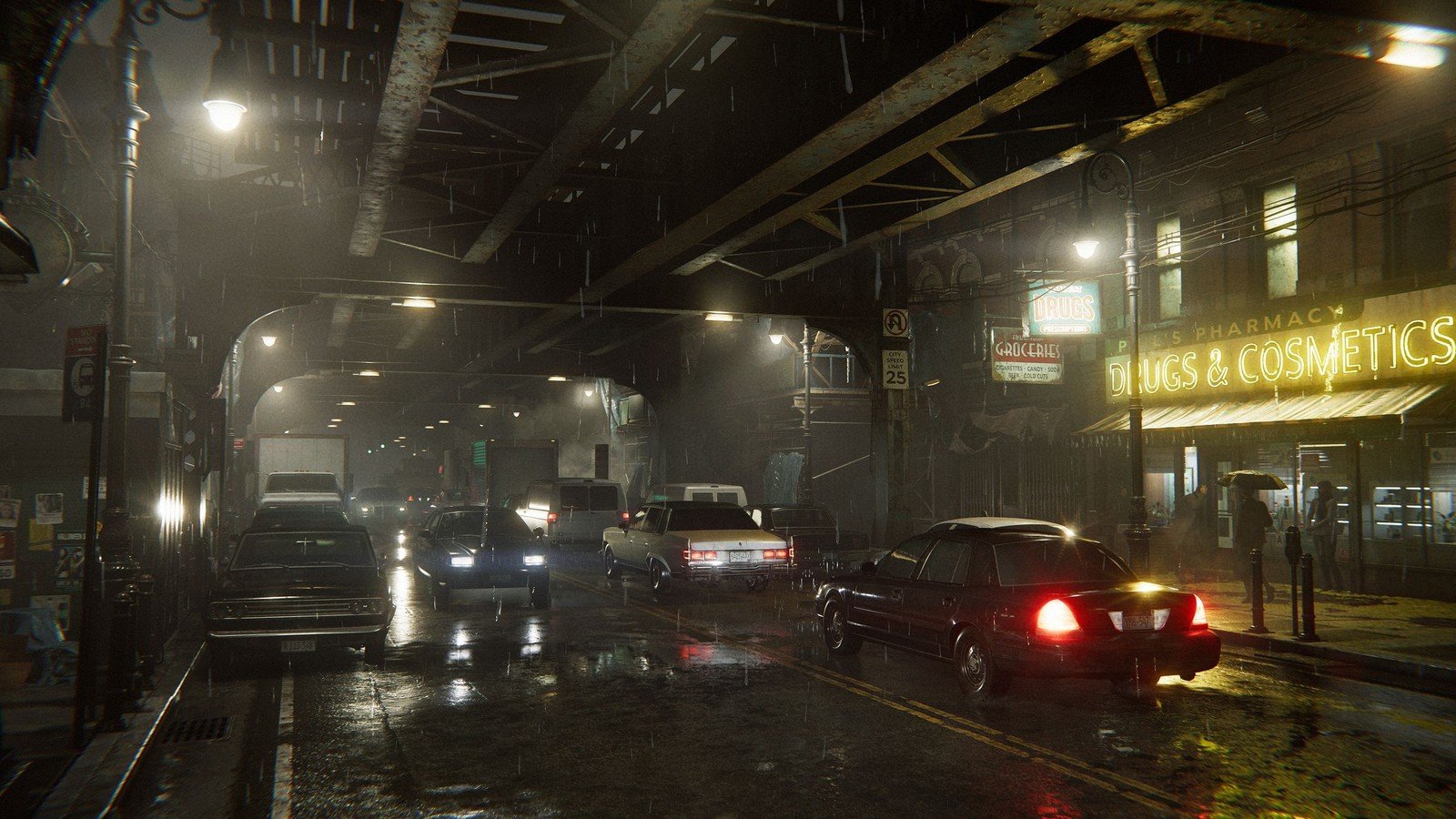
“Resident Evil Requiem path tracing requirements” are becoming one of the hottest topics among PC gamers, as the latest news about the game’s lighting technologies makes one thing clear: the visual leap will be significant, but it will come at the cost of graphics card performance. The news covered by PC Gamer emphasizes that path tracing in the game is highly demanding on the GPU, while also suggesting that this technology could reach the mainstream market faster than ray tracing did in the past.
This matters not only to those pursuing “ultra” graphics. Path tracing is often presented as the “ultimate” stage of real-time lighting: instead of using a few selected rays or hybrid tricks, it attempts to simulate the complete behavior of light within a scene—with more natural reflections, color bleeding (global illumination), and more accurate shadows. The result can be stunning, but the frame rate can be unforgiving if the hardware is not prepared for it.
This news is particularly relevant to fans of the “Resident Evil” series, as Capcom traditionally invests heavily in visual quality and optimization. However, path tracing is a different beast: even a well-optimized engine cannot avoid the fundamental computational cost. This naturally raises the question—what do “Resident Evil Requiem path tracing requirements” mean in practice, and how should players respond if they want beautiful visuals without getting a slideshow instead of a game?
Resident Evil Requiem path tracing requirements: why is the GPU under such a heavy load?
Ray tracing is already familiar to many players: more accurate reflections, more realistic lighting, and softer shadows. However, in many games, it involves a compromise—only part of the scene’s lighting is calculated using rays, while the rest is handled through traditional methods (rasterization) or various “tricks.” Path tracing follows a more ambitious approach: it aims to calculate most of the lighting in a physically accurate way by modeling the path of light through the scene, its bounces, light scattering, and even subtle color nuances.
As a result, the GPU load does not increase “slightly”—it rises dramatically. Every additional ray bounce, every transparent or semi-transparent material, and every reflective surface requires additional calculations. Keeping the image clean also requires denoising solutions, which consume further resources. In other words, path tracing is not simply a checkbox in the settings—it switches the entire lighting system to a more computationally expensive mode.
This is where the core of the news comes in: yes, path tracing in “Resident Evil Requiem” may be demanding even for powerful graphics cards, but the market also offers a growing number of technologies that can make such a mode more manageable. Today, real-time upscaling (DLSS, FSR, XeSS), frame generation, and more mature RT acceleration hardware in GPU architectures can turn something that seemed impossible a few years ago into something that is at least “possible with compromises.”
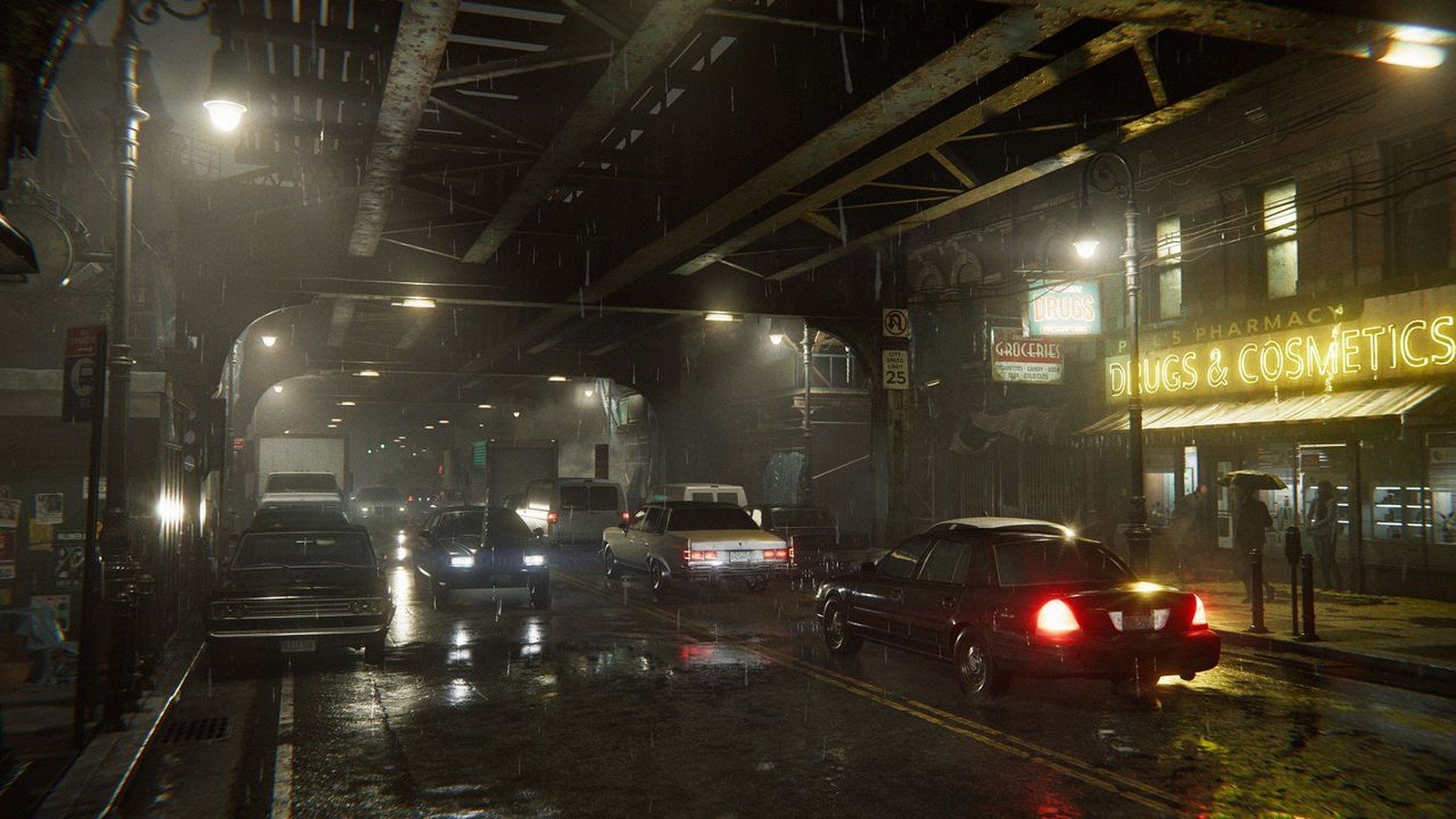
Resident Evil Requiem path tracing requirements in practice: what kind of PC might you need?
It is important to distinguish between two things: the official system requirements, which are usually announced closer to release, and the reality dictated by your chosen graphics mode. When discussing “Resident Evil Requiem path tracing requirements,” we usually do not mean the minimum scenario in which the game simply runs, but rather a comfortable experience with path tracing enabled and an acceptable FPS. The latter often means that it will be difficult to play without a modern graphics card with strong ray-tracing performance.
One practical recommendation is to consider more than just the name of the GPU model and focus on three factors: ray-tracing performance, the amount of VRAM, and whether you plan to use upscaling or frame generation. Path tracing modes consume plenty of VRAM because high-resolution textures, more complex lighting data, and additional buffers quickly fill the available memory. If the system runs out of VRAM, even a powerful GPU core may begin to stutter because of the need to move data around.
Resolution is a critical factor here. Playing at 1080p with aggressive upscaling is often the point at which path tracing becomes most “accessible” to a broader audience. A 1440p resolution already requires more performance headroom, while 4K with path tracing is almost always flagship territory or an exercise in compromise—a quality preset combined with upscaling and reduced settings elsewhere. In other words, if your goal is a high resolution and maximum realism, expect this to be the most expensive part of your PC configuration.
The CPU often takes a back seat, but it should not be underestimated. “Resident Evil”-style games are generally not the biggest CPU killers, but consistent frame times depend on how quickly the system feeds data to the GPU and handles AI, physics, and streamed texture loading. Path tracing will usually overwhelm the GPU first, but if you want to achieve the highest possible FPS with upscaling and frame generation, a weak processor could become an unexpected bottleneck.
Another practical consideration is storage. Modern horror games often feature large, detailed locations and numerous unique assets, while a fast SSD, particularly an NVMe drive, helps reduce microstutters when the game constantly loads textures or geometry. Path tracing itself is not an “SSD feature,” but overall smoothness often suffers not because of one major issue, but because of several smaller ones.
How to achieve a good frame rate without buying a new GPU
Even if path tracing appears to be something you can simply “enable and forget,” the best results are achieved by adjusting settings intelligently. The first step is to decide on your priority: is image clarity with less noise more important to you, or is FPS your main concern? Path tracing often relies on denoising, and its quality can have a major effect on image stability. A lower denoising level can sometimes produce more visible “grain,” but it may also free up resources.
Second, consider resolution and upscaling. If the game allows you to choose between quality modes, using high-quality upscaling on a 1440p monitor is often a better compromise than playing at native resolution with poor FPS. Upscaling technologies have improved significantly over the past few years: text, fine details, and motion often look better than players were previously accustomed to. As a result, path tracing is no longer “only for enthusiasts” and is becoming accessible to at least “some” players.
Third, consider compromises involving reflections and shadows. Although path tracing theoretically covers many lighting components, developers sometimes allow players to adjust related parameters in practice: shadow quality, reflection detail, the number of lighting bounces if such an option is available, and additional post-processing effects. Even if there is no dedicated “bounces” slider, the game will very likely offer several modes, such as “Path Tracing: Low/High,” that effectively control the number of rays and the level of noise.
Fourth, use frame generation if it is supported. It does not make the GPU “more powerful”—instead, it inserts additional frames between the ones that are actually rendered. This can significantly improve the overall experience, especially if the base FPS is already sufficiently stable. However, it is important to remember that this can sometimes create latency concerns in competitive games, while horror games tend to prioritize smooth movement and visual immersion, making the technology potentially very suitable for them.
Finally, check your drivers and temperatures. Path tracing often means spending longer periods at 99% GPU utilization, so cooling and a stable boost clock become genuine parts of overall performance. Sometimes, a 5–10% difference can result simply from preventing the graphics card from reaching the temperature limit at which it begins reducing clock speeds.
Why path tracing could become standard faster than ray tracing
The idea raised in the PC Gamer article—that path tracing could become a mainstream option faster than ray tracing did in the past—makes sense when viewed in the context of the industry’s development cycle. When ray tracing first began to gain traction, two things were missing: a sufficiently broad installed base of RT-capable GPUs and mature supporting technologies. The situation is different now—the market already has many times more graphics cards with RT acceleration, and players have grown accustomed to upscaling as a “normal” part of the graphics pipeline.
Furthermore, developers can build on what they have already learned. Ray-tracing integration mistakes, performance pitfalls, denoising solutions, and shader optimization have all become everyday concerns over the past several years. As a result, path tracing is no longer completely “unknown territory”: it is more of an evolution that can be introduced in stages while preserving hybrid modes for players who do not want—or cannot afford—to pay the FPS cost.
Consumer expectations are also worth mentioning here. A few years ago, ray tracing often felt like an extra feature that reduced FPS by 20–40% in exchange for subtly better-looking reflections. Today, when many players already own high-refresh-rate monitors and can see a real difference in motion, developers are more inclined to provide “greater” value in return for the performance cost. Path tracing as a concept often delivers a more noticeable “wow” effect, particularly in lighting and atmosphere, making it psychologically easier for players to justify the compromise.
If “Resident Evil Requiem” does indeed offer path tracing as a clearly defined mode, it will be another indication that “Resident Evil Requiem path tracing requirements” are not simply a quirk of this series. Instead, they are part of a broader trend in which top-tier graphics modes are developed under the assumption that upscaling and next-generation GPUs are standard tools rather than exotic technologies.
What to do now: buying and upgrading strategy
If you are currently considering an upgrade solely because of “Resident Evil Requiem” and its path tracing, the most rational approach is to wait for more specific information: official system requirements, explanations from the developers about the available modes, and real-world benchmarks. Path tracing can be implemented in different ways: in some games, it becomes a “complete” lighting mode, while in others, it is more of a showcase option with limited use cases or a very clearly defined visual-quality target.
Nevertheless, you can prepare without making a purchase. First, evaluate your monitor’s resolution and your target FPS. If you play at 1080p and are satisfied with 60 FPS, your chances of making path tracing work with compromises—such as upscaling and reducing some settings below “ultra”—are generally better than those of 1440p or 4K enthusiasts who want 120+ FPS. It is often the combination of unrealistic goals—high resolution, maximum effects, and a very high FPS—that makes the “requirements” appear impossible.
Second, make sure your system is balanced: sufficient RAM, a properly functioning SSD, and a case with adequate cooling. Sometimes the upgrade that provides the biggest improvement in “comfort” is not the GPU—it may be moving to a faster drive, improving the cooling, or upgrading the processor if it is clearly limiting the overall system. Yes, path tracing is primarily a GPU workload, but smooth frame pacing depends on the entire hardware chain.
Third, have a plan B. Even if path tracing proves too demanding for your GPU, “Resident Evil Requiem” will very likely offer other modes as well: traditional lighting, hybrid ray tracing, and different presets. The most important thing is for the game to remain playable and preserve its atmosphere. Lighting is critical in the horror genre, but atmosphere is not created by maximum realism alone—it also comes from art direction, sound design, animations, and pacing.
Conclusion
The news about “Resident Evil Requiem” and its path tracing is a reminder that the race for more advanced graphics technology never stops: increasingly realistic lighting comes with higher GPU demands. “Resident Evil Requiem path tracing requirements” will likely be high when aiming for maximum visual quality and a high resolution, but the industry now has more tools for handling them—from upscaling to more mature RT solutions in modern GPUs.
If Capcom manages to present path tracing as a meaningful and visible leap in quality rather than merely a technology demonstration, it could become another step toward making such modes increasingly common. For players, the most important thing now is not to panic about the “requirements,” but to plan realistically: choose your targets, understand the compromises, and wait for the official figures.