
 LT
 DE

“Stardew Valley quiz in Lithuanian” is a phrase that has recently been heard increasingly often among farming simulation fans, as PC Gamer has published a new quiz aimed at veterans, inviting them to test how many Pelican Town details they actually still remember. This is not a game update or DLC, but this type of content often gives the community a great opportunity to return to their saved farms and remember the characters, mechanics, and small, easily forgotten details.
The news is simple: PC Gamer has created a “Stardew Valley” quiz that is reportedly aimed at experienced players—those who have completed the Community Center more than once, know when every seasonal festival begins, and can tell which gifts each town resident receives with the greatest enthusiasm. As “Stardew Valley” approaches its ten-year mark, a quiz like this becomes a symbolic way to celebrate the game’s longevity and its cultural importance within the cozy genre.
What is interesting is that “Stardew Valley” is one of those games where knowledge is not limited to small pieces of lore. Much of it is directly connected to efficient progression: what appears where and when, what is worth doing first, and how to optimize time, energy, relationships, and income. A quiz about Pelican Town therefore often reveals not only a player’s memory but also their experience—which systems they have mastered and where gaps still remain.
Stardew Valley quiz in Lithuanian: why veterans are talking about it now
Although online quizzes have existed for a long time, PC Gamer’s version is presented as a challenge for “expert farmers.” In other words, this is not a beginner’s test about who Pierre is or who lives on the beach. Some of the questions, judging by the tone and intended audience, focus on details that usually become apparent only after playing for a long time: event requirements, specific items, town routines, hidden nuances, or subtle differences between mechanics.
This news is also important because of its context: a decade of “Stardew Valley” represents a period during which the game became a comfort classic. Many players started playing it back in 2016, others joined after the major updates, and still others discovered it only after the game had established itself as one of the strongest examples of the relaxing genre. The quiz naturally becomes a community look back: what do we all remember, and what do we need to check on the wiki?
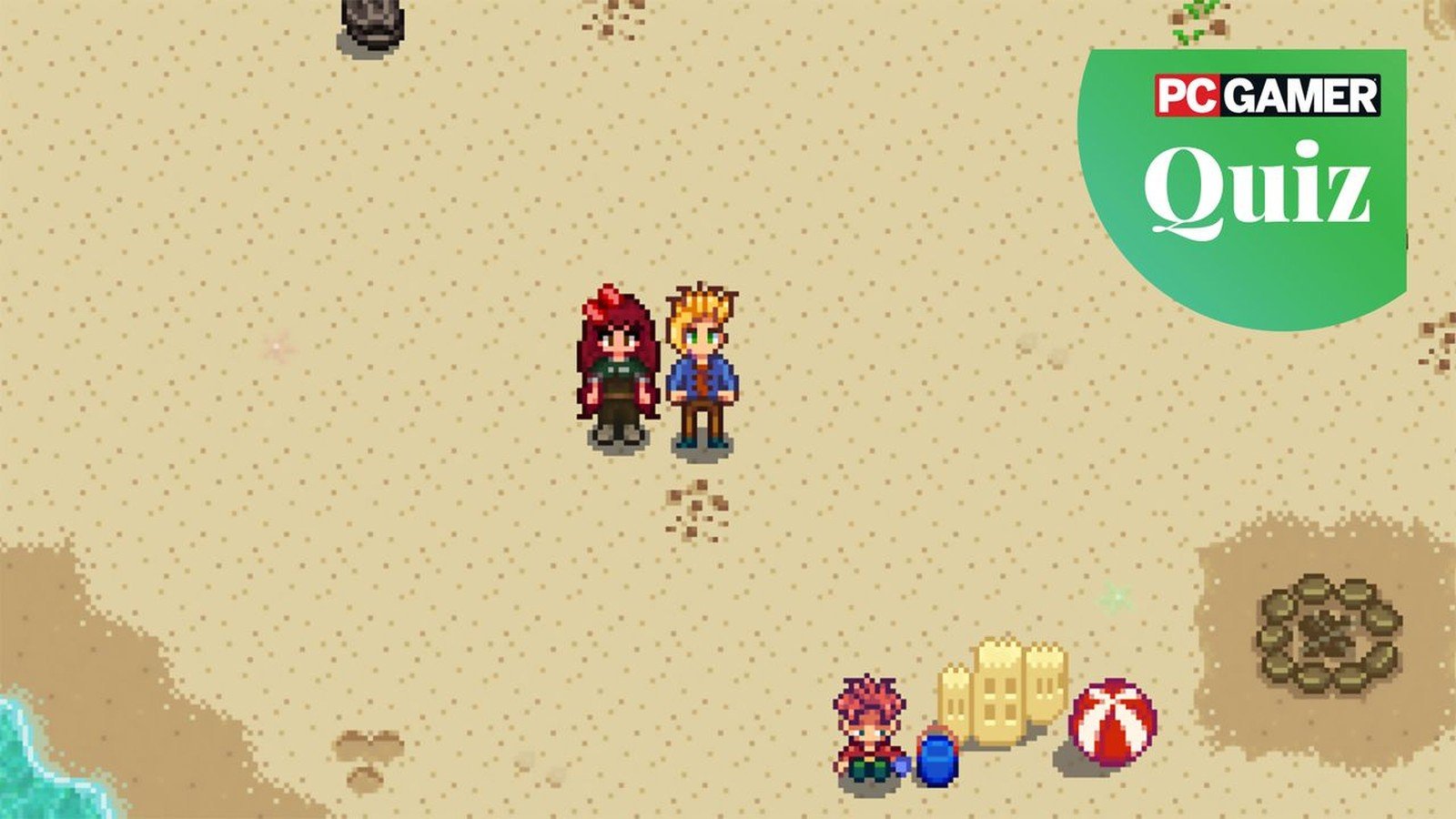
For a Lithuanian-speaking audience, there is an additional angle here: although PC Gamer’s quiz is presented in English, the idea itself can easily be brought into the local community—from unofficial translations to game nights on friends’ Discord channels, where the questions can be read in Lithuanian and points can be awarded. In practice, this news could therefore become an opportunity for more than one community effort to create or adapt a “Stardew Valley” quiz in Lithuanian.
Another reason why these tests are so engaging is that “Stardew Valley” has a peculiar quality: even if you have played for hundreds of hours, you still forget something. One season passes, and by the next you no longer remember which festival takes place on which day or exactly where a particular recipe is obtained. A quiz brings these gaps to the surface, creating an urge to “check in practice”—to launch the game and make sure.
How this type of quiz differs from a simple fan test
Online tests are often superficial: “Who is your favorite NPC?”, “Which farm would you choose?”, and so on. Based on the description provided, PC Gamer’s version is closer to a genuine trivia quiz: the questions should require knowledge rather than opinions. This is important because “Stardew Valley” contains many factual elements: an item catalog, recipes, seasonal fish, minerals, artifacts, events, and achievements.
On the other hand, it is worth remembering that a trivia quiz is not an official exam. It is entertainment that may include editorial choices regarding which details are considered “important,” as well as interpretive decisions about how precisely a question should be phrased. The results are therefore best treated as a fun indicator rather than the final verdict on who is a “true” “Stardew Valley” expert.
Nevertheless, these tests create an excellent social effect: people compare their scores, share where they made mistakes, and start discussions. “Why do I always forget that one recipe?” “How could I have mixed up those two festival prizes?” From this perspective, the quiz is a community conversation starter.
Who this news is for and why it matters to cozy genre fans
PC Gamer emphasizes veterans, but the news is actually relevant to a broader audience. If you played “Stardew Valley” a few years ago and then stopped, the quiz serves as an easy way back: you test your memory for 10–15 minutes and suddenly remember why you enjoyed the Pelican Town routine so much in the first place.
The cozy genre has expanded significantly in recent years, with more games about gardening, communities, small towns, and peaceful progression. “Stardew Valley” remains the benchmark, and any content that highlights the depth of its systems also indirectly demonstrates why it has endured for so long. The quiz becomes a kind of measure of mastery—even in relaxing games, there is still room for improvement.
In addition, a quiz is content that does not require any extra spending: there is no need to buy a new edition or subscription, and there is no need to devote entire evenings to grinding. A few minutes are enough, while the emotional effect can be significant—especially if the game is connected to personal memories, such as the first virtual “harvest,” the first relationships with NPCs, or the first “million” earned from wine or truffle oil.
How to prepare for a Stardew Valley quiz in Lithuanian (even if the test is in English)
If your goal is not only to “take a look” but also to earn a high score, it is worth reviewing several areas that are most often forgotten. This also offers a practical advantage: preparing is not about dry memorization—it is simply a return to the game’s systems.
First, remember seasonality: the “Stardew Valley” calendar is one of the game’s most important frameworks because fish, crops, festivals, and certain events all depend on it. If you have not played for a long time, you are most likely to mix up specific times—for example, what happens in summer and what happens in fall—as well as the requirements for certain things to appear.
Second, NPC gifts and heart events: many players have two or three favorite characters whose gifts they know by heart, but remembering the others is more difficult. If the quiz is aimed at veterans, questions about villagers’ preferences or event requirements are among the most logical choices because they create plenty of “aha” moments.
Third, resources and crafting: minerals, artifacts, production, recipes, and crafting chains such as kegs, preserves jars, and similar equipment. This is where many specific details emerge—things players do automatically but rarely list out. A quiz that asks for exact names or locations forces players to turn that automatic knowledge into something they can clearly explain.
If you want a “Stardew Valley quiz in Lithuanian” experience, a practical solution is to create a small glossary of the most common terms, including fish, tools, buildings, and professions, or simply agree with friends that one person will read the questions and briefly explain them in Lithuanian without changing their meaning. This maintains fairness while also improving accessibility.
What types of questions to expect and where even experienced players usually make mistakes
Although we will not quote specific questions here, the design of “Stardew Valley” itself makes it possible to predict what most commonly becomes a trap. The first type involves similar items and names. The game includes many cases where only “one word is different”: different fish, different minerals, and different dishes that appear similar but serve different purposes or are obtained under different conditions.
The second type involves locations and time. “Where is this found?” and “When does this appear?” are classics because Pelican Town may look small, but it actually contains many niche locations, while time-related rules involving weather, seasons, and time of day constantly overlap. Even if you know how to obtain something “in principle,” you may make a mistake when asked to provide an exact answer.
The third type involves mechanical details. For example, what a particular dish or elixir provides, exactly how a certain profession bonus works, or how one system connects to another. Veterans often play by feel and optimize through experience, but a quiz asks them to turn that experience into a clear explanation.
The fourth type involves festivals and special events. Many players remember the general atmosphere but forget the exact day, rules, or prizes. If the test is intended for “Pelican Town veterans,” festivals are far too iconic an element to leave out.
What this type of quiz says about the longevity of Stardew Valley
The simple fact that major gaming websites are still creating special tests about “Stardew Valley” shows that the game has not lost its relevance. Some projects become little more than nostalgic memories after a few years, but here we see the opposite effect: the game is still alive within its community, and its details are rich enough to form challenges even for experienced players.
The success of “Stardew Valley” is often explained by its warm tone and the freedom to play at your own pace. However, the quiz highlights another side: beneath that peaceful atmosphere lies a structure of rules and a vast network of items and interactions. This is precisely what allows the game to remain deep even after many hours of play.
These tests also bring together different types of players. Some are min-max enthusiasts who calculate profitability and routes. Others are fans of the story and characters. Still others are collectors aiming to complete the museum and unlock every achievement. A quiz often includes a little from every area, allowing everyone to feel strong in one category and weaker in another.
Community ideas: how to turn a Stardew Valley quiz into an event
If you have a group of friends who play “Stardew Valley,” PC Gamer’s quiz can become a simple game-night format. One person opens the test while the others answer in turns or as teams. You can agree on rules: whether checking the wiki is allowed, whether there is a time limit, and whether the team’s overall score is counted.
For a Lithuanian format, it is worth choosing one of two approaches. The first is a light spoken translation that does not change the meaning of the questions, keeping the results comparable to the original. The second is an inspired but original quiz in which the questions are phrased to sound natural in Lithuanian and reflect what the local audience is most likely to remember.
A “Stardew Valley quiz in Lithuanian” could also become content for creators: a segment during a Twitch stream, a YouTube video, or even a short TikTok series featuring one question every day. This is particularly well suited to games with many recognizable details that spark discussions in the comments.
Is it worth trying if you played a long time ago?
Yes, precisely because it is low-risk. In the worst-case scenario, you will earn a modest score and discover what you have forgotten. In the best case, you will surprise yourself with how much information has remained in your “muscle memory.” And if the test makes you want to start another season on your farm, the quiz will have served another purpose: bringing you back to the game without any pressure.
If you decide to start over, that is perfectly normal too. “Stardew Valley” is one of those games where a fresh start often provides more enjoyment than trying to remember what you were doing in an old save. The quiz can also provide direction: if you got the fish questions wrong, perhaps you will become a fishing master this time; if you struggled with recipes, you may pay more attention to production; and if festivals caused problems, you can follow the calendar and plan ahead.