
 LT
 DE
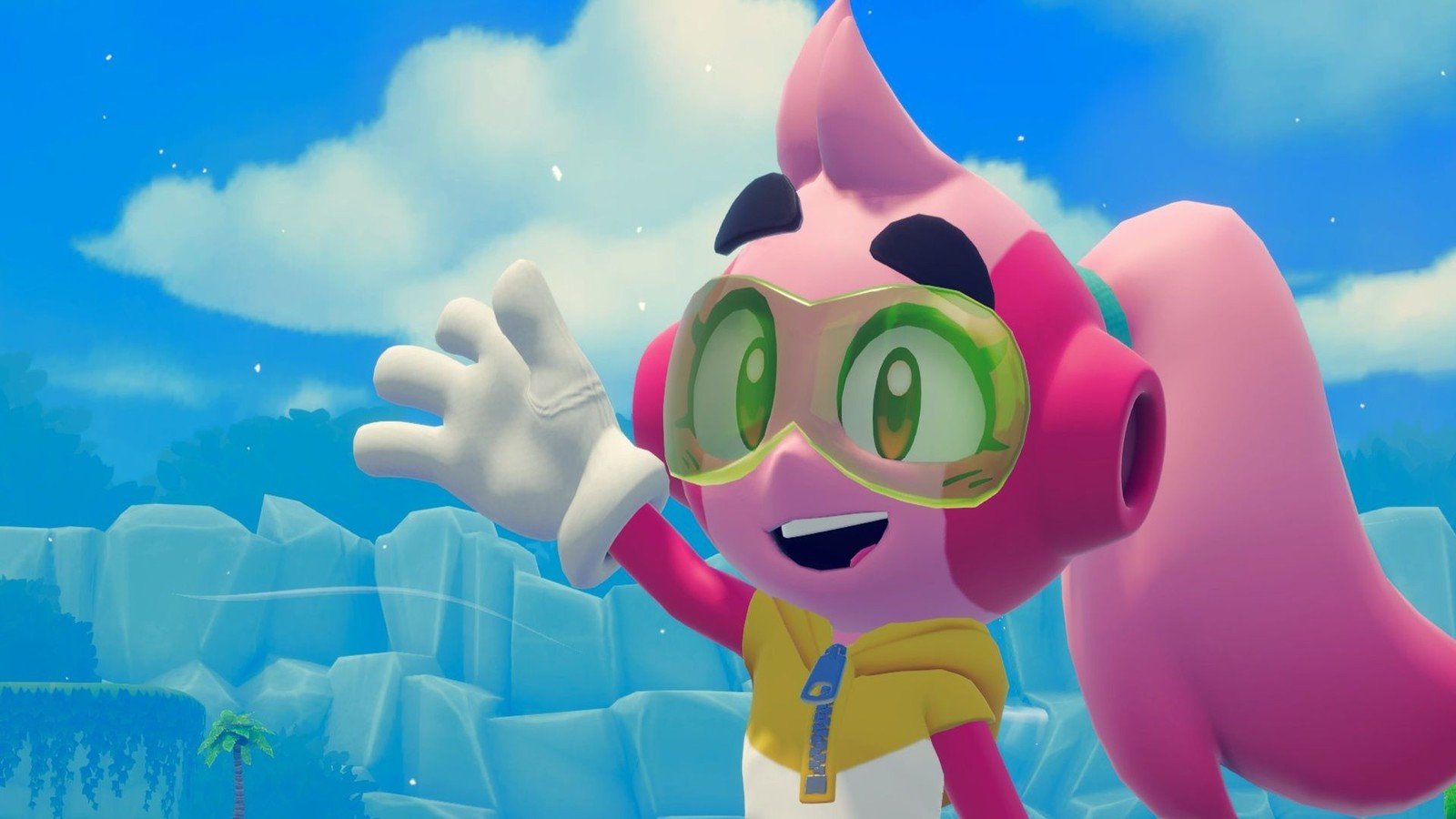
If you are looking for an experience similar to the fastest multiplayer racing games on PC, you will usually think of tracks, cars, and the pursuit of faster lap times. However, the latest Steam demo update is a reminder that “racing” can take place in an entirely different format: a speed platformer where horsepower matters less than your reactions, route memory, and the cost of making mistakes.
PC gaming media recently highlighted one of the demos available during Steam Next Fest, which many players remember as being particularly well suited to speedrunning. This 3D platformer, clearly inspired by the pace of the classic 3D Sonic era, has received an important addition: ranked multiplayer races, transforming the game from “a good single-player challenge” into an ongoing competition against other players.
Updates like this usually change the entire rhythm of a game’s life cycle. A demo that was previously something you would use to “set a time and move on” suddenly becomes a place you want to return to every evening: to climb the rankings, face stronger opponents, learn more efficient routes, and find out whether your best run is genuinely good when others are attempting the same thing.
What changed: ranked races and why they appeal to fans of the fastest multiplayer racing games on PC
Ranked races essentially mean that the multiplayer mode is not simply about “completing a level quickly alongside others,” but also includes a clear competitive structure: your results are recorded and compared, while the game attempts to match you with players of a similar skill level. This creates a form of progression that is more than a personal record—it becomes visible and “rated” by the system.
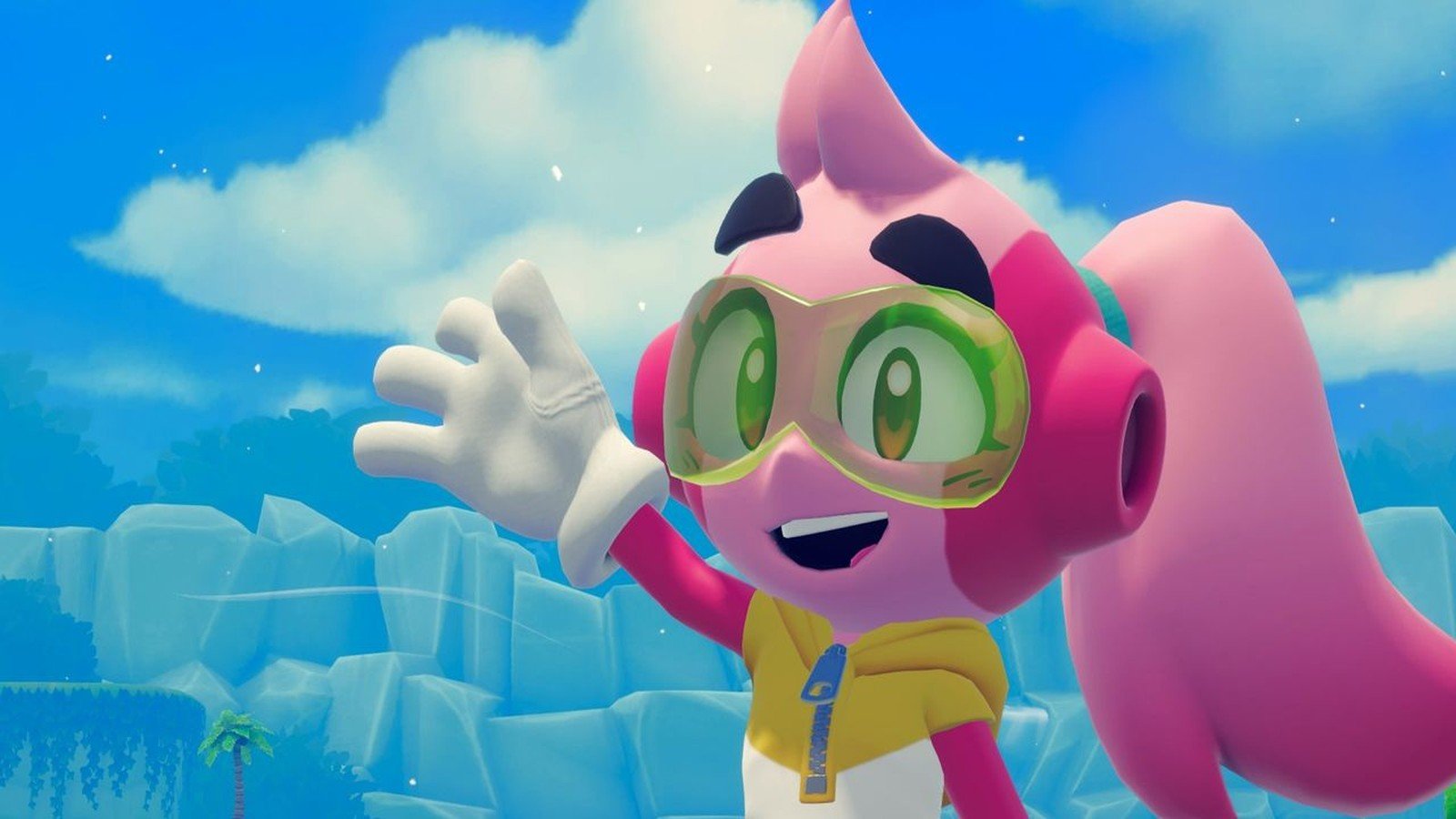
This is particularly well suited to a speed platformer because its core gameplay already resembles racing: finding the optimal route, consistently maintaining momentum, taking risky shortcuts, and knowing that “one mistake means falling behind.” The only difference is that instead of navigating turns on asphalt, you are more often deciding when to jump, where your momentum will carry you, and how to maintain speed through several consecutive sections.
Another important aspect is that a ranked mode often reduces the feeling of randomness. Regular public multiplayer can be chaotic, with one player being a newcomer and another highly experienced, while a ranked format makes it more likely that matches will be evenly contested. This appeals to players who want tension but do not want every match to end in either a crushing defeat or an overly easy victory.
Finally, these races work extremely well with a replayability-focused design: short attempts, a quick return to the starting line, a clear objective to finish in a higher position, and the recurring question, “What if I played more cleanly this time?” This feeling is one of the reasons why the speed-focused genre remains so popular on PC.
Speedrunning and “racing”: why a platformer suddenly becomes a competitive game
Within the speedrunning community, “racing” has long been a separate discipline. Even when a game does not officially support multiplayer, people organize race formats: they start at the same time, compare completion times, follow each other’s progress, and analyze strategies. When developers add ranked races directly to a game, they essentially institutionalize something that previously took place on Discord servers, in tournaments, or on community websites.
The 3D Sonic-inspired game design is particularly important here. In platformers like this, speed does not simply mean “running fast”—it is a system that must be learned: how to preserve momentum, how to avoid stopping because of a poorly timed jump, and how to link a chain of movements together. This is enjoyable in single-player mode, but ranked races turn the same mechanics into a comparison—not only whether you can master them, but whether you can do so better than other players.
In addition, the racing format helps highlight the game’s quality. If movement is not precise, collisions are inconsistent, or the camera gets in the way, a ranked mode exposes those problems immediately—players lose because of the system rather than their decisions. When developers are still willing to introduce a ranked mode, it often signals confidence in their movement model and a desire for players to push it to its absolute limits.
Another interesting nuance is that in platforming races, you compete not only against other players but also against your own consistency. In speed-focused games, victory is often determined not by a single brilliant trick but by the ability to repeat it ten times in a row. A ranked mode encourages this kind of discipline because rankings usually reflect more than “one successful run,” instead rewarding more consistent results across multiple attempts.
How rankings and matchmaking work—and what to expect from an early version
Although the exact implementation can vary, most ranked multiplayer systems follow similar principles. First, a player receives an initial rating, sometimes after several placement races, and the system then attempts to find opponents with a similar skill level. This is particularly relevant in speed-focused games, where a difference of two or three seconds can feel like an enormous gap.
Second, these systems often introduce seasonal dynamics: rankings are reset or gently adjusted so that everyone has an opportunity to climb again and continued activity is encouraged. During the demo stage, this may still be very simple—for example, there might only be a single leaderboard and an overall MMR rating—but even a basic version provides something missing from the pursuit of single-player times: a living meta in which everyone is simultaneously searching for the best solutions.
Third, it is important to expect growing pains. When multiplayer races have only recently been introduced, issues that are resolved later may still occur: imperfect matchmaking, a lack of clarity about how points are calculated, connection problems, or even balancing concerns, such as whether a certain technique is too powerful. Even so, the community is often most engaged during this early period because players feel that they can influence the game’s direction.
Finally, transparency is important in ranked races: the more clearly players understand why they earned points or why they lost them, the less frustration they will experience. Frustration appears especially quickly in speedrunning-style games if players feel they were punished not for making a mistake but because of the system. The success of an update like this therefore often depends not only on the idea itself, but also on how it is explained through the UI, rules, and results screens.
How this update expands the fastest multiplayer racing games scene on PC
On PC, the “fastest” multiplayer racing games are often associated with a clearly defined track and a timer: the better your lap, the higher you place on the leaderboard. In recent years, however, another direction has become increasingly prominent—racing as a test of movement mastery. Here, the most important factor is not your choice of vehicle but your muscle memory and ability to make decisions in a fraction of a second.
This demo update shows that a competitive racing format does not necessarily have to be tied to the traditional racing genre. If a game has: (1) a clearly measurable result, such as a completion time or finishing position, (2) a sufficiently deep movement system, and (3) short attempts that can be repeated quickly, it is effectively already a racing game—even if it is technically a platformer.
Decisions like this are also interesting because they broaden the audience. The hardcore speedrunning community often enjoys longer, methodical routes, but ranked races can attract players who prefer quick bursts of adrenaline: you log in, play a few races, see your progress, and log out. This is very similar to the logic of live-service games, except that the main content here is the movement system rather than endlessly farming new items.
Another important part of the context is that Steam Next Fest demos are increasingly becoming more than advertisements, functioning as a form of public beta. Developers collect data, observe how people play, and experiment more boldly. Adding ranked multiplayer races during the demo stage is an ambitious step because it requires not only strong design but also technical stability. If it works, however, the game immediately gains a very powerful hook: a reason to return.
What ranked races actually offer players: motivation, learning, and community
One of the greatest advantages of ranked modes in speed-focused games is the motivation to learn. When playing alone, it is easy to achieve a “good enough” time and stop. When competing against others, you see someone finish several seconds earlier, naturally raising questions: where are they saving time? Am I playing too safely? Is there an alternative route?
In this way, ranked races also become a learning tool. Even if the game does not provide detailed telemetry data, simply observing how opponents behave can reveal that a certain turn or jump can be completed more quickly. Once the community starts sharing discoveries, a healthy culture of technique emerges: optimizing routes, improving movement chains, and analyzing mistakes.
The social layer is no less important. Multiplayer, especially in a ranked format, creates a shared language: “What rank are you?”, “How long does this section take you?”, and “What strategy are you using?” These are the kinds of things that can transform a demo into a long-term project and turn a casual player into a regular member of the community.
Of course, rankings also have a darker side: stress, tilt, and burnout. Speed platformers, however, often have a good antidote—short attempts. Did you lose? The next attempt starts almost immediately. This makes it easier to maintain the “one more try” mentality, provided that the system is calibrated intelligently and does not punish players too severely for one bad race.
Practical tips for getting started in ranked races
If updates like this are the reason people search for the “fastest multiplayer racing games on PC,” it is worth remembering that success depends on more than reflexes. The first step is consistency: it is better to complete the track safely and cleanly than to attempt maximum speed and make constant mistakes. Ranked modes usually reward consistency.
Second, prepare the technical side of your setup in advance. Frame-rate stability, input latency, and control sensitivity are particularly noticeable in speed-focused games. Even if it is only a demo, it is worth disabling unnecessary background processes, checking whether a keyboard or controller feels more comfortable, and adjusting sensitivity so that your movements can be repeated consistently.
Third, set small goals. Instead of saying, “I want to reach the top 1%,” start with goals such as: “I want to complete this section without making a mistake,” “I want to win three out of ten races,” or “I want to improve my start.” Goals like these help you make progress even when your ranking moves slowly.
Fourth, pay attention to what is happening around you. If the game has replays, a ghost feature, or at least visible fragments of your opponents’ routes, these provide the fastest way to learn. Even if it does not, the community will usually create clips, guides, and route discussions very quickly. Ranked races generally accelerate this process.
What this means for the game’s future: from demo to full competitive mode
The mere fact that the demo has received a ranked multiplayer mode is an important sign of ambition. It shows that the developers are thinking beyond a one-off campaign or a “fun platformer for the weekend” and instead envisioning a longer-lasting game in which people compete and return to make progress.
If the community responds actively, it would be logical to expect further additions that usually accompany ranked modes: clearer seasons, rotations of additional tracks or levels, perhaps separate rulesets, such as “no shortcuts” variants or different routes, as well as better tools for players to analyze their results. Even if some of these ideas remain only plans, the direction is already clear—the game is trying to become competitive.
It is also interesting that 3D Sonic-inspired games have long been niche titles: movement enthusiasts loved them, but broader audiences often chose more straightforward forms of racing. Ranked multiplayer races are a way to translate this niche into more universal language: the fastest player wins, and everyone understands that.
Finally, updates like this may also have a broader impact on the market. When one indie project demonstrates that a speed platformer can successfully support a ranked racing mode, other developers become more willing to experiment. For players, this means more choice, while searches such as “fastest multiplayer racing games on PC” gain more results that may not be traditional racing games but still deliver the same competitive thrill.