
 LT
 DE
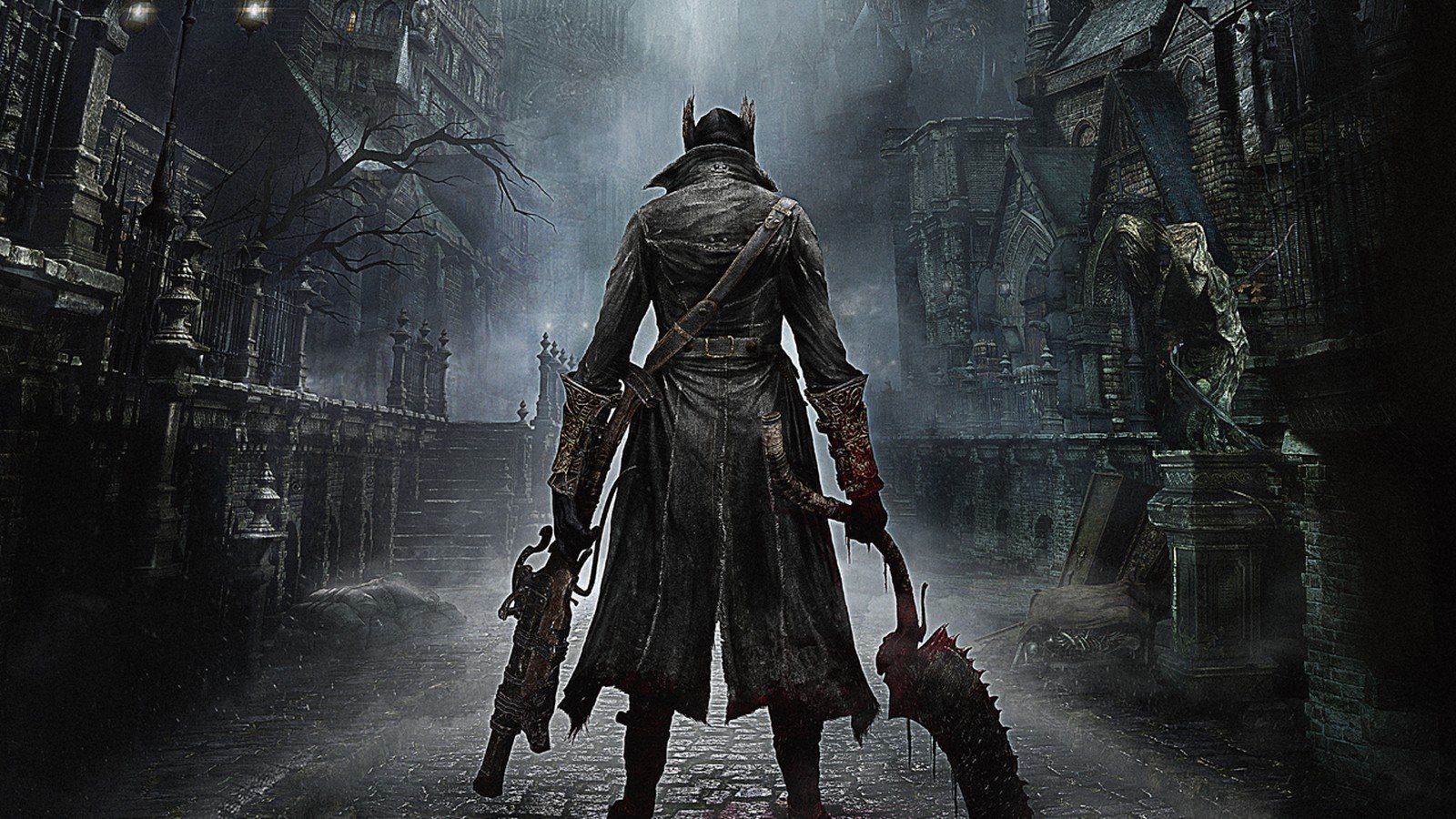
The question “will there be a Bloodborne remake for PS5?” has been repeated throughout the gaming community for almost a decade, but new behind-the-scenes information suggests that the situation may be more complicated than a matter of rights or technical capabilities alone. A recent report claims that Sony was apparently prepared to approve the remake idea, but FromSoftware rejected it.
This news is significant not because it confirms the existence of a specific project or reveals its development stage, but because it changes the usual narrative. For a long time, fans have speculated about Bluepoint or another studio getting involved, secret internal prototypes, or an inevitable “PS5 upgrade.” Now, the focus has shifted to FromSoftware’s own decision and priorities.
Bloodborne remains one of the most prominent PlayStation exclusives to this day: its unique Victorian horror aesthetic, aggressive combat pace, and the atmosphere of Yharnam have earned it cult status. However, cult status does not automatically mean that a remake is inevitable—especially when decisions are driven by creative control, resources, and the studio’s long-term strategy.
Below, we examine exactly what has been reported, why it could mean the chances of a remake are at their lowest in the near future, and which realistic scenarios remain for those still hoping to return to Yharnam in an updated PS5 release.
Will There Be a Bloodborne Remake for PS5? A New Behind-the-Scenes Signal
New information circulating through gaming media claims that Sony was prepared to “greenlight” a Bloodborne remake, but the initiative stalled because of FromSoftware’s decision. This wording does not mean that contracts had been signed, a budget had been allocated, or full production had begun—rather, it suggests that the idea was considered seriously enough that Sony would not have been the obstacle.
The most interesting part is the rejection itself. Fan discussions often assume that Sony could independently assign the project to another team, with FromSoftware playing only a minimal role. In practice, however, such decisions often require the developer’s support because of the original design, technical solutions, art direction, and reputational weight involved. If the studio is unwilling, even strong interest from the publisher may not be enough for the project to move forward smoothly.
This news may also explain why, despite constant rumors, we have not even seen a simpler option—for example, an official “PS5 patch” with support for 60 frames per second. If FromSoftware is not interested in returning to Bloodborne’s technical foundation, even smaller updates could become stuck between competing priorities.
What “Sony Was Prepared to Approve It” Really Means
In the gaming industry, the phrase “we were prepared to approve it” can cover a broad spectrum—from preliminary discussions to internal planning stages. It could mean that Sony saw the commercial logic: the Bloodborne brand has enormous recognition value, while the PS5 audience eagerly buys high-quality remakes, especially when they take advantage of current-generation technical capabilities.
However, approval from the publisher is not the only guarantee of success. Projects like this require a clear answer to one question: who will develop it, and how? Would it be a full remake with a new engine, rebuilt models, and expanded levels? Or would it be a remaster with a higher resolution, better texture filtering, faster loading times, and stable 60 FPS performance? Each option comes with a different cost, level of risk, and required expertise.
In recent years, Sony has shown that it is not afraid to invest in remakes when it is clear who will develop them and what quality standard they will meet. However, Bloodborne is a special case: the original game’s identity is closely tied to FromSoftware’s style. A remake made by the “wrong” developers could attract not only excitement but also criticism—especially if the game’s feel, animation timing, or subtle atmospheric details were altered.
Why FromSoftware May Have Said “No” to the Remake
There are several rational reasons why the studio may not have wanted to develop or supervise a Bloodborne remake. The first is resources and priorities. Following the success of Elden Ring, FromSoftware operates as a global powerhouse whose planning is generally focused on new projects, additional content, and long-term brand expansion. A remake, even one with strong financial potential, could divert attention away from developing “new ideas.”
The second is creative risk. Bloodborne is a highly specific work rooted in the design choices of its era: its aggressive defensive mechanics, the “weight” of its attacks, the timing of its animations, and even the technical compromises of the time. A remake would need to update the visuals and technology while preserving the same feel. The more you modernize, the greater the chance of accidentally changing the game’s character.
The third is reputational responsibility. If FromSoftware contributes directly to the project or officially “blesses” the remake, audiences will naturally expect the highest possible quality. If another team develops the remake but FromSoftware’s name remains attached to it, any shortcomings will also affect the original developer’s reputation.
Finally, there is the question of strategic timing. Studios sometimes deliberately avoid keeping older projects updated and active on the market so that new products receive more attention, or so that a return can be planned for the ideal moment—for example, when there is a new IP, a film or TV series, or a major platform campaign. This does not mean that the remake will never happen, but it explains why it could be postponed indefinitely.
How This News Changes Fan Expectations for a PS5 Version
The biggest practical conclusion is this: if FromSoftware truly is not interested in returning to Bloodborne, the chances of seeing not only a full remake but even “simple” improvements in the near future are decreasing. For many players, the biggest problem is not the texture quality but the 30 FPS limit and inconsistent frame stability in certain areas. In the PS5 era, 60 FPS has become something of a “minimum standard” for many action games.
Still, it is worth remembering that behind-the-scenes information often describes the situation at a particular point in time. Decisions can change, especially when executives, partnerships, or market conditions change, or when a new team emerges that can take over the project with less involvement from the original studio. For now, however, the signal is clear—expecting an announcement soon would be optimistic.
Will There Be a Bloodborne Remake for PS5 in the Coming Years? Realistic Scenarios
If we were to clarify what the “lowest likelihood” means, it is worth separating several scenarios. Each has a different level of realism, but all are theoretically possible, depending on how much Sony would want to push and how willing FromSoftware would be to cooperate.
1) A full remake. This is the most expensive and risky option, but also the most desirable. It would mean modern graphics, faster loading, potentially new visual modes (Performance/Quality), and perhaps even some “quality of life” improvements. If FromSoftware does not approve of it, Sony would probably be reluctant to take the risk without the developer’s support, especially considering how sensitive fans are about Bloodborne’s atmosphere.
2) A remaster or technical update. This would be the “sweet spot” for fans: 60 FPS, a higher resolution, improved frame pacing, possibly better anti-aliasing, and faster loading. Such an option could be implemented relatively quickly, but it would still require access to the code, testing, and certification. If FromSoftware does not want to touch the project, even this option could become complicated.
3) A PC port. Although this topic often appears alongside discussions of a “PS5 remake,” it is not the same thing. A PC port requires optimization for different hardware, anti-cheat solutions if online elements are included, graphics settings, and so on. If the remake has been rejected, a PC port may also be “less likely,” but not for the same reasons. Ports are sometimes handled by specialized studios, but developer support and technical documentation are also extremely important here.
4) Nothing new, only availability through existing channels. This is the boring but realistic scenario—Bloodborne remains a PS4 game that can be played on PS5 through backward compatibility, without major improvements. That is exactly how the situation looks now.
What This Says About Sony’s Approach to Remakes and Its Legacy
In recent years, Sony has been actively working with its back catalog: rereleasing older hits, launching remakes and remasters, and sometimes accompanying them with additional features or major technical improvements. As a result, Bloodborne often looks like an obvious “gap” in the strategy—a game with a cult following but no current-generation version.
If Sony truly wanted to move forward but encountered resistance from FromSoftware, it reveals something important: not every remake is solely the publisher’s decision. When an IP’s history is tied to a specific developer’s style, the publisher may choose to proceed cautiously to avoid clashing with audience expectations.
This does not mean that Sony has no leverage or alternatives. However, in cases like this, the decision is often to “wait”—until the right moment, the right team, and a clear creative plan emerge, one that does not look like nothing more than a marketing decision.
Why Bloodborne Is Such a Sensitive Subject: Technology, Atmosphere, and Fan Standards
Bloodborne fans often discuss more than just a graphics upgrade. The most important aspect is the feel: the rhythm of the animations, sound design, lighting mood, color palette, and even “small” details such as particle effects or motion blur. A remake that “looks better” but loses the original sense of dread or aggressive pace could receive a mixed response.
In addition, the soulslike audience is particularly observant. Players quickly notice when hitboxes, invincibility frames, stamina recovery speed, or enemy AI behavior change. A remake would therefore need to be not only visually impressive but also mechanically precise. This would increase the amount of testing required and the risk that an “unnoticeable” change could spark widespread debate over whether the game is “still the same.”
What to Do Now: The Best Ways to Play Bloodborne on PS5 Today
Until there are official announcements, the most practical advice is to assess the current situation and choose the most convenient way to play. The PS5 allows you to play Bloodborne through backward compatibility, but the game’s technical parameters essentially remain the same as they were during the PS4 era. This means you should not expect a miraculous 60 FPS experience without an official update.
If you want the best possible experience, it is worth taking care of a few things: a stable display with good motion handling, properly calibrated HDR if you use it, and comfortable controls. Some players also find that it helps to “warm up” to 30 FPS—after a few hours, the eyes adjust and the game’s rhythm begins to feel natural again.
It is also worth remembering that the Bloodborne community thrives on more than technical updates: there are challenge runs, build experiments, lore analyses, and discussions about the details of the world. If the remake is postponed, that does not mean the game loses its value—it simply means its “current-generation” revival has not happened yet.
Conclusion: What to Expect From the Question “Will There Be a Bloodborne Remake for PS5?”
The latest behind-the-scenes information—that Sony may have been prepared to approve a Bloodborne remake, but FromSoftware reportedly backed away—is one of the clearest signals in recent years. It does not confirm a specific product, but it helps explain why everything has remained silent for so long: when the developer is not interested, even intense fan pressure and the publisher’s desire do not always turn into a real project.
Still, the gaming industry loves surprises. Decisions change, while the brand’s value is not going anywhere. For now, the most rational approach is to remain cautious: follow official channels, evaluate information critically, and do not treat rumors as promises. If an announcement ever appears, it will most likely be clear, with a specific studio, date, and vision. Until then, Bloodborne remains what it has always been—a unique, terrifying, and unforgettable gem in the PlayStation catalog.