
 LT
 DE

If you are trying to answer the question of why you should play Diablo 2 in 2026, a new reflection on the game’s Act 1 gets straight to the point: it is an opening that manages to build tension, spark curiosity, and clearly demonstrate within just a few hours how Diablo 2 differs from most modern “quick dopamine” ARPGs.
This news comes from the gaming media, with an article revisiting the world of Diablo 2 and Act 1 in particular as a kind of gateway into dark fantasy. This is not a patch or new season announcement, but rather a reminder that sometimes the biggest gaming news is not about numbers or rankings, but about how an old creation can still make you feel just as strongly as it did the first time.
Act 1 is more than a prologue. It establishes a carefully constructed tone: from the first steps outside the Rogue Encampment to muddy paths, graveyards, dungeons, and finally the confrontation with Andariel. It is this journey that reminds us why Diablo 2 is still mentioned alongside the benchmarks of the genre.
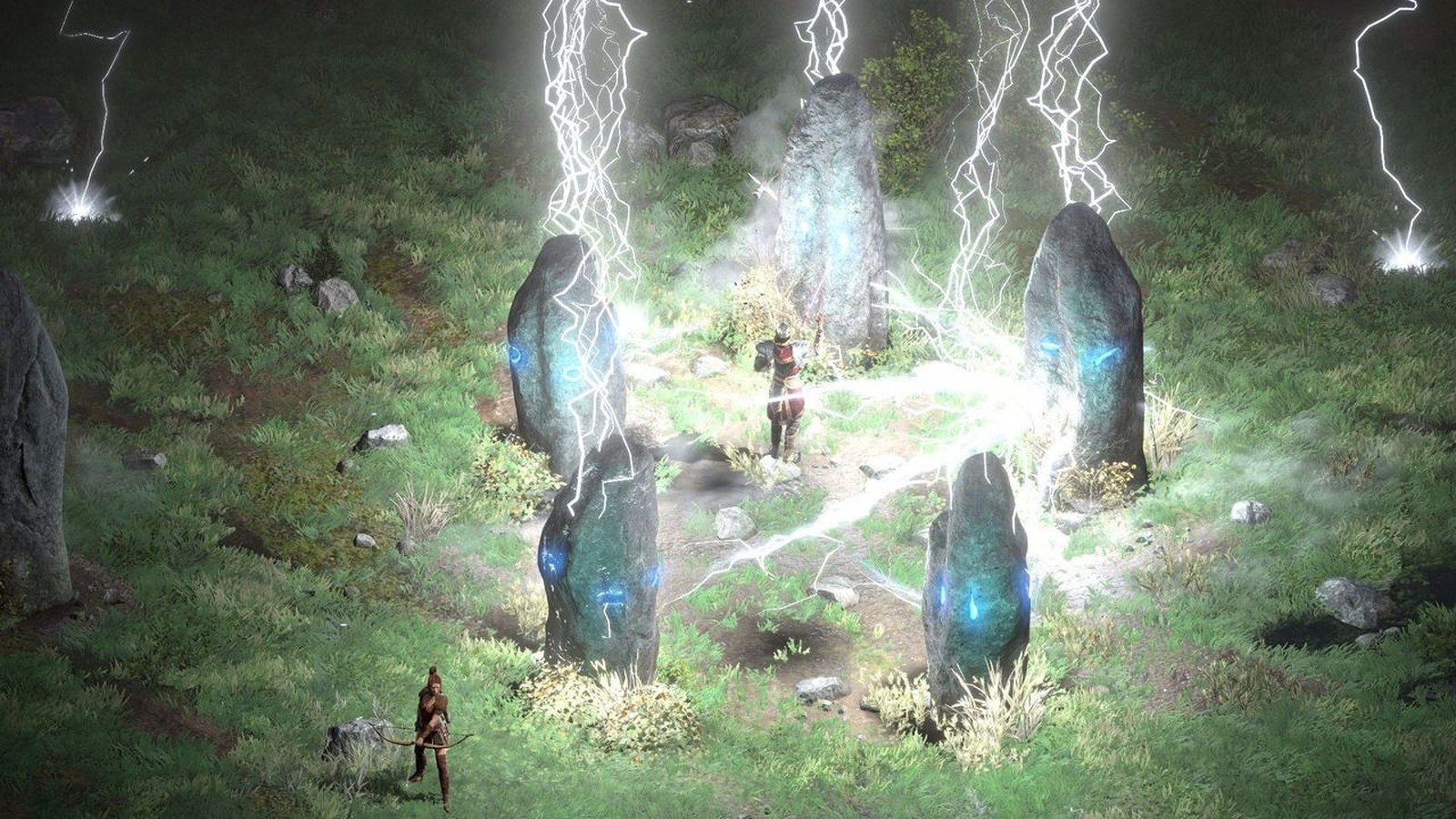
Why You Should Play Diablo 2 Today: Act 1 as a Masterful Introduction
Diablo 2’s strengths are often summarized briefly: loot, builds, and atmosphere. However, Act 1 demonstrates how these elements are brought together into a single experience. The new reflection on Act 1 highlights what veterans already feel intuitively: the game speaks clearly from the very beginning, but it never spoon-feeds you everything.
In modern ARPGs, the opening hours often feel like an extended tutorial that slows the pace and overwhelms you with information. Diablo 2 does the opposite: it throws you into danger while giving you enough tools to survive. You learn to read the environment, recognize threats, and understand that even simply moving forward involves a chain of decisions: whether to take a risk for a chest off to the side, return to camp, or continue down one more dungeon level.
Act 1 creates a sense of “journey.” Every region has its own mood, colors, and sounds. The few meters between a safe campfire and a dark corner of the forest become psychologically significant. This kind of design feels refreshing even today—not because of the graphics, but because of its carefully controlled pacing.
An Atmosphere That Never Gets Old: Mud, Rain, and Unease
When discussing why Diablo 2 has left such a lasting impression, mechanical elements are often mentioned first: runes, unique items, and synergistic skill trees. But Act 1 reminds us that the game is, above all, about mood. Dark fantasy is not merely “decoration” here—it is the main driving force that compels you to keep going.
Act 1’s aesthetic is damp, gray, and earthy. There is none of the epic glow of a “savior”: you feel more like a person who has ended up in the wrong place at the wrong time. The tension comes not from enormous set pieces, but from details: empty houses, collapsed graves, noises in the forest, and monsters suddenly leaping at you from the side. This direction and soundscape make the game convincing even when its visuals are compared with newer titles.
It is no surprise that the final confrontation with Andariel is the “first major memory” for many players. She is not just a boss. The journey to her takes you through places where you constantly feel a sense of progression: you find your way forward, unlock waypoints, and learn to recognize dangerous enemies. By the time the battle begins, you already have your own small story—how you survived, what you found, and what you lost.
Why You Should Play Diablo 2 for Its Pacing: From Camp to the Catacombs
Pacing is one of Diablo 2’s least frequently mentioned yet most important qualities. Act 1 is a perfect example of how the game balances “tension” and “reward.” You constantly return to the Rogue Encampment to sell items, repair equipment, speak with NPCs, and prepare. This creates a loop that feels natural and engaging.
This loop also helps psychologically: after a dangerous dungeon, you return to a safe area where everything is familiar, before plunging back into the unknown. It is simple but brilliant. Because of this, even today, when players are accustomed to automatic loot filtering, map markers, or an aggressive push toward the endgame, Diablo 2’s opening feels like a deliberately crafted journey.
Act 1 is also open enough to let the player choose. Want to go straight through the main quests? You can. Want to farm a few areas to feel stronger? You can. Want to check every corner because there might be a chest containing a better bow or staff? You can do that too. This kind of freedom is sometimes lost in modern games that guide players through their content very rigidly.
Builds Begin Early: Class Identity From the First Levels
One reason why you should play Diablo 2 is its build system, which allows characters to feel different even when playing the same class. Although true “optimization” often begins later, especially in Nightmare or Hell, Act 1 still lays the foundation: you quickly sense that your choices have consequences.
Even the simple decision of where to invest your first skill points changes the pace of combat. Will you rely on keeping a safe distance? Will you charge into melee combat? Will you focus on crowds or a single target? Diablo 2 does not encourage you to be “everything at once”—the game rewards specialization. This creates a sense of satisfaction when your character begins to work “as planned.”
This quality is especially evident in Act 1 because the enemies are varied but not yet overloaded with mechanics. Players learn the basics: positioning, the importance of resistances, kiting, and crowd control. These lessons become essential later, while the beginning introduces them naturally without covering the screen in lengthy instructions.
The Philosophy of Loot: Small Victories That Become Addictive
Diablo 2’s loot system is still called one of the best for good reason. In Act 1, it works like bait: you have not reached the endgame and do not yet know all the unique items, but the game constantly reminds you that any dropped item could change your situation. Better gloves, slightly higher resistances, faster movement—these are small improvements that you can genuinely feel.
Unlike some modern games, Diablo 2 is less likely to bury you under identical items that become junk after 20 minutes. Yes, plenty of items drop, but evaluating them is part of the game. You learn what matters for your class and begin to recognize when it is worth stopping to review your inventory.
Act 1 also reminds us that loot is not just about statistics. It is an emotion: that moment when a better weapon finally drops and you immediately feel the difference, or when you find an item with an attribute that “locks in” your decision to follow a particular path. These small victories create the “just one more dungeon” effect.
Social and Cultural Context: Why This Article Is Relevant Again
The fact that a personal story about Diablo 2’s Act 1 has resurfaced in the media reflects a broader trend: players are increasingly returning to classics not only because of nostalgia, but because they offer a different pace of game design. Over the past few years, the ARPG market has grown, bringing more seasonal models, more live-service elements, and more systems competing for attention.
Against this backdrop, Diablo 2 feels like a concentrated experience: less noise, more atmosphere, and a clearer gameplay identity. The new reflection on Act 1 serves as a reminder that good design does not have an expiration date. Sometimes one act, one region, and one journey to the first serious boss are enough to understand why this game became a template for the entire genre.
Returning to Diablo 2 is also easier today than ever before: some players choose the original for its authenticity, while others prefer the remastered version for its convenience and visuals. In both cases, however, the foundation remains the same: Act 1 still “sells” the game in the same way that a strong opening chapter sells a novel.
Practical Advice for Returning Players: How to Experience Act 1 at Its Best
If this news and the surrounding discussion have made you want to launch Diablo 2 again, it is worth remembering a few things that can help you experience Act 1 the way it was meant to be played—without unnecessary frustration.
First, do not rush. This act is designed to reward exploration. Waypoints and returns to camp are not a “waste of time”—they are part of the game’s pacing. Second, managing your defenses is crucial early on: resistances, health, and movement speed can often provide more value than a few extra points of damage.
Third, give yourself permission to experiment with skills. The beginning of Diablo 2 is a good opportunity to understand whether you prefer melee combat, the safety of ranged attacks, or controlling minions. Even if you decide to optimize later, your first journey through Act 1 is the best time to discover the character of your class.
Finally, listen. Diablo 2’s sound is a huge part of the experience. The forest ambience, the echoes of the dungeons, and the “impact” of combat are details that still create tension today without the need for additional tricks.
Why Play Diablo 2 If You Have Already Played It a Hundred Times?
Veterans may wonder whether there is really any point in returning to the same opening again. This is where Act 1 plays its trick once more. Even if you know every area by heart, the game remains interesting because of small variations: item drops, early decisions, your chosen build, and even how quickly—or slowly—your character begins to come together.
You also change over time. After playing other ARPGs, experiencing the pace of seasonal games, and spending hundreds of hours in different genres, the beginning of Diablo 2 may feel completely different than it did before. It is like returning to the fundamentals: simpler but extremely precise design choices that still work today.
The new reflection on Diablo 2’s Act 1 ultimately serves as a reminder of this value: sometimes one act is enough to understand why a classic is a classic. Not because it is “old,” but because it knows exactly what it is doing.