
 LT
LT
 DE
DE
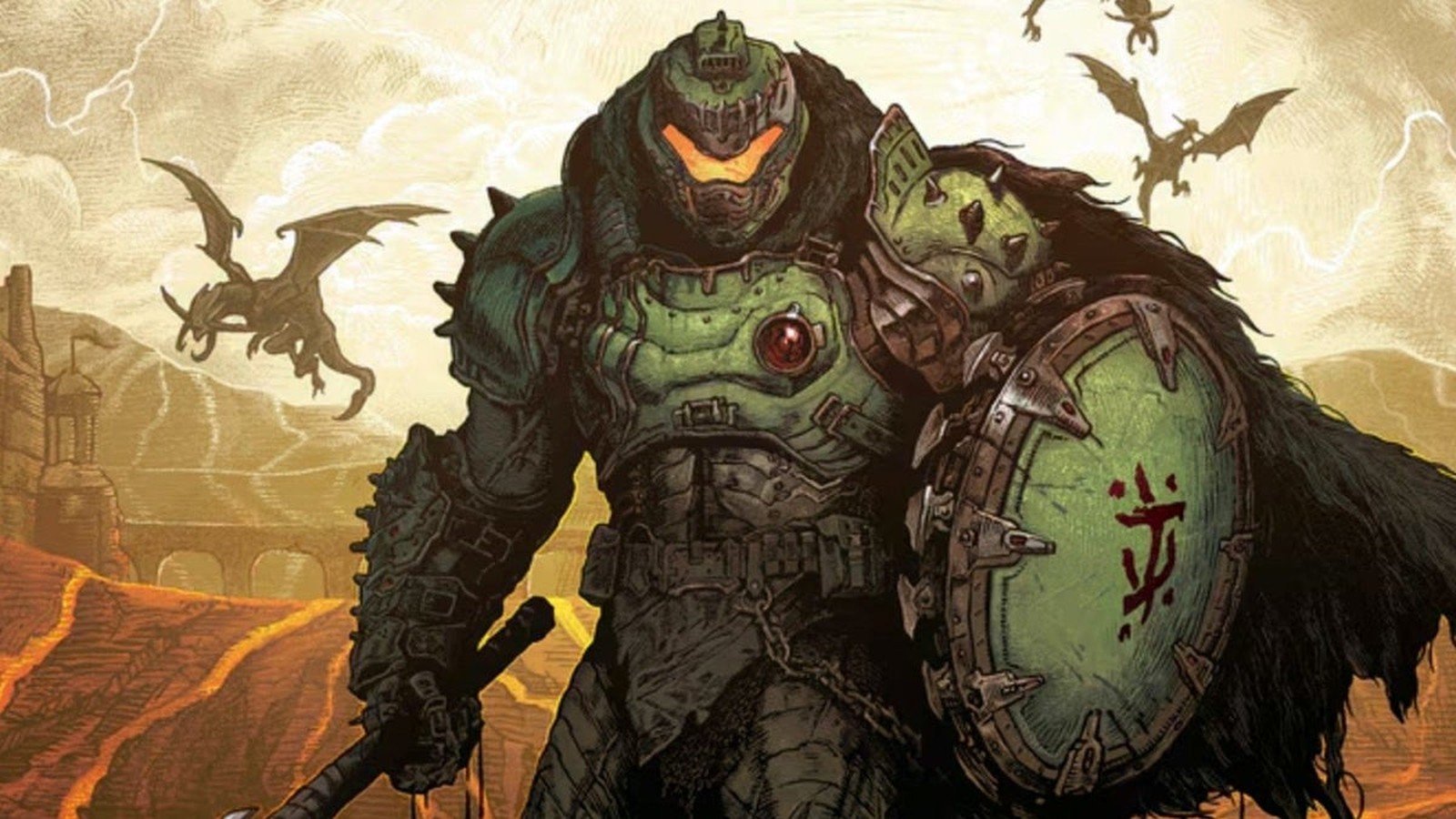
“Doom The Dark Ages DLC size” has become one of the hottest topics among FPS fans, as reports suggest that the upcoming expansion may not be an ordinary add-on but something comparable to a standalone sequel in both content and ambition. These hints change expectations: we are not just talking about a few missions or cosmetic items, but a broader package that could expand the campaign, mechanics, and even the way the world is presented.
News sources cite the claim that the DLC’s scope would “basically be like a sequel.” This is significant wording because it offers clues about the scale of the content: more new levels, more story, new enemies, and perhaps even an additional progression or equipment system. Of course, until an official and complete content list is available, much remains open to interpretation, but the direction of the messaging itself signals an extremely high bar.
Large-scale DLC is nothing new today, but such a promise carries particular weight for the “Doom” series. This is a franchise in which gameplay pacing, weapon balance, and arena design are often more important than anything else. When an expansion is described as being “like a sequel,” the question becomes: will it offer more of the same, only bigger and better, or will it attempt to introduce a new direction within the darker, more medieval aesthetic of this era?
What the news is and why “Doom The Dark Ages DLC size” is being discussed so widely
The main news is simple: information from gaming media suggests that the “Doom: The Dark Ages” DLC currently in development is extremely large, even being compared to a sequel. Headlines like these usually do not appear out of nowhere—they reflect either comments from the developers or clearly worded hints intended to generate a wave of anticipation.
This matters to players for several reasons. First, “Doom” fans are accustomed to intense, meticulously polished campaigns. Second, a large DLC often means not only additional hours of content but also meaningful changes: new systems, more progression, and bolder experiments with weapons or movement. Third, a larger scope often correlates with a higher price and a longer development cycle, so it is important to understand what such a promise could realistically mean.
“Like a sequel” is both a marketing phrase and a commitment. If the expansion truly approaches the scale of a standalone product, it will be judged by different standards: whether it has its own beginning and ending, whether it introduces a new hook, or whether it simply extends the base campaign with additional chapters. Practical questions also arise: how will it be integrated into the base game, will it require a new save file, will the content only become available after the campaign, or will it offer an alternative path?
Doom The Dark Ages DLC size and content scope: what we can reasonably expect
Although details may still change, a large-scale DLC usually has several distinct components. The first is a campaign expansion. In the FPS genre, particularly in story-driven shooters, this generally means a set of new missions featuring unique arenas, new set-piece moments, and a separate progression pace. If the “Doom The Dark Ages DLC size” really is close to that of a sequel, the number and variety of missions should be sufficient to give players a clear sense of substantial content rather than merely an “extension.”
The second component is new enemies and combat scenarios. In the “Doom” series, enemy design forms the chessboard of combat: every demon forces players to change their priorities, movement paths, and weapon choices. A larger DLC aiming to feel like a sequel would likely need to introduce several new enemy archetypes that force players to rethink the familiar meta: which target to eliminate first, how to control crowds, and how to make the best use of the available space.
The third component is new weapons, tools, or modifications. The “The Dark Ages” aesthetic suggests the potential for more brutal and mechanically distinct options: perhaps more melee variants, shields, or specific mobility solutions. Even if the base game already features a unique arsenal, the expansion could introduce genuine game-changers: one or two weapons that radically alter the rhythm of combat and encourage new builds.
The fourth component is new locations and expanded atmosphere. If the base version of “The Dark Ages” focuses on a darker setting with a medieval flavor, the DLC could provide an opportunity to expand the world’s geography: different types of fortresses, variations of Hell’s architecture, new environmental hazards, and greater verticality or openness. “Doom” arena design is often precisely calibrated, so additional locations require a significant amount of creative and technical work.
Finally, there may be additional systems and quality improvements. Sometimes a major DLC also arrives alongside free updates: balance changes, UI improvements, new difficulty settings, expanded photo mode features, or additional challenge-type modes. Even if these are not directly part of the DLC content, they contribute to the overall impression that the project is being developed with a long-term vision.
The question of price, value, and expectations: when “almost like a sequel” becomes a reality
A large expansion almost always sparks a discussion about pricing. Players generally tolerate a higher DLC price when they can clearly see the quantity and quality of the content: a longer campaign, new mechanics, and an obvious package of added value. However, the line between a “large DLC” and an “overpriced add-on” is a delicate one—especially if the base game itself is sold at full price.
Value is not measured by hours alone. “Doom” games are often concentrated and intense—an 8–12-hour campaign can be more valuable than 30 hours of monotonous content. Therefore, if the “Doom The Dark Ages DLC size” really is substantial, it is important that the expansion be dense with ideas: varied encounters, unique boss moments, and different level objectives rather than simply “another corridor filled with demons.”
Another consideration is whether the DLC will be designed as a separate entry point. Some major expansions can be played almost independently, while others strictly require players to complete the base campaign and have well-developed progression. The second option could make sense for “Doom” because of the game’s learning curve, but the first often helps an expansion reach a broader audience.
Expectations will also depend on communication: if the marketing consistently repeats the phrase “like a sequel,” players will expect a clear structure, a strong finale, and new ideas. If it ultimately turns out to be “just a lot of missions,” some members of the audience may feel that it lacks the sense of a true sequel. In other words, scale is necessary, but it is not sufficient on its own.
What a DLC of this scale could mean for the development pace and release window
A large scope usually means two things: a longer development cycle and greater risk. An expansion comparable to a sequel requires more level design, more testing, more localization, and more optimization. The specific nature of “Doom”—particularly its demanding performance requirements, including numerous enemies, effects, and rapid movement—adds another quality benchmark: poorly optimized content could ruin the entire experience.
If the expansion is being developed alongside the base game, as often happens with major projects, some of its content may have been planned in advance as a post-release package. That is not necessarily a bad thing: sometimes it allows the team to design story threads in advance that naturally lead into the expansion. However, it is important to players that the base game feels complete—a large DLC should not appear to be content that was cut from the original release.
The other side of the equation is developer flexibility. If the base game receives feedback about balance, difficulty spikes, or the usability of certain mechanics, a large DLC can become an opportunity to adjust course. In that case, the expansion does more than add content—it also evens out the overall experience by offering a better, more mature version of what the team originally wanted to achieve.
How “Doom” expansions usually deliver: context for players expecting quality
For its audience, the “Doom” name is associated with a clear philosophy of quality: speed, aggression, the fusion of music and visuals, and a sense of flow in which the player constantly balances risk and reward. As a result, any large DLC will need to deliver not only a certain quantity of content but also that difficult-to-define “Doom” rhythm.
When an expansion is large, it needs a strong thematic backbone. One approach would be to deepen “The Dark Ages” identity even further: a heavier atmosphere, different colors and textures, and perhaps a greater sense of weight in combat. Another approach would be to provide contrast: new locations deliberately designed to differ from the base campaign, allowing players to feel as though they are entering another chapter in the history of the same world.
It is also important to consider how the promise of a “sequel” will be used. A sequel usually means not only “more” but also “different”: a new threat, a more clearly defined antagonist, a new set of rules, or at least one major idea that forces players to learn again. If the DLC can introduce at least one such major twist, its scale will be measured not in numbers but in the impression it leaves.
Practical tips: how to prepare for a large DLC from day one
If you plan to play on release day, it is worth preparing in several simple ways. First, complete the base campaign—or at least make sure your save is in order—because large expansions often unlock after the main events or recommend a certain level of progression. Second, review your settings: sensitivity, field of view, and key bindings. The speed of “Doom” means that even small quality-of-life details can make a major difference.
Third, prepare enough storage space and be ready for updates. Large-scale content often means a larger download, and some PC configurations may require updated drivers or revised performance settings. Fourth, if the base game includes several difficulty levels or additional modes, consider whether you want to begin the DLC at a comfortable difficulty or immediately aim for maximum intensity. A larger expansion is often a marathon, so choosing a difficulty that is too high from the start could become exhausting.
Finally, keep an eye on official information about the content structure. If the DLC is “almost like a sequel,” it may have its own menu entry, a new campaign selection, or clearly separated mission “books.” This makes it easier to plan your time and understand whether it is worth returning to the base game for additional improvements.
What could disappoint players and what deserves skepticism
Although the promise of a large DLC sounds appealing, it is worth maintaining a healthy level of skepticism. The first risk is overly abstract communication. “Like a sequel” could mean “a lot of missions,” “a lot of story,” or “a lot of systems.” If clear details are not provided before release—such as the approximate number of missions, new mechanics, and new enemies—some members of the audience may feel uncertain.
The second issue is the consistency of the content’s quality. A large DLC can sometimes contain filler: less memorable levels, repetitive scenarios, or locations that fail to reach the heights of the base game. This would be particularly noticeable in “Doom,” because the series’ strength lies in its constant rush of adrenaline and highly meticulous encounter design. If the expansion is large but uneven, discussions about “Doom The Dark Ages DLC size” could quickly turn into questions about whether it is truly worth the price.
The third issue is its technical condition at launch. Large-scale DLC releases often arrive alongside patches that can affect the base game. For players, this means it is important to follow the patch notes, while the developers need to ensure that updates do not harm stability or performance. Optimization will be critical, especially if the DLC introduces new effects, enemy AI, or larger-scale scenes.
What this news means for “Doom” fans and why future announcements are worth following
If the “Doom: The Dark Ages” DLC really is as large as currently suggested, it could become one of the most notable examples of an expansion growing into the category of a “mini-sequel.” This format is convenient for players who want more of the same core experience but also expect new ideas and fresh challenges. It is also good news for those who enjoy returning to a game after a break: a large DLC often creates a second wave within the community, reviving discussions, strategies, and discoveries.
For now, the most important thing is to wait for specific details: the content structure, approximate length, new mechanics, price, and release window. However, the overall direction is clear: “Doom The Dark Ages DLC size” will be one of the main talking points, which means the expansion will most likely be positioned as a major event rather than simply another add-on for the collection.
If you are a fan of the series, it is worth following not only the headlines but also the official explanations when they appear: the more specific the information, the easier it will be to determine whether this expansion is a must-have for you or whether it would be better to wait for reviews. In any case, it is rare for a DLC to be described as “almost a sequel”—and that alone suggests that the developers, or publishers, are preparing something big.