
 LT
 DE
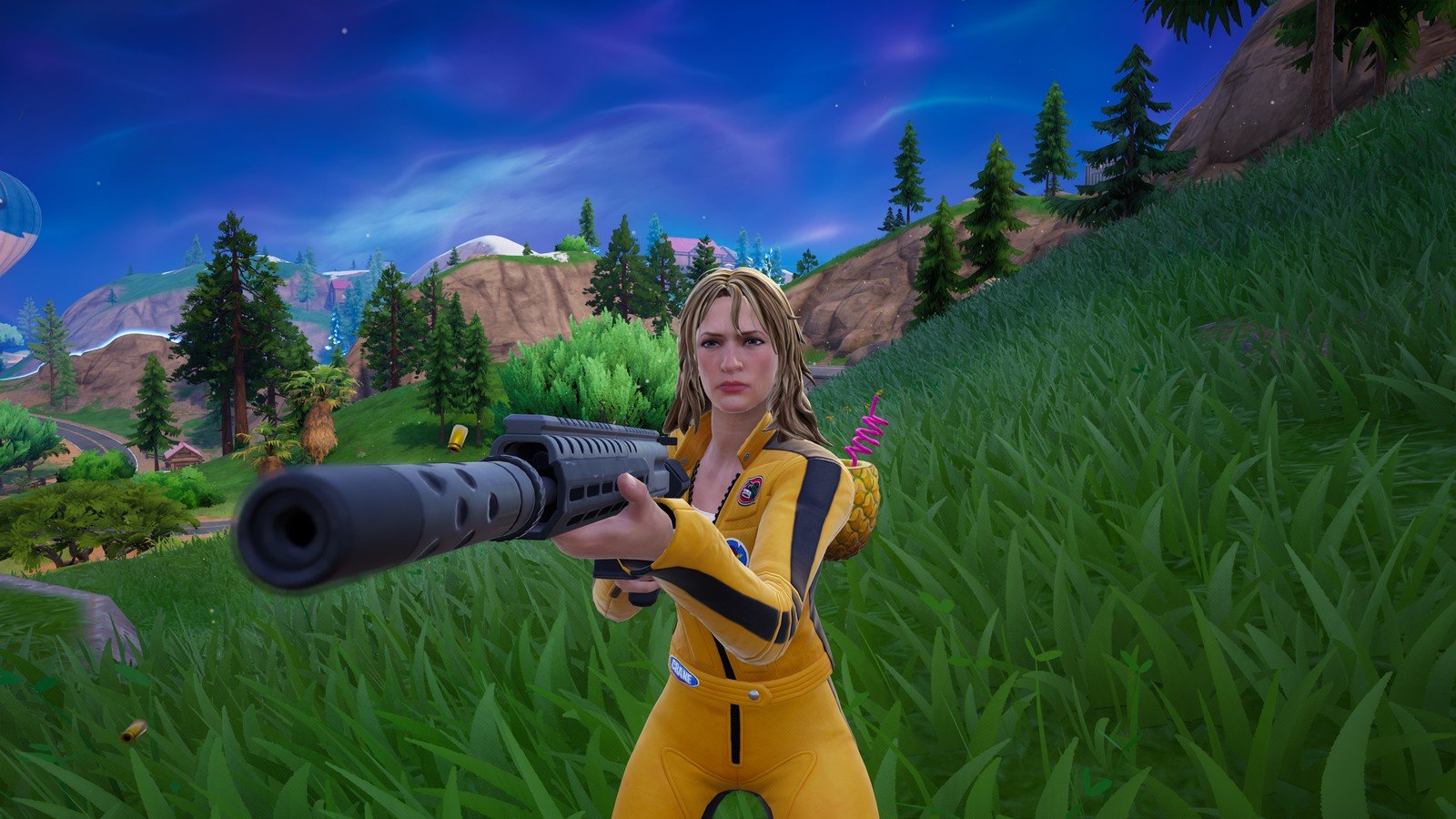
“Fortnite Chapter 7 best weapons” is not just a trendy search term this time—it reflects a real discussion about how the Chapter 7 weapon pool (often shortened by players to “Season 7”) has finally started to feel balanced, yet dangerous at the same time. A new PC Gamer overview highlights that the current loot pool could become a blueprint for future battle royale games: less pointless randomness and more choices with clear costs and benefits.
The core of this news is simple: weapon buffs and new guns have created a situation where you rarely feel as though you won simply because you were “lucky” enough to find one dominant item. Instead, your decisions matter more—which engagement range you choose, how you manage resources, when you risk making an aggressive push, and when you play from a strong position.
This matters to players because Fortnite has always balanced between being a chaotic party and a competitive arena. When the weapon pool leans too far in one direction—for example, when one weapon or modification becomes a must-pick—the game loses part of its identity: there is less room for improvisation, and fights start to feel repetitive. In Chapter 7, according to the overview, there is more flexibility—you can win with several different loadouts if you use them correctly.
Fortnite Chapter 7 best weapons: why loot balance matters now
The loot pool is the complete selection of weapons, healing items, and other combat-related equipment that can actually drop during a match. It determines whether the game is about tactics or a lottery. PC Gamer’s claim that the Chapter 7 loot pool has become “balanced, lethal, and flexible” may sound abstract at first, but in practice, it means three very specific things.

First, “balanced” means that more weapons have a clear place in the meta: there is no single option that wins everywhere and every time without competition. Second, “lethal” means that even a non-top-tier option can be dangerous if you land your shots, control recoil, choose the right angle, or force your opponent to fight on your terms. Third, “flexible” means that there is no longer a single inventory template: different playstyles—an aggressive push, safe play from the edge of the zone, or control of high ground—can coexist.
This is especially relevant because Fortnite combat is not just about aim: movement, positioning, and resource economy also matter. A balanced weapon pool allows these elements to shine. When one weapon is too powerful, everything comes down to a single scenario; when weapons are close to one another in effectiveness, decisions become meaningful.
What a “balanced, lethal, and flexible” Chapter 7 loot pool means
The core message of the PC Gamer article is that Fortnite has finally found the middle ground between “too weak, so nothing feels impactful” and “too powerful, so everything explodes without any control.” A balanced loot pool usually emerges from two deliberate actions: careful buffs and a clear separation of roles between weapon categories.
Role separation is critical. When, for example, a close-range weapon is too effective at medium range, it starts to consume the niches of other weapons. In the context of Chapter 7, flexibility means that different categories are meaningful again: close range requires aggression and risk, medium range requires stability and control, and long range requires patience and positioning.
The “lethal” aspect is also important for another reason: when almost everything can kill, players become more accountable for their mistakes. This creates tension, which is one of the battle royale genre’s greatest strengths. A player with a more modest weapon still has a chance—if they force their opponent to make a mistake, use cover more effectively, change angles at the right time, or control the pace of the fight.
Finally, “balanced” does not mean “boring.” On the contrary, a well-balanced weapon pool enables more scenarios, more types of smaller duels, and fewer situations where you feel helpless simply because of the drop.
Weapon types that stand out the most this season
Although specific names and variants may change with patches, the principle highlighted by PC Gamer makes it fairly easy to understand which categories tend to perform best when a loot pool is considered exemplary. If you are looking for what “best” actually means, it is worth thinking about a combination of categories rather than one overpowered weapon.
Close-range burst damage. When the meta includes a clear close-range threat, fights become more focused on decision-making: do you really want to push inside, or would it be better to force your opponent out into the open? This niche is usually dominated by pump shotguns or alternatives that reward an accurate opening shot.
Fast-paced spray pressure. In a balanced season, SMG-type weapons—or other rapid-fire alternatives—become tools for finishing opponents or punishing bad positioning, but they do not always replace everything else. They are powerful when you can maintain close range, shred your opponent’s cover, or punish them during a rotation.
Reliable medium-range performance. For many players, this is the workhorse category: assault rifles, hybrid variants, or more accurate semi-automatic options. If PC Gamer is talking about flexibility, this is often the range that allows players to adapt their approach: you can play from a hill, tag running enemies, or control rotations.
Long-range control. Long-range options such as sniper rifles or DMR-style weapons should not rule the entire match in a balanced environment, but they should provide value to players who invest in positioning and patience. When long-range damage feels fair, it encourages intelligent movement and reduces random, seemingly invisible defeats.
Utility tools. The “best weapon” is sometimes not the one that deals the most damage, but the one that allows you to create a situation in which your damage becomes effective. That is why any season with clear mobility, shield, or control tools—even if they are not technically weapons—has a major impact on the true meta.
How to build a loadout that works in every situation
If Chapter 7’s direction really is balanced and flexible, the ideal loadout should not follow a single rigid doctrine. However, there is a universal logic that can help prevent you from losing simply because you do not have an answer at the wrong moment.
1) One close-range finisher. This is the weapon that wins the fight when the distance closes to just a few meters. It is important not only in box-fight situations, but also when an opponent tries to finish you after you have already lost your shield.
2) One reliable medium-range weapon. This will usually be the workhorse option you use most often. It should be stable enough to hit a moving target and versatile enough that you do not feel forced to rush into close-range combat every time.
3) Utility or long range, depending on your style. If you enjoy controlling rotations, choose a long-range option. If you prefer aggression, choose a tool that helps you close the gap: mobility, additional pressure, or situational control. This is where flexibility becomes apparent: you do not always need to carry a sniper rifle, but you should always have a plan for what you will do if an opponent refuses to let you get close or tries to maintain their distance.
4) Healing and shields. It sounds boring, but survivability becomes even more valuable in a balanced season: when weapons are lethal, even one additional healing opportunity can turn into a victory because it gives you a second chance.
5) One wildcard slot. This is where your personal choice goes: grenades, an additional weapon, a second mobility item, or a situational tool. If the season is genuinely balanced, this slot will change more frequently—and that is a good sign.
Fortnite Chapter 7 best weapons by match phase
When discussing the “Fortnite Chapter 7 best weapons,” it is worth recognizing that the best weapon in the early game will not necessarily be the best one at the end. The idea behind the Chapter 7 loot pool—according to PC Gamer’s conclusion—is that different choices can shine at different times, rather than allowing one weapon to dominate the entire match.
Early game—the drop and first fights. Speed and reliability are the priorities here. You need a weapon that forgives mistakes and ends a duel quickly because you often have no shields, resources, or time. In this phase, lethality should be balanced in a way that keeps the fight fair: the winner should be the player who makes better use of what they found, not the one who happened to receive the golden ticket.
Mid-game—rotations and selected fights. This is where the value of medium-range weapons becomes apparent. If your loadout allows you to poke opponents with repeated hits from a distance and maintain pressure, you begin to control the pace: you force the enemy to use shields, change their route, or give up their position. A balanced loot pool often means that the mid-game can support several playstyles, both aggressive and strategic.
Late game—small zones and high tension. This is where close-range weapons and utility become important again. As the zone shrinks, distances get shorter and mistakes become costly, so a finisher may be more important than ever. At the same time, flexibility means having an answer to more than one late-game scenario: what will you do if an opponent holds the high ground? What will you do if you are forced to cross an open area? What will you do if the fight drags on and you run low on healing items?
How this balance changes the meta and the perception of skill
One of the most interesting things that happens when a weapon pool becomes exemplary is that player conversations also begin to change. Instead of saying, “that weapon is broken,” players have more discussions about decisions: when it is worth fighting, how to hold a position, and which loadout to choose for a specific route or zone prediction.
A balanced loot pool often strengthens skill expression—the ability to demonstrate skill in different ways. Some players win through accuracy, others through positioning, and still others through good timing and pressure management. This matters both to the competitive scene and to ordinary players because even casual matches become more enjoyable when you can feel yourself improving: you learn to play with different weapons instead of simply waiting for the one “correct” drop.
The value of risk also changes. If more weapons are viable, you can take risks more often because you are not always dependent on one specific combination. This naturally increases the variety of fights: more unexpected transitions, more outplay situations, and fewer monotonous matches.
Why this could become a blueprint for future battle royale games
PC Gamer’s point about a blueprint is significant in a broader context. The battle royale genre often suffers from two extremes: either everything becomes excessively random and unpredictable, or the meta narrows down to a few mandatory choices. Both situations eventually reduce players’ motivation to keep playing.
Fortnite’s historical strength has always been its ability to change while maintaining a recognizable feel. If the Chapter 7 loot pool is genuinely well tuned, it demonstrates that even a constantly evolving live-service game can have a season in which players feel respected: their decisions matter, their skills are visible, and new additions do not turn everything into a lottery.
In practice, this could also mean that we will see more middle-ground adjustments in the future: no radical nerfs that kill an item and no sudden buffs that make it mandatory. This approach is especially important if the developers want the game to remain appealing to both newcomers and veterans.
Quick tips: how to find your best weapon combination faster
If you want to put this balanced loot pool idea into practice, it is worth developing a simple routine that helps you understand what works for you this season.
Play 5–10 matches with a clear goal. Focus on close-range combat one evening, medium range the next, and long-range control on the third. In a balanced season, you should feel that every style has a chance if you play it consistently.
Pay attention to where you lose. If you often lose when an opponent keeps their distance, you are missing a medium- or long-range answer—or you need better positional discipline. If you lose at close range, you need a more reliable finisher or better angle management.
Do not chase rarity alone. Higher rarity often helps, but in a balanced environment, it is much more important for a weapon to suit your movement, aiming tempo, and decisions. Sometimes an average option will be better if you consistently land your shots with it.
Have a plan for every slot. When every inventory slot has a purpose, there is less chance that you will end up in a situation where you have no way to respond.