
 LT
 DE
Is HELLDIVERS 2 worth playing in 2026? That question sounds completely different to me now than it did during the game’s “honeymoon” period. Today, in 2026, it is an established cooperative shooter where the most important thing is not “how powerful you are,” but how you handle chaos, mistakes, and team decisions. HELLDIVERS 2 can be both incredibly fun and exhausting: one evening, you will laugh at a badly placed airstrike; the next, you will wonder why you lost another mission in a single second when everything seemed under control.
If you are looking for a game that rewards a cool head, situational awareness, and team rules—even when they are not spoken aloud—you will find plenty of “aha” moments here. But if you want steady progression without sudden punishment, HELLDIVERS 2 occasionally reminds you that it is built around risk: friendly fire, unexpected events, and chaotic teammates are not exceptions—they are part of the design. That is why it is worth understanding in advance who the game suits and who might be better off looking for a different pace.
Below, I explore how the game feels to play now: what makes it most engaging, what causes the most frustration, how the experience differs when playing alone or with friends, and what type of player will get the most from this formula. If you want, you can take a look at the official page on Steam, but the decision usually depends less on the description and more on whether you enjoy the idea of “a well-organized plan meeting absolute chaos.”
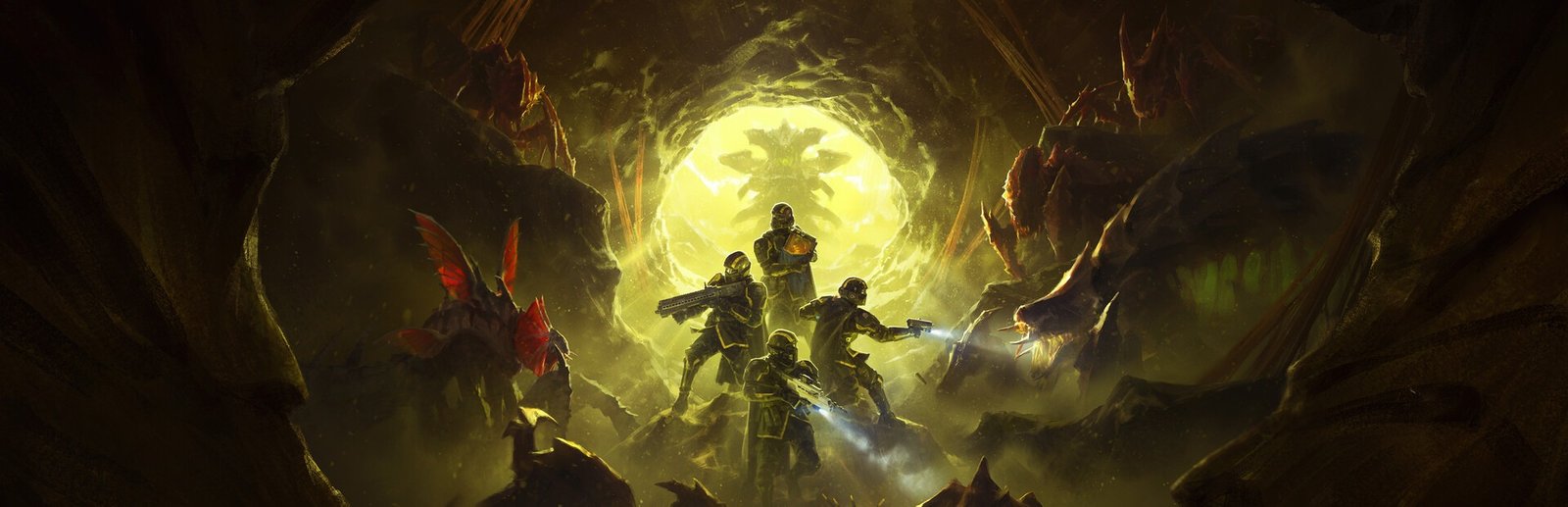
Quick summary
- If you enjoy risk, tension, and competition – HELLDIVERS 2 can be extremely engaging.
- If you are looking for relaxed progression and a “stable” experience – the game may become exhausting.
- The game often works best with friends, because playing as a team makes it easier to plan and compensate for mistakes.
- Solo play is possible, but it generally requires more patience, caution, and a hit-and-run mindset.
- Your choice of server or mode often determines whether you will enjoy the game during your first few hours.
Who is this game for?
It will suit you if:
- You enjoy a clear risk–reward dynamic and plenty of tension.
- You like learning through experience and mistakes.
- You want a social element: communication, negotiation, or tactics.
- You enjoy challenges and skill-based progression.
- You play with friends or enjoy team-based dynamics.
You may not like it if:
- You want a relaxed pace and guaranteed progression.
- You dislike sudden losses or being “punished” for mistakes.
- You are looking for a strong story or an A-to-Z campaign.
- You want very short sessions that require little involvement.
- You dislike competition or pressure from other players.
Which mode or server is best for beginners?
New players will usually benefit from starting somewhere with less chaos and more room to learn the basics, which makes the first impression significantly better.
- Vanilla – an authentic experience, but often stricter and more punishing for beginners.
- Modded / boosted – less routine, faster progression, and more freedom to experiment.
- Solo/Duo/Trio limits – better balance if you play alone or with one or two friends.
- Moderated community servers – often offer a friendlier culture and clearer rules.
What kind of game is it, and who is it for?
HELLDIVERS 2 is a cooperative third-person shooter with a simple mission structure: you land in a dangerous zone, complete objectives, collect whatever you can, and try to escape alive. However, it is only “simple” on paper. The key ingredient is the use of stratagems—tools, support equipment, and strikes—which you call onto the battlefield, combined with the constant tension of knowing that a single inaccurate move can reduce a carefully organized plan to ruins.
The game is designed for players who enjoy teamwork, clearly divided roles, and situational tactics. Some come for the precise shooting and satisfying feel of the weapons, while others come for the “mini-stories” that emerge naturally: someone is running with their last bullet, someone takes a risk, someone covers the retreat, and someone else… accidentally triggers a catastrophe. HELLDIVERS 2 often makes you laugh not through jokes, but through how seriously it allows you to mess everything up.
In 2026, it is particularly well suited to players looking for a “living” co-op experience—one where every mission has a chance to become memorable, even when the objectives are familiar. This is not a game you casually play in the background. Even a short session often demands your attention: watching your surroundings, listening to your team, reloading at the right time, retreating, and never assuming that “there is still enough time.”
If the lone-hero fantasy is important to you, HELLDIVERS 2 may disappoint. Much of your power comes not from a single character, but from synergy: one person brings crowd control, another brings an anti-armor solution, the third provides support, and the fourth has “plan B.” When everything comes together, the experience becomes almost cinematic; when it does not, the lesson can be harsh.
It is also worth understanding the tone: HELLDIVERS 2 embraces satire and exaggerated militaristic enthusiasm. If that kind of humor works for you, it gives the game a strong identity. If it does not, it may feel like noisy decoration. Even then, however, the core of the game remains clear: this is co-op about coordination, managing mistakes, and dealing with the cost of your decisions.
What you will enjoy most (strengths)
- “One button, major consequences” design. Calling in stratagems forces you to think: where should you throw them, when should you use them, and does the team understand what is about to happen? It provides a satisfying sense of responsibility when your decision saves the situation.
- Team tension without artificial drama. You often do not need a scripted sequence to make things exciting—it is enough for everyone to be trying to escape while the environment applies pressure. The tension builds organically, especially as resources begin to run low.
- A friendly-fire system that changes how you behave. Although it can sometimes be painful, it forces players to remain disciplined: shoot more carefully, communicate, and hold the line. Once the team gets organized, battles become much cleaner and more impressive.
- The feel of the weapons and shooting. HELLDIVERS 2 knows how to create a satisfying experience when you control recoil and choose the right moment and distance. Even basic encounters can be interesting when you play deliberately.
- A clear sense of roles, even without classes. One player naturally becomes the anti-armor specialist, another handles crowd control, and a third provides support. This makes it possible to create small strategies without complicated menus.
- Constantly emerging stories. The most enjoyable part is often not the loot, but the moments: the final sprint to extraction, an accidentally blocked landing zone, or a heroic return to rescue a teammate left behind. These moments are easy to remember and retell.
- Reading the map and having freedom of choice. It is satisfying that you can often choose whether to go straight ahead, take a detour, clear a base, ignore it, or complete optional objectives. This creates a real sense of planning a tactical route.
- The tension between greed and safety. Do you still have time to complete that optional objective? Is another point worth the risk? This dilemma prevents missions from turning into an autopilot routine.
- Humor created by the mechanics. The game is often funny not because of its dialogue, but because of the situations created by its rules. It is “living” humor involving the entire team.
- An excellent game for a well-coordinated group. When you play with the same people and develop shared phrases, signals, and micro-plans, HELLDIVERS 2 truly shines. You feel like a team rather than four separate players on the same map.
- Skill progression feels genuine. Even when unlocks are not miraculous, the player becomes better: you spot threats more easily, make decisions more quickly, and commit fewer foolish mistakes. It is one of the most satisfying forms of growth.
- Atmosphere and visual chaos. Explosions, smoke, urgent shouts, and last-second escapes all create an intense battlefield experience. When a mission succeeds, the victory feels earned.
What may become frustrating (weaknesses)
- Chaos is not always “fun”. Sometimes the game feels unfair: several bad events happen in a row, and you suffer more than you learn. If maintaining a stable sense of control is important to you, these moments can quickly become exhausting.
- The random teammate lottery. When playing with random players, you might get an excellent team that communicates well, but you may also get silence, rushing, selfish behavior, or careless shooting. The experience varies significantly depending on who joins you.
- Friendly fire as a source of social friction. When players are tired or frustrated, “accidental” losses can lead to conflict. The game requires patience and the ability to laugh things off, which is not always what you want after a day at work.
- The sense of balance can change. Because this is a live game, your favorite solution may suddenly no longer feel as reliable as before. If you dislike adapting, this dynamic may become frustrating.
- The risk of repetition. Even with different maps, a sense of “I have seen this before” fatigue can develop over time, especially if you always choose the same safe playstyle. The game is most rewarding when you allow yourself to change tactics.
- Technical issues can ruin an evening. Even minor problems feel more significant in co-op games because they affect not only you but also your team. If it is important to you that everything runs like clockwork, be prepared for occasional rough edges.
- “Tryhard” pressure at higher difficulties. Some players begin demanding perfect performance: the correct choices, a specific loadout, and strict discipline. If you prefer a more relaxed atmosphere, you may sometimes have to choose your teammates carefully.
- The game’s tone will not appeal to everyone. The satirical militaristic aesthetic is charming to some players and simply noisy to others. If the exaggerated “propaganda” style annoys you, it may take some time to get used to it.
Game pace, difficulty, and grind
The pace of HELLDIVERS 2 usually comes in waves. There are calmer sections where you plan your route, manage inventory decisions, and scout the area, but they often end in a sudden explosion of chaos. This makes the game a good fit for players who enjoy abrupt adrenaline spikes and quick reactions, but it may become tiring if you are looking for a steady, meditative rhythm.
The difficulty feels like an agreement you make with yourself. Lower levels allow you to understand the basics, but the game truly opens up when you begin to feel that every decision has a cost: is it worth making noise, should you take a detour, should you engage, or is it better to retreat? The higher you set the bar, the more important team discipline and clear priorities become.
When discussing the grind, it is worth separating two things. On the one hand, there is conventional progression—unlocks, experimentation, and more convenient options. On the other hand, there is the player’s own grind: developing skills, improving map awareness, and learning how to survive with limited resources. To me, the second aspect feels more important because even with better tools, you will still lose just as quickly if you lack the necessary skill.
If repetition bothers you, the best solution is to deliberately change your role: spend one evening as the “defender,” another as the “objective specialist,” and a third as the “emergency responder.” HELLDIVERS 2 is most enjoyable when you create your own challenges and avoid reducing everything to a single optimal formula.
There is one more nuance: the game often rewards staying calm. Rushing, especially when playing with strangers, results in the team correcting each other’s mistakes instead of completing the mission. When the pace is dictated by a plan rather than panic, the sense of grind decreases because you spend more time playing and less time putting out fires.
Alone or with friends?
With friends, HELLDIVERS 2 is almost a different game. Trust develops: you know that one person will definitely provide cover, another will not abandon an important objective, and the third understands what the short phrase “don’t put it here” means. Even minimal communication, whether through voice chat or clear pings, significantly improves the experience.
With random players, everything depends more heavily on the group’s culture. Sometimes you get a team where everyone quietly but professionally does their job—at the end of evenings like these, you want to press “one more mission.” At other times, you get people who rush ahead, ignore objectives, spam dangerous stratagems, and leave everyone else to deal with the consequences. Then the game feels less like co-op and more like a peculiar social experiment.
The solo experience is possible, but it is more often “tactical” than heroic. To me, solo play resembles a cautious survival mode: slower movement, more scouting, more hit-and-run decisions, and more retreats. This can be highly engaging if you enjoy planning and surviving, but it may also become boring quickly if you prefer dynamic team-based chaos.
If you want the best option without relying on a perfect schedule with friends, it is worth looking for established communities: Discord groups, clans, or smaller servers with rules. HELLDIVERS 2 is highly sensitive to the quality of its players, so having a reliable group is often the “secret” upgrade that changes the entire experience.
One more observation: even with friends, it helps to establish unwritten rules. Who is responsible for the extraction zone? Who protects the resources? Who decides when it is time to retreat? The less guesswork there is, the more energy remains for having fun. Then even defeats become stories rather than reasons to get angry.
How long does it take, and is it worth the price?
HELLDIVERS 2 is one of those games whose value is often measured not by “how many hours” you play, but by “how many evenings” you want to return. If you enjoy the core loop—missions, pressure, extraction, shared laughter, and tension—it can become a regular choice that you keep launching between other major games. If the loop does not hook you, even a large amount of content will not help because the foundation remains the same.
The price is most likely to feel worthwhile when you have people to play with or enjoy joining a community. For a solo player who dislikes coordinating with strangers, the sense of value may be lower—not because the game is “bad,” but because it is built around team-based rhythm.
It is also worth considering your tolerance for live balancing and an evolving experience. If you enjoy games that change over time, introduce new challenges, and encourage the community to debate different decisions, you will feel like part of the “events.” If you want a complete product clearly structured from beginning to end, it may feel like something is missing.
For me personally, the value of HELLDIVERS 2 comes from two things: first, it rarely allows you to fall asleep, and second, it creates shared stories that you cannot get from single-player campaigns. But if uncertainty bothers you—whether the mission will succeed, whether the team will start fighting, or whether the system will fail—it is worth comparing it with more relaxed co-op alternatives.
Ultimately, the best test of its “price” is simple: are you interested in learning here and now? If so, the game will give you a lot in return. If you only want a short-term shooting experience without commitment, the price may seem too high compared with games better suited to short, unstructured sessions.
Similar games you may enjoy
- Deep Rock Galactic – cooperation, clearly defined roles, and a “team versus the environment” experience, but with a different pace and more humor generated through teamwork.
- Left 4 Dead 2 – classic co-op intensity where positioning and team discipline matter most, and mistakes are punished quickly.
- Warhammer 40,000: Darktide – a similar crowd-pressure dynamic and team-survival rhythm, with a greater focus on melee combat and atmosphere.
- Warhammer: Vermintide 2 – if you enjoy holding a united front against waves and providing clear mutual support, you will find plenty of team chemistry here.
- Destiny 2 – offers more looter structure and long-term progression, but also includes plenty of co-op activities where coordination and builds create a strong identity.
- Tom Clancy’s The Division 2 – more tactical, grounded co-op shooting with a clearer cover system and mission structure.
- Risk of Rain 2 – if you enjoy chaos that grows over time and decisions with collective consequences, this game delivers a powerful risk–reward experience.
- GTFO – a much stricter and slower co-op game where communication is everything; it will suit you if you want even more tension and less of an “explosion festival.”
- Aliens: Fireteam Elite – clear missions, co-op shooting, and crowd control with an atmosphere close to the “objective plus extraction” formula.
- Remnant II – offers more adventurous exploration and boss battles, but the co-op is strong, and combat requires you to learn and adapt.
- Earth Defense Force (series) – if you enjoy exaggerated scale, huge crowds, and “everyone shoots at everything” energy, EDF can provide an alternative with a different style of humor.
- Helldivers (the first game) – if you are curious about how everything worked from a top-down perspective and at a different pace, the predecessor is interesting as a design comparison.
Verdict: Is it worth playing?
HELLDIVERS 2 is worth playing if your ideal co-op experience is not about “peacefully collecting progression,” but about dealing with stress, mistakes, and unexpected situations together. It is a game that creates extremely vivid emotions, ranging from “we were brilliant” to “how did that happen?” For many players, that contrast is precisely what makes it addictive.
If you are the kind of player who enjoys learning through experience, trying different roles, communicating with the team, and taking responsibility for decisions, you will find plenty of value here. If you want stability, prefer to avoid social friction, and value the control offered by single-player games, HELLDIVERS 2 may feel too harsh and too chaotic.
For me, it works best as an “evening game” when you want intensity and a shared story with friends. If your friends’ schedules do not align, it is worth investing in a community—even now, in 2026, the game can still feel fresh because every team creates a different kind of evening.