
 LT
 DE
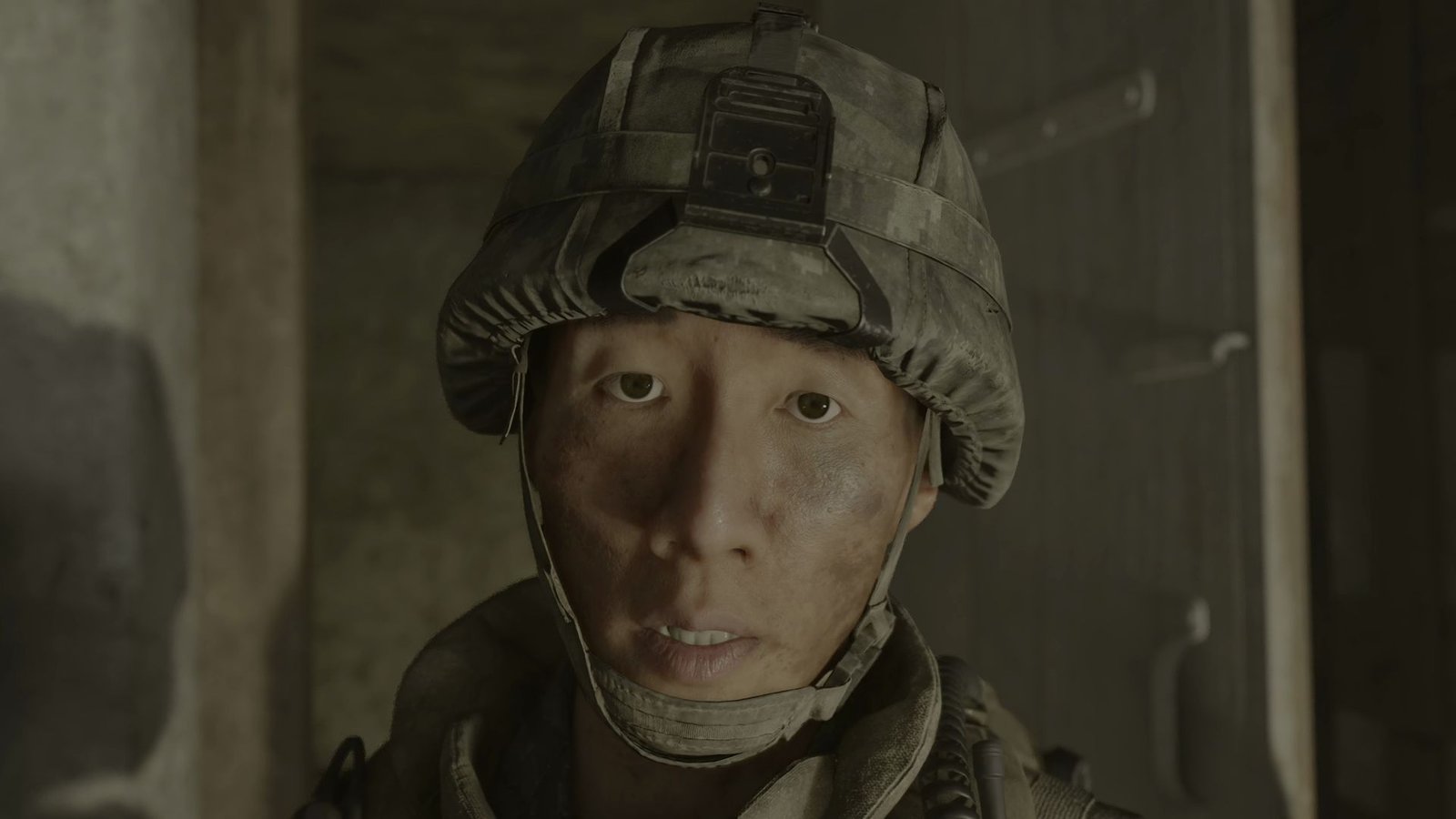
For now, it is only possible to speak with any real confidence about the single-player campaign in “Call of Duty: Modern Warfare 4.” During a three-day event in Los Angeles, the source’s author spent around 24 hours with the game, trying the campaign, multiplayer, and DMZ, but did not give it a final score. According to the author, this “Call of Duty” installment’s place in the series can only be properly assessed once the game has been tested with the wider player community.
That means the verdict is best narrowed down to one question: does the roughly six-hour campaign seem worth your attention? Based on the impressions provided, the answer is yes—if what you want most from “Call of Duty” is large-scale, meticulously staged military action and a story about soldiers who do not feel invincible. However, the campaign is not equally strong throughout. The story of the new South Korean Marine squad made a much better impression than the continuation of Captain Price’s storyline.
The biggest change is not the scale of the battles, but who takes part in them
“Modern Warfare 4” was presented as the conclusion to the “Modern Warfare” story that began in 2019, but it works best when it is not returning to the familiar faces of that storyline. Players spend more than half of the roughly six-hour campaign with a group of young South Korean Marines and several Americans. They are approaching the end of their mandatory military service when North Korea launches an attack.
This perspective brings the campaign closer to the series’ older stories, in which the player was one of many soldiers in a major war rather than an elite operative constantly saving the world. The members of the new squad draw on recognizable archetypes: there is a serious soldier, a character who says very little, and an American who fills every quiet moment with jokes. Even so, the PC Gamer writer found them charming enough to remember their names.
This choice directly affects the tone of the battles. The campaign’s characters are not always in control of the situation and do not hide their fear, while their side can be clearly outmatched by the attacking forces. This gives the large action sequences a different context: they depict not only an efficiently executed special operation, but also an attempt to survive a wider conflict that no individual soldier can control.
The campaign offers two distinct forms of action
The standout episodes in “Modern Warfare 4” are divided between large, chaotic battles and a much more open-ended mission behind enemy lines. The first approach is best represented by “Mayhem” and “Losing Ground.” In these missions, South Korean and American forces attempt to hold the fictional city of Hajin, even though its defense appears doomed and the enemy has the numerical advantage. The characters’ fear and the constant pressure distinguish these missions from more recent stories about seasoned specialists.
“Counter Attack” increases the scale even further with a massive beach assault. According to the author, it is a big-budget sequence that shows how many resources were devoted to the campaign. Together with lavish cutscenes and generally excellent shooting mechanics, episodes like this make up the campaign’s most traditional, but also one of its strongest, components.
For the player, this means that much of the appeal does not come from a completely new “Call of Duty” formula. The campaign’s strength lies in its ability to present familiar military action at the right scale and with characters who respond to danger more like real people than the series’ usual super-soldiers. If staged firefights and major assaults are exactly what you are looking for, the impressions presented here are favorable toward this side of the campaign.
“Stranded” changes the pace and offers more choice
“Stranded” departs the furthest from the traditional structure. After making a forced landing, Park’s squad finds itself behind enemy lines in North Korea. The multi-hour mission features three nonlinear objectives, optional tasks, and a hideout where players can craft better armor, weapons, and camouflage.
After the loud urban battles, this section is quieter and more isolated. Players can choose the order in which they tackle its objectives, so the mission briefly changes not only the campaign’s pace but also its usual structure. The PC Gamer writer compared it to a small “Far Cry” episode inside a “Call of Duty” campaign. At first, the change felt somewhat abrupt to the author, but “Stranded” ultimately became one of the most memorable episodes in the entire story.
The mission uses the loot-collection system familiar from DMZ. This could have raised concerns that the single-player content had once again been adapted around another mode, but the author was told that the “Stranded” map was created specifically for the campaign. In other words, the system borrowed from DMZ is used here for a standalone single-player mission rather than simply repurposing an existing multiplayer space.
This is an important distinction for those who disliked previous attempts to push “Call of Duty” campaigns closer to “Warzone.” Based on the impressions provided, “Stranded” is not an arbitrary segment taken from another mode. It gives Park’s squad more time in the spotlight, allows objectives to be completed in a non-prescribed order, and uses looting and crafting to serve the needs of this specific mission.
Price’s return divides the campaign instead of strengthening it
The strong story of the South Korean Marines highlights the campaign’s main problem: not all of its narrative is devoted to the new squad. Their experiences unfold in parallel with a largely separate storyline involving Captain Price. Price is a wanted fugitive because of the events of “Modern Warfare 3,” and the new installment provides a lengthy recap of the previous story for those who did not see it.
Price’s episodes attempt to show a darker side of the character, but they also repeat familiar action sequences: a shootout during a car chase, a chase on foot complete with jumps, and a cinematic knife fight. The source’s author did not find these sections memorable. In the author’s view, they faded from memory almost as quickly as they ended.
Even more surprising is the fact that Price essentially drops out during the second half of the campaign and never meets the South Korean squad, whom the author considers the true heroes of the story. As a result, the campaign’s two halves not only differ in how compelling they are, but also feel insufficiently connected. It creates the impression that the familiar character’s scenes were included to meet fan expectations, even though the developers seemed more interested in the new group of soldiers.
This is especially important for players awaiting the finale of the story that has been developed since 2019. Although “Modern Warfare 4” was presented as the conclusion to this narrative, in practice Price’s storyline felt more like a rushed effort to tie up the remaining plot threads to the source’s author. Mads Mikkelsen also reportedly had the potential to become a threatening figure, but the campaign does not give him enough time.
The experience of war is more convincing than its political explanation
The campaign’s premise centers on a North Korean attack, but the source warns against expecting a complex geopolitical narrative. The conflict is presented from a conventional American perspective, the characters aligned with the CIA remain the “good guys,” and the involvement of a superpower behind the events follows a familiar genre template.
In practice, this means the campaign’s strengths lie in the experiences of individual soldiers, their fear, and the staging of its battles rather than in a multifaceted examination of an international conflict. Players who value political nuance should keep this limitation in mind. On the other hand, the source offers no reason to claim that this problem overshadows the entire campaign—it is identified as a weaker part of the narrative alongside well-executed military sequences.
Who might find this campaign worth their time?
- Those who miss campaigns about ordinary soldiers. More than half of the story follows a young squad whose members are not portrayed as elite operatives in complete control of a major conflict.
- Fans of large-scale military set pieces. The defense of Hajin and the beach assault make use of “Call of Duty’s” ability to create loud, expensive-looking, and meticulously staged battles.
- Those who want traditional campaign action as well as a more open-ended mission. The campaign includes familiar scripted action sequences, while “Stranded” offers nonlinear objectives, optional tasks, looting, and crafting.
- Players who want the campaign to feel like more than a token addition. The PC Gamer writer says it was the most enjoyable “Call of Duty” campaign they had played in many years and that it finally does not feel like secondary content.
- Those who want less influence from “Warzone” and “Zombies.” Although one mission uses DMZ’s loot-collection system, its map was created specifically for the campaign, and in the author’s assessment, the overall experience is not overshadowed by other modes.
What might get in the way of enjoying the story?
- Expectations of a strong finale for Price. His episodes are described as less memorable than the story of Park’s squad, while the storyline itself largely disappears during the campaign’s second half.
- A need for a cohesive narrative. The two parallel stories are not equally strong and do not come together in a meaningful way.
- A search for a politically complex story. The premise of a North Korean attack and the broader international conflict are presented in a simplified manner.
- A desire to assess all of “Modern Warfare 4.” The source does not provide a detailed analysis of multiplayer or DMZ, so the quality of the campaign cannot automatically be equated with the quality of the complete game.
What do we still not know?
The source does not state the game’s price, provide a list of platforms, or offer a detailed assessment of its technical condition. It is also impossible to determine how multiplayer will perform once it encounters the wider player community. Although the author took part in roughly 24 hours of preview play during a three-day event, they deliberately postponed a final assessment until after release.
These unknowns matter when deciding whether the full game is worthwhile. The roughly six-hour campaign may be appealing in its own right, but without information about the price and assessments of the other modes, the overall value of “Modern Warfare 4” cannot be determined reliably. There is also no basis for drawing conclusions about performance, bugs, or differences between platforms.
Is it worth playing now?
Based on the information currently available, the “Modern Warfare 4” campaign appears worth considering for those who have missed a self-contained “Call of Duty” single-player story. Its strongest selling points are the perspective of the South Korean Marines, the large-scale battles, excellent shooting mechanics, and the “Stranded” mission, which offers more freedom than the usual linear episodes. For the PC Gamer writer, it was the most enjoyable campaign in the series in many years.
Even so, this is not an unequivocal recommendation of the complete game. Price’s story is described as weaker and as a rushed conclusion to earlier plot threads, while the political side of the conflict lacks nuance. If the main reason you want to play is specifically to see Captain Price’s finale, the available impressions suggest lowering your expectations.
If your decision depends on multiplayer, DMZ, the game’s technical condition, or its overall content-to-price ratio, the source does not provide enough information for a final answer. In that case, it would be more reasonable to wait for a more comprehensive post-release assessment. The current cautious verdict is simple: campaign fans have reason to be interested, but the overall quality of “Modern Warfare 4” has yet to be assessed.