
 LT
 DE
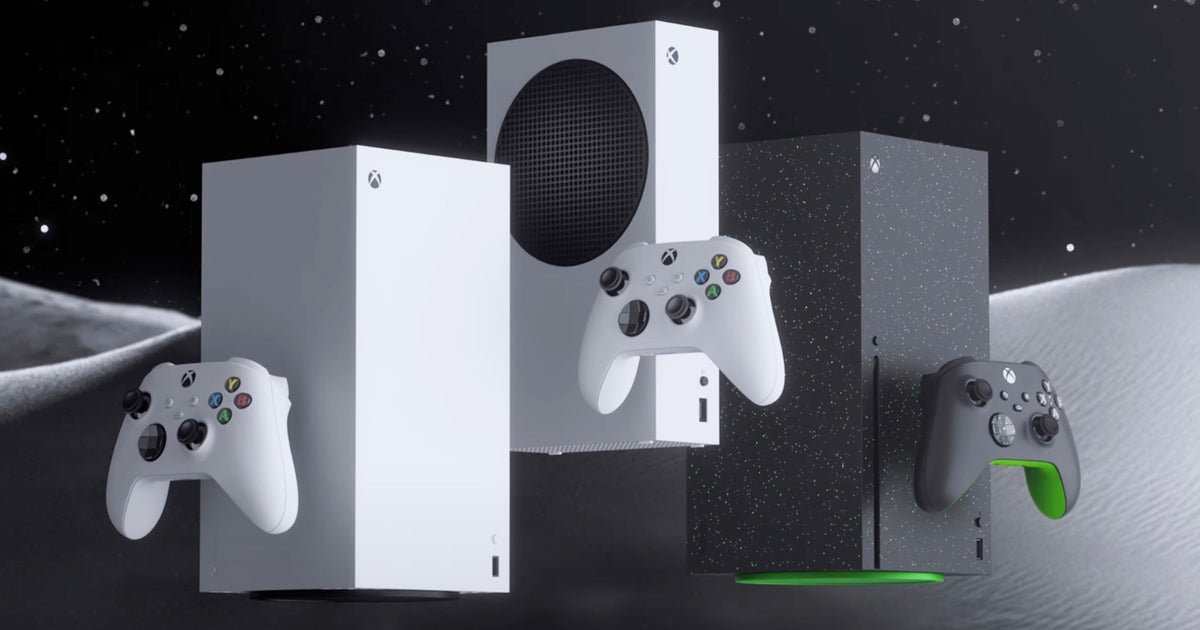
AMD has confirmed that its FSR 4.1 image upscaling technology will be released for Xbox Series X, Xbox Series S, ROG Ally, and ROG Ally X devices. It is the company’s most advanced version of FSR, using machine learning to reconstruct images at a higher resolution. A specific release date for Xbox Series consoles has not yet been announced.
FSR is not new to the Xbox ecosystem, as the consoles already support an earlier version of the technology. The new announcement confirms the move to FSR 4.1, which should give developers a more advanced tool for balancing image quality and performance. AMD’s technology will be available on both the more powerful Series X and the more hardware-constrained Series S, as well as the handheld ROG Ally and Ally X devices.
FSR 4.1 reconstructs images at a higher resolution
FSR works by rendering images at a lower internal resolution. Instead of immediately rendering every frame at a higher resolution, the game produces a lower-resolution image, which machine-learning algorithms then upscale to a higher resolution.
This approach can be used for different purposes. The hardware resources it saves can help deliver a sharper final image without requiring the same workload as conventional higher-resolution rendering. Alternatively, the available resources can be used to maintain more consistent performance. FSR 4.1 is not simply intended to increase the number of pixels displayed—the technology is designed to reconstruct a higher-quality final image from a lower-resolution source frame.
FSR 4.1 has already arrived on Steam Machine and Steam Deck devices. This happened shortly after the Steam Machine was unveiled in the summer, with the technology becoming one of the options available to players looking for a sharper image.
The greatest benefits are expected on more limited hardware
FSR 4.1 could prove useful across all the announced devices, but the greatest potential gains are associated with Xbox Series S, ROG Ally, and ROG Ally X. Their hardware capabilities are more limited, so more efficient upscaling could help strike a better balance between image quality and performance.
For Series S, FSR 4.1 will give developers an additional tool when working with the less powerful console in the current Xbox generation. By rendering a game at a lower internal resolution and reconstructing the final image with machine-learning algorithms, the workload required for direct rendering can be reduced. This could make it possible to get more out of the console’s available hardware, although the specific results will depend on how the technology is used.
FSR 4.1 is expected to serve a similar purpose on ROG Ally and Ally X. On these handheld devices, upscaling can be used to achieve a sharper image or more consistent performance without placing the same demands on the hardware as rendering at a higher resolution from the outset.
FSR 4.1 plans announced shortly after QSSR was unveiled for PlayStation 5
The plans for FSR 4.1 were announced just a few weeks after Sony unveiled QSSR technology for PlayStation 5. QSSR also uses machine learning to upscale image resolution. It is described as a less capable version of PSSR, while PSSR itself remains exclusive to the PlayStation 5 Pro console.
The close timing of these announcements does not confirm that FSR 4.1 is a direct Microsoft response to QSSR. An older version of FSR is already supported on Xbox consoles, so this latest step is an upgrade to existing AMD technology. AMD’s role in this area also extends across both console ecosystems: the company designs the chips used in both Xbox and PlayStation devices.
Although FSR 4.1 and QSSR are based on a similar machine-learning concept, that alone is not enough to compare their final image quality. Since FSR 4.1 has not yet arrived on the announced Xbox devices, there is no practical basis for claiming which solution will deliver sharper or more consistent results.
AMD and Microsoft will also collaborate on Project Helix
Xbox technology chief Scott Van Vliet said that Microsoft worked closely with AMD to optimize FSR 4.1. According to him, the technology will give developers another tool for improving performance and image quality. The companies’ work will not be limited to the current Series consoles, with their collaboration continuing across both hardware and software.
Discussing future plans, Van Vliet mentioned Project Helix and FSR Diamond. The latter technology is intended to be used for whatever comes after the current Xbox generation, but no further technical details about how it works were provided. As a result, it is not possible to determine how FSR Diamond will differ from FSR 4.1 or what specific capabilities it will bring to future hardware.
At the same time, recent reports have mentioned a possible price of $1,800 or more for the next-generation Project Helix consoles. This figure has not been officially confirmed. If such a price proves accurate, it could significantly hinder the adoption of the new consoles.
AMD has not announced an FSR 4.1 release date
AMD has confirmed plans to bring FSR 4.1 to Xbox Series X, Xbox Series S, ROG Ally, and ROG Ally X, but it has not said when the technology will become available on Xbox Series consoles. The impact of FSR 4.1 can be assessed once the technology reaches the announced hardware.