
 LT
 DE
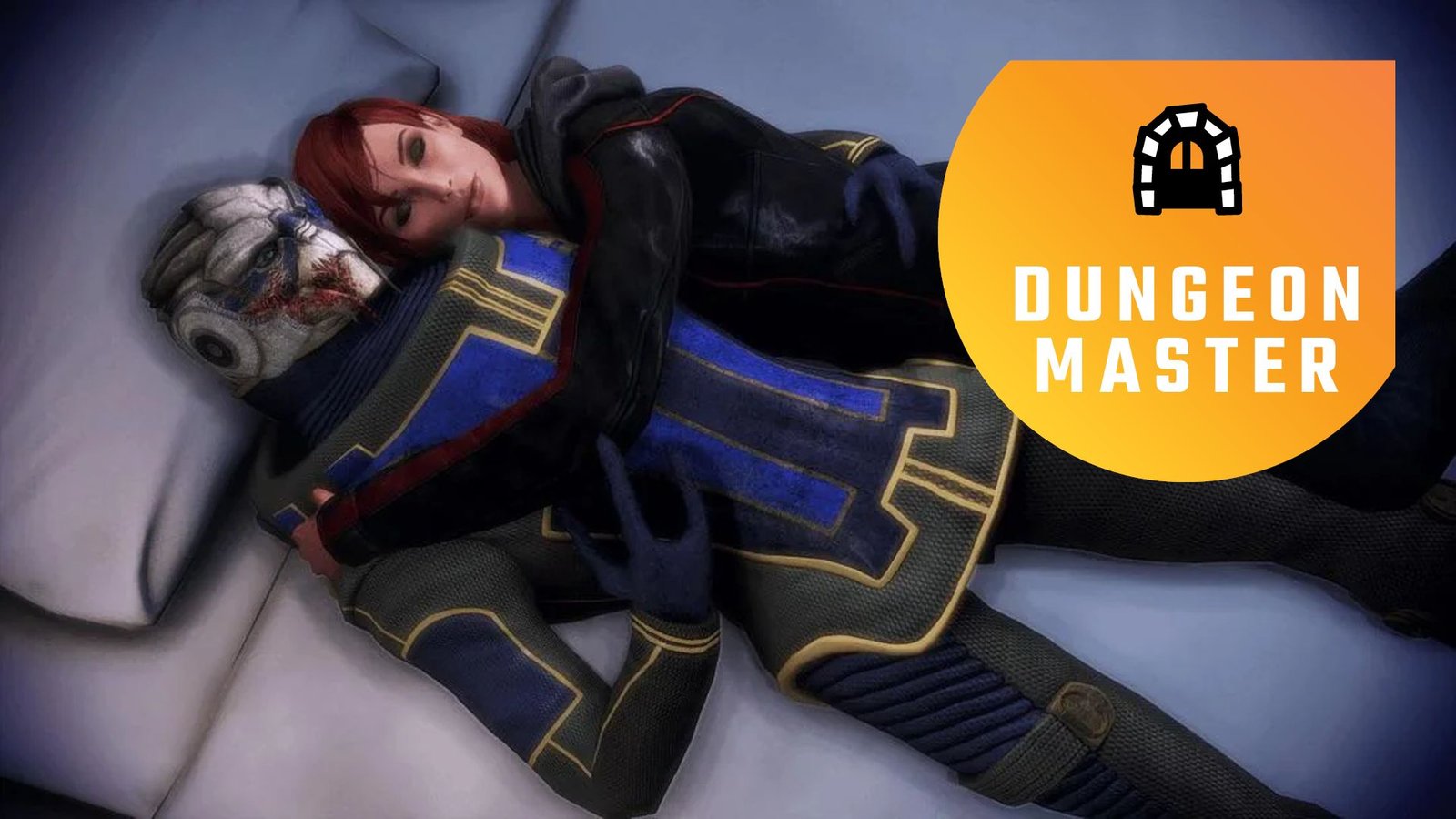
A PC Gamer columnist writes that EA has decided to shut down the long-running RPG studio BioWare. This brings the developer’s history—spanning “Baldur’s Gate,” “Neverwinter Nights,” “Star Wars: Knights of the Old Republic,” “Mass Effect,” and “Dragon Age”—to an end. Even so, the studio’s influence does not end with its operations: many of the storytelling principles, technologies, and development approaches it advanced have long been used in the work of other teams.
The source’s author acknowledges that BioWare itself made mistakes, but places the primary responsibility for the studio’s decline on management decisions, staff reductions, and a failure to fully understand the popularity of “Dragon Age.” This is the author’s assessment of the situation, rather than an official explanation from EA.
The games released in recent years did not restore BioWare to its former position. The PC Gamer author is particularly critical of “Mass Effect: Andromeda,” “Anthem,” and 2024’s “Dragon Age: The Veilguard.” Yet even this criticism does not change his central argument: the studio’s legacy should not be judged by a single unsuccessful period, but by the number of different directions in RPG development that it helped shape.
BioWare’s most important legacy is the weight of player choice
Over time, the BioWare name became associated not only with dialogue choices, but also with clearly showing their impact on characters and the world. In the studio’s RPGs, players could determine who survived, how relationships with companions changed, and which character became a romantic partner. These systems did not emerge in a single project, but they were developed particularly clearly in “Knights of the Old Republic” and “Mass Effect.”
One of the most important stages in this process was “Star Wars: Knights of the Old Republic.” The game placed significant emphasis on its morality system, relationships with party members, and the ability to influence them. Some companions could even be pushed toward the Dark Side. Choices were no longer isolated moments in dialogue, but became one of the elements shaping the structure of the adventure.
This approach became so recognizable that prominent story branches shown to players in advance are still described as BioWare-style choices. This description does not refer to a specific mechanic or an official term. Rather, it describes a narrative model in which a decision clearly changes subsequent events, the fates of characters, or their relationship with the protagonist.
“Mass Effect” expanded this idea across several games. Shepard was a more clearly defined protagonist than many of the studio’s earlier heroes, but players could still create different versions of the character. Shepard’s identity was not limited to the Paragon and Renegade paths—it was shaped by the political, moral, and personal decisions made throughout the story.
Players had to decide the fate of an alien species, the future of the Galactic Council, potential human sacrifices, and romantic relationships. Most importantly, the consequences of some choices carried over into the sequels. Decisions accumulated over several years ultimately became part of the fight for the galaxy’s survival. It was precisely this continuity that gave the choices in “Mass Effect” a weight that disconnected episodes could not have achieved.
The studio changed the form of RPGs while trying to preserve their complexity
As traditional computer role-playing games, often referred to as CRPGs, began to decline in popularity and consoles became increasingly important, BioWare had to change how it presented its games. “Knights of the Old Republic” retained many systems characteristic of CRPGs, but concealed some of their complexity beneath an interface designed for consoles and controller input. The game became an important bridge between the studio’s earlier work and its later big-budget RPGs.
The series started by “KotOR” continued with Obsidian’s “Knights of the Old Republic 2.” BioWare itself later returned to the “Star Wars” universe with the MMO “Star Wars: The Old Republic.” At launch, it was the most expensive MMO ever made, and the scale of the project was particularly evident in its vast amount of dialogue and voiced content. The game remains operational, although Broadsword is now responsible for it.
2005’s “Jade Empire” became another attempt by the studio to combine storytelling with action RPG mechanics. It continued to develop the kinds of choices for which BioWare was already known, but in the PC Gamer author’s view, the project followed an existing trend of narrative-driven action RPGs rather than establishing a new standard.
“Mass Effect” brought a much more significant change. The studio, which had made its name with classic computer RPGs, adopted third-person shooter elements without abandoning the player’s influence over the narrative. This allowed BioWare to move away from its earlier CRPG format without losing the decision-making, companion, and relationship systems that had become an important part of its creative identity.
Technology connected the histories of BioWare, Obsidian, and CD Projekt Red
The studio’s influence spread through more than its narrative systems. The Infinity Engine became the technological foundation for games whose impact can still be felt in RPGs released much later. Black Isle Studios, which published “Baldur’s Gate,” used the engine to create “Icewind Dale” and “Planescape: Torment.”
After Black Isle Studios closed, Obsidian was formed. Its connection to BioWare’s work did not end with the Infinity Engine era: the team developed sequels to “Knights of the Old Republic” and “Neverwinter Nights,” and later released “Pillars of Eternity,” considered a spiritual successor to the classic “Baldur’s Gate.” In the PC Gamer author’s assessment, without the earlier work of BioWare and Black Isle, the modern CRPG revival probably would not have happened in the same form.
The author sees a similar chain of creative influence in other projects. He connects “Disco Elysium” to “Planescape: Torment,” and “Esoteric Ebb” and “Zero Parades” to the influence of “Disco Elysium.” This is not a claim that the achievements of later studios belong to BioWare. Rather, the connection demonstrates how ideas from earlier RPGs were adopted, changed, and adapted for new generations of games.
Another important technological direction began with the 2002 release of “Neverwinter Nights.” The game itself retained the foundations of CRPGs while responding to the growing demand for 3D graphics, but its long-term impact was especially strengthened by the Aurora Engine and the Aurora Toolset.
Using these tools, players created worlds, adventure modules, modifications, and persistent servers. In the way they operated, the latter resembled community-run MMOs. According to the source’s author, the “Neverwinter Nights” community has been working with this toolset for more than two decades.
The importance of the Aurora Engine can also be seen in the history of CD Projekt Red. Founded in 2002, CD Projekt initially worked in localization and collaborated with BioWare and Interplay to produce the Polish version of “Baldur’s Gate.” The company was later commissioned to port “Baldur’s Gate: Dark Alliance” to PC, but the project collapsed because of Interplay’s problems.
After establishing a separate game development studio, CD Projekt Red, the company began creating the first “The Witcher” game. The project licensed the Aurora Engine, which the developers heavily modified. Following the announcement of BioWare’s closure, CD Projekt executive Michał Nowakowski recalled that the studio had played an important role in the company’s early history. It not only lent CD Projekt its engine, but also shared its experience and gave the company space at its E3 booth.
“Dragon Age” demonstrated both the studio’s ambition and the cost of its working conditions
Released in 2009, “Dragon Age: Origins” spent seven years in development, went through significant changes, and was presented as a spiritual successor to “Baldur’s Gate.” Just a few months after release, its sales reached 3.2 million copies. The PC Gamer author sees this result as evidence that a more complex, methodical RPG could also appeal to console audiences.
According to the source’s author, the significance of “Origins” was not limited to its mechanics or commercial results. The game became a big-budget project that clearly portrayed LGBTQ+ characters and relationships. “Mass Effect” had already allowed a female Shepard to pursue a romantic relationship with Liara, but the author criticizes how this relationship was presented and points out that the Asari were described as a genderless species even though Liara was clearly coded as female.
In its later RPGs, BioWare portrayed LGBTQ+ relationships more openly. In some cases, romance storylines were tied to specific characters; in others, characters could become romantic partners regardless of the player character’s gender. The author considers this direction one area of the studio’s influence and cites the LGBTQ+ romance storyline in “Kingdom Come: Deliverance 2” as an example of the broader change.
The later development of “Dragon Age” also revealed difficult production circumstances. “Dragon Age 2” had to be completed within an extremely short timeframe, placing a heavy workload on the team and forcing compromises within the game itself. Despite this, the PC Gamer author views its writing positively and highlights the introduction of Varric, Cassandra, and Hawke.
Different problems arose during the development of “Dragon Age: Inquisition.” EA wanted its projects to use a single engine, Frostbite, which meant BioWare had to work with tools that were not designed for RPG development. According to the source, this became a major challenge for the team and contributed to an intense period of work before release. The game itself attempted to combine the directions taken by “Origins” and “Dragon Age 2,” while adopting a largely open-world structure.
The PC Gamer author calls “Inquisition” the last great BioWare game. This is a subjective assessment, as is his criticism of “Andromeda,” “Anthem,” and “The Veilguard.” In the author’s view, the quality of later projects declined, but he emphasizes that what he wanted was not the studio’s closure, but a return to its earlier creative boldness.
Unfinished plans and ideas continuing elsewhere
The PC Gamer author writes that with BioWare closed, we will no longer see what the studio had planned for the fifth “Mass Effect” game. The source mentions a previously leaked teaser, but provides no further confirmed details about the project. At the same time, the “Mass Effect” series being developed by Amazon is reportedly still planned.
The PC Gamer author also sees echoes of the creative direction of “Mass Effect” in two other science-fiction RPGs: Owlcat’s “The Expanse: Osiris Reborn” and Archetype’s “Exodus.” These are not continuations of BioWare’s series, but the source presents them as games that are adopting, in their own ways, ideas that BioWare helped popularize.
Similarly, the importance of “Baldur’s Gate” is not limited to the original game. The PC Gamer author sees the impact of BioWare’s early work in projects from Owlcat, Obsidian, and Larian, including the “Pathfinder” CRPGs, “Pillars of Eternity,” “Tyranny,” and “Baldur’s Gate 3.” Each of these studios is responsible for its own creative achievements, but their work belongs to an RPG tradition that BioWare played a major role in shaping.
The studio’s history is therefore defined by more than the popularity of individual series. The Infinity Engine is associated with the foundations of classic CRPGs, the Aurora Toolset gave the community the ability to create its own worlds and servers, “Knights of the Old Republic” brought choice and relationship systems to the forefront, and “Mass Effect” carried their consequences across multiple entries in the series. “Dragon Age: Origins,” in turn, demonstrated that a more complex RPG could also reach console audiences.
BioWare’s closure brings the operations of a specific studio to an end, but the ideas it shaped have long since ceased to be associated with only one name. They can be seen in the games of other teams, in the development tools used by communities, and in the very way modern RPGs connect choices, companions, and long-term narrative consequences.