
 LT
 DE
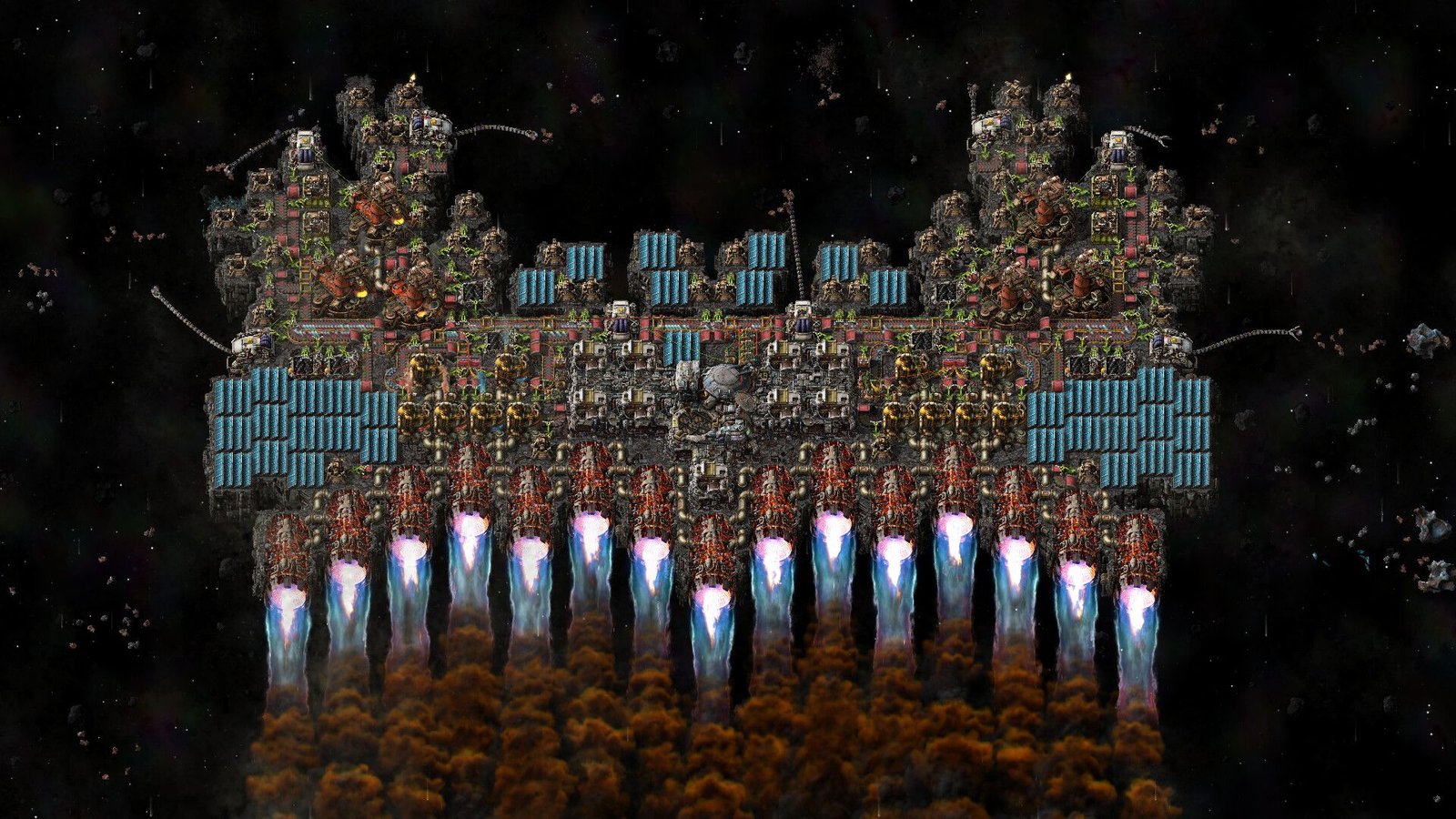
After 14 years of continuous development, Factorio has received its final major update. Version 2.1 marks the end of active development on the game: Wube Software believes the project has reached the right point to conclude the main work. Smaller patches may still be released in the future, but no further major updates are planned.
Version 2.1 is not a major addition of new content. It primarily improves and completes existing systems, particularly the space logistics introduced in Space Age.
What is Factorio about?
Factorio is a factory-building simulator centered on creating production and logistics systems. The source mentions conveyor belts, inserters, trains, fluid infrastructure, assembling machines, oil refineries, and rocket silos. These elements form an interconnected network: manufactured items must be moved, distributed, and delivered wherever they are needed for the next stage of production.
The changes in 2.1 cover unloading delivered items, connecting pumps to fluid wagons, linking space transportation to factory logistics, and automatically importing items from all available locations.
The player’s base is attacked by Biters, which also expand their territory. Version 2.1 changes how their expansion groups are formed and how they select locations for new nests.
2.1 is not a new content expansion
Before getting started, it is important to understand the scale of the update. Version 2.1 does not add new planets, enemies, or research trees. The developers describe it as a substantial collection of quality-of-life changes, small features, and finishing touches. The update also includes features that the team wanted to implement in version 2.0 but did not have enough time to complete.
Version 2.1 mainly changes existing systems: it streamlines space logistics, overhauls enemy expansion, improves the management of fluid infrastructure, and updates the visuals of several machines.
The biggest changes focus on Space Age logistics
The Space Age expansion allows players to extend their industry into space and across four distinct alien planets. This part of the game receives the most notable improvements in version 2.1. They do not change the number of planets or the research structure, but they make it easier to move cargo into orbit and between different locations.
Rockets can now carry several different types of items. Previously, each rocket was limited to a single type of cargo. The practical benefit of the new system is especially clear when constructing space platforms: a single launch can deliver a wider variety of required components, reducing the need to organize every type of cargo entirely separately.
Space platforms themselves can now transfer items to one another while in orbit. They can also automatically import items from all available locations. This creates more opportunities to build an interconnected supply network in which cargo is not managed solely through isolated routes between two specific points.
A new unloading zone can also be connected to landing pads. Inserters take delivered items from it and direct them straight onto conveyor belts, into trains, or toward other factory elements. This directly links the arrival of space cargo to ground-based logistics. The player still needs to design the entire chain, but unloading interplanetary shipments now integrates more smoothly into an automated factory.
What has changed in the core systems?
Not every change in version 2.1 depends on Space Age. The developers have reworked the territorial expansion of Biters. The formation of their expansion groups now changes according to evolution, making the task of clearing enemy territory a more meaningful challenge rather than a matter of destroying numerous small and irritating nests.
Biters should also choose more natural locations for new nests. Their territorial expansion takes place regardless of whether the player explores the map early on. As a result, choosing to explore less of the map at the beginning will not, by itself, stop enemy expansion.
The update also restores the prevention of different fluids being mixed. A new visualization system has been added to make it easier to connect pumps to railway fluid wagons. This is a narrower change than the space logistics overhauls, but it directly affects the construction of fluid transportation infrastructure.
Version 2.1 also adjusts the Space Age quality system, although the source does not provide enough information to assess the exact extent of these changes. Assembling machines, oil refineries, rocket silos, and heat exchangers have received new graphics. These visual changes do not alter the principles of production, but they reflect the update’s overall direction: completing and polishing systems that are already in place.
The most important areas changed in 2.1
- Transporting Space Age cargo into space and between planets.
- Rockets capable of carrying mixed cargo and space platforms that can transfer items to one another.
- Unloading zones that can be connected to landing pads.
- Biter expansion groups that change according to evolution and more natural selection of locations for new nests.
- Fluid-mixing prevention, quality system adjustments, new machine graphics, and improvements to pump connections.
What does 2.1 not add?
Version 2.1 does not add new planets, enemies, or research trees. Space-based industrialization and the four alien planets were introduced in the previously released Space Age expansion, while version 2.1 mainly improves existing mechanics.
Version 2.1 does not change the game’s fundamental direction: the developers present it as a collection of quality-of-life changes, small features, and finishing touches rather than a package of new planets, enemies, or research trees.
Version 2.1 is the final significant update for Factorio. Smaller patches may still be released, and Wube Software is working on new prototypes, but the studio has warned that it will not have anything to share about them for a long time.
Space Age and the base game
The base game and Space Age are not the same content package. Space-based industrialization, four alien planets, orbital platforms, and interplanetary supply networks are associated with Space Age. If these particular additions in version 2.1 are what attracted the most attention, it is important to understand that they improve the expansion’s systems rather than describing the base game alone.
What does 2.1 mean for Factorio’s development?
Version 2.1 improves specific parts of existing systems: rockets can carry several types of items, platforms can transfer cargo to one another, unloading zones connect landed goods to factory logistics, and the enemy and fluid systems have received changes.
The update has already been released and marks the end of the active phase of major Factorio updates. Smaller patches may still appear in the future, but version 2.1 is the game’s final significant update.